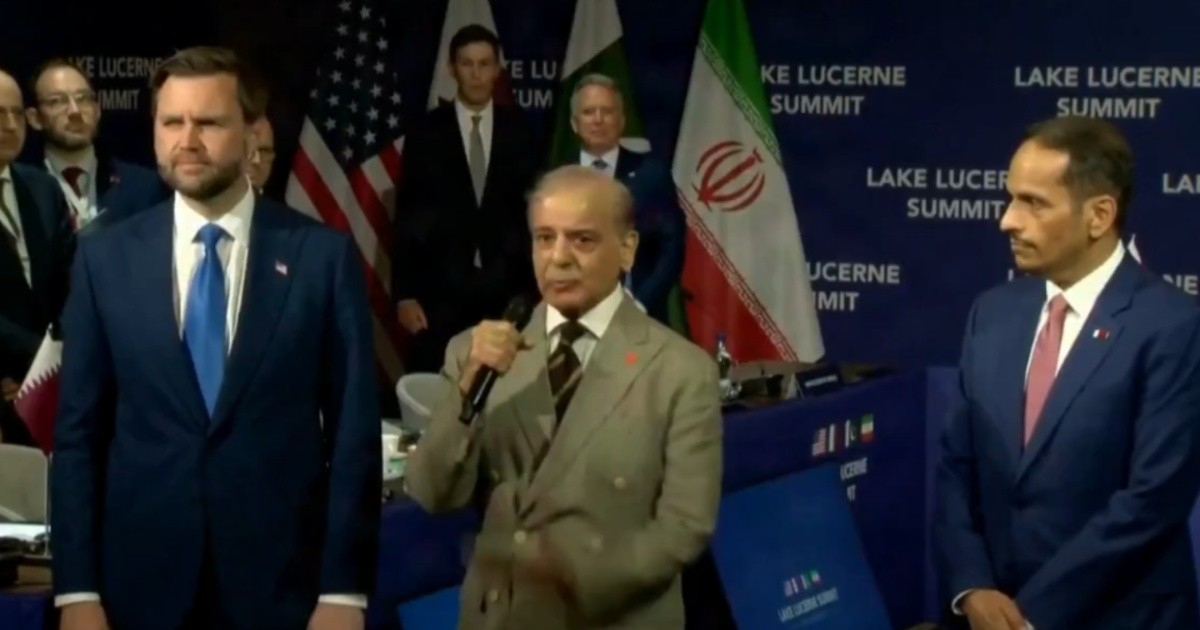
The initial day of peace talks between the United States and Iran at the Bürgenstock resort in the Swiss Alps came to an unexpected halt on Sunday. The Iranian delegation exited the premises in protest over a post made by President Donald Trump on his social media platform, Truth Social.
After a mere 80 minutes into the discussions, the Iranian state news agency IRNA reported that negotiations had "hit a difficult phase after 80 minutes of discussions and an interruption due to an insulting message from the American president."
The catalyst was Trump's post, which threatened further attacks if Tehran did not restrain its Hezbollah allies in Lebanon: "If not, we will strike Iran with much greater force, as we did last week, or even more powerfully."
The Iranian team, led by Parliament Speaker Mohammad Bagher Qalibaf and Foreign Minister Abás Araqchí, made it clear that Iran would "not negotiate under military threats" and that their forces were "prepared for any scenario."
Suspicion from the Iranian side was evident even before the incident, as delegation members avoided shaking hands with their American counterparts and did not join the initial press appearance with Vice President JD Vance, who headed the U.S. delegation, alongside the Qatari and Pakistani prime ministers, mediators of the process.
Despite the walkout, Vance had stated before the incident that there had been "significant progress" earlier in the day, with the aim to "turn a new page and transform our relationship with the Iranian people."
The vice president also warned that Tehran needs to be "willing to stop being a regional destabilizing factor and to renounce its long-term aspirations of acquiring nuclear weapons."
These talks were meant to follow up on a 14-point memorandum of understanding signed on June 17, which called for an immediate ceasefire and set a 60-day deadline to negotiate a final agreement on ending hostilities and Iran's nuclear program.
The memorandum also includes a $300 billion reconstruction fund for Iran, lifting sanctions, and ensuring free passage through the Strait of Hormuz.
Tensions were already high prior to the formal talks. On Saturday, Iran announced the closure of the Strait of Hormuz in response to Israeli attacks in southern Lebanon, accusing Washington of violating the recent agreement.
The meeting in Bürgenstock marked the first high-level face-to-face dialogue between Iranian and American officials in nearly half a century since the armed conflict began on February 28, 2026.
Swiss hosts were hopeful that the secluded setting of the resort—accessible only via a closed road and funicular during the meeting—would encourage continued dialogue. However, by the end of the day, neither party had confirmed whether talks would resume or when.
Key Questions About the US-Iran Peace Talks
What triggered the Iranian delegation to leave the talks?
The Iranian delegation left the talks after President Trump posted a threatening message on Truth Social, warning of new attacks if Iran did not control its Hezbollah allies in Lebanon.
What was the purpose of the US-Iran peace negotiations?
The negotiations aimed to follow up on a memorandum of understanding that called for a ceasefire and set a deadline to negotiate an agreement on ending hostilities and Iran's nuclear program.
What were the conditions of the memorandum of understanding?
The memorandum included a $300 billion reconstruction fund for Iran, lifting sanctions, and ensuring free passage through the Strait of Hormuz.