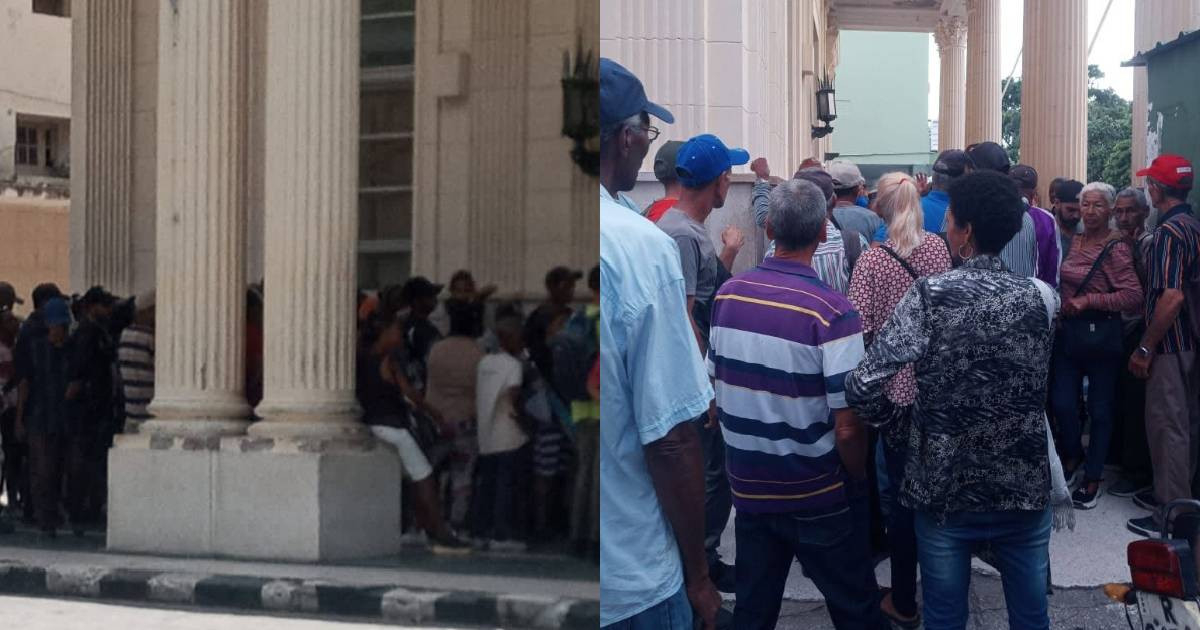
Freddy De León López, a resident of Santa Clara, reported an unsettling ordeal on Thursday—waiting three days to withdraw just 40% of his salary. The delays were due to a severe cash shortage, persistent banking system failures, and operational restrictions obstructing normal financial transactions.
He shared his experience on Facebook, painting a picture of a cumbersome process to access his own wages, hindered by numerous operational barriers. ATMs are frequently out of cash, the system suffers regular outages, and sometimes funds are simply inaccessible, forcing him to spend three days to retrieve only a portion of his earnings.
Challenges in Electronic Transactions
After securing partial access to his salary, De León López attempted to shop at a private business using electronic payment, which offers a 6% discount on transactions. However, the store refused to accept card payments, highlighting yet another disconnect between formal banking policies and their real-world application in Cuba’s everyday economy.
De León López noted that inspectors in the area acknowledged the existence of large sums in fiscal accounts within private businesses, yet the cash is unreachable due to the banking system's unavailability.
Systemic Banking Failures
According to his account, this creates a paradox where money is digitally recorded but not practically accessible. The result is a dysfunctional cycle: salaries are deposited onto cards, ATMs don’t dispense cash, businesses reject electronic payments, and oversight mechanisms fail to enforce regulations. This series of breakdowns effectively blocks the use of earned income.
His complaint underscores the structural tensions in Cuba’s banking process, where accessing funds has become a daily challenge for a large portion of the population.
A comment on his post summarized it succinctly: "The chain breaks at the bank when TCPs can’t withdraw cash. As a result, the inspection body can't act against the bank, preventing electronic payments from being accepted."
Other Cubans echoed these sentiments in their comments. One user blamed the banks and their leadership, stating, "They implemented a first-world system in a fifth-world country."
Public Outcry Against Banking Policies
A private vendor shared her frustration: "We have no cash and nowhere to shop. They don’t accept 10, 20, or even 50 bills, and using transfer feels like an insult."
The most forceful voices demanded policy changes: "End the so-called banking process. It doesn’t work. It tortures the most vulnerable. Remove it. We want cash."
This testimony coincides with the regime's announcement of 176 economic measures in an extraordinary session of the National Assembly, including the unprecedented introduction of private banking and the removal of limits on transfers and withdrawals since 1959. The irony is hard to miss.
The failure of banking reforms isn't novel. By May, less than 10% of private businesses in Sancti Spíritus accepted regular transfers, based on a survey conducted then. Additionally, the Central Bank of Cuba's macroeconomic policy director publicly admitted, "If electronic payments aren't easier or faster than cash, they won't catch on."
The situation worsened when Fincimex halted operations with Visa and Mastercard earlier this month, a consequence of U.S. sanctions against institutions linked to GAESA, the island's military elite conglomerate. By May, over half of Havana's ATMs had already ceased functioning.
As the regime touts historic reforms on paper, a worker in Santa Clara still faces a three-day ordeal to withdraw part of his salary, only to be unable to buy food with it.
Frequently Asked Questions on Cuba's Banking Crisis
What are the main challenges with Cuba's current banking system?
Cuba's banking system faces significant issues such as cash shortages, frequent system outages, and restrictions on normal financial transactions, making it difficult for citizens to access their own funds.
How does the banking crisis affect private businesses in Cuba?
Private businesses struggle as they cannot access cash from their accounts due to system unavailability, leading to difficulties in operations and an inability to accept electronic payments effectively.
What measures has the Cuban regime announced to address the banking issues?
The Cuban regime announced 176 economic measures, including the introduction of private banking and the removal of transfer and withdrawal limits, aiming to address the banking crisis.