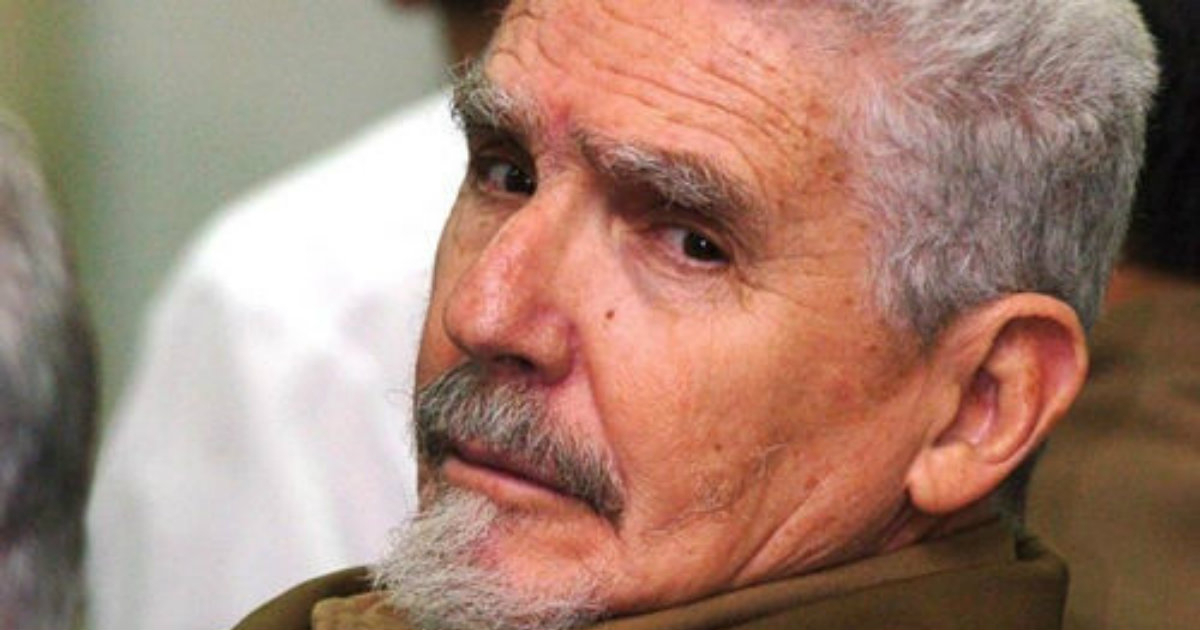
Ramiro Valdés Menéndez, one of the last remaining figures from the founding generation of the Cuban Revolution, passed away on Sunday, coinciding with Father's Day, at the age of 94. The announcement was made by Cuban leader Miguel Díaz-Canel in a series of three posts on his official account on the social media platform X.
"The physical departure of the Commander of the Revolution, Ramiro Valdés Menéndez, is profoundly painful, akin to losing a father. I always held him in high regard and respect. I will remember his unwavering support, guidance, discreet collaboration, and exemplary dedication to serving the nation," Díaz-Canel expressed.
Legacy of Ramiro Valdés
Born on April 28, 1932, in Artemisa, Valdés was a participant in the Moncada Barracks attack on July 26, 1953, a member of the Granma expedition, and fought in the Rebel Army as the deputy leader of Che Guevara's column during the march from Oriente to the West.
Following the 1959 triumph, he became the chief architect of Cuba's state security apparatus. Valdés was the inaugural head of the Ministry of the Interior (MININT) since its inception in 1961, founded the State Security Department and the General Intelligence Directorate, and maintained close ties with the Soviet KGB.
Significant Roles and Contributions
Valdés held the position of Minister of the Interior twice—from 1961 to 1968 and again from 1979 to 1985. He also served as Vice President of the Councils of State and Ministers, Minister of Informatics and Communications, and was a founding member of both the Central Committee and the Political Bureau of the Communist Party of Cuba.
In his tribute, Díaz-Canel emphasized that "every act in Commander Ramiro's life was marked by his absolute loyalty to the leadership of Fidel and Raúl, his comrades in struggle, and the Moncada Program." He concluded with the rallying cry: "Ever onward to victory, Commander!"
Speculation and Final Days
Valdés's death did not come as a surprise to those who had been monitoring his public engagements. His absence from official events since September 2025 had fueled increasing speculation regarding his health, and by January and February 2026, unofficial reports circulated about his critical hospitalization.
On June 6, during the 65th anniversary ceremony of the MININT—an institution he founded—his absence was notably conspicuous when Díaz-Canel paid tribute to the organization without Valdés in attendance.
With his passing, the historical generation of the Cuban Revolution is now reduced to two figures: Raúl Castro, aged 95, and Guillermo García Frías.
Before Valdés, other prominent commanders had passed away, including Fidel Castro in November 2016, Faure Chomón Mediavilla in December 2019, Efigenio Ameijeiras Delgado in February 2020, and both Julio Camacho Aguilera and Marcos Antonio Hernández Alcaraz in December 2024.
The official confirmation of Valdés's death arrived on Father's Day, which Díaz-Canel described as a day overshadowed by the sorrow of his departure.
Understanding the Impact of Ramiro Valdés's Death
Who was Ramiro Valdés Menéndez?
Ramiro Valdés Menéndez was a key figure in the Cuban Revolution, known for being one of the last surviving members of its founding generation. He played a pivotal role in establishing Cuba's state security systems and held numerous significant governmental positions.
What did Díaz-Canel say about Ramiro Valdés?
Miguel Díaz-Canel expressed deep sorrow over the loss, comparing it to that of a father, and praised Valdés for his unwavering support, advice, and dedication to the nation.
How did Ramiro Valdés contribute to Cuba's government?
Valdés was instrumental in the formation of Cuba's state security infrastructure, serving as the first Minister of the Interior and creating key intelligence departments. He held various high-ranking positions, influencing Cuba's political landscape significantly.