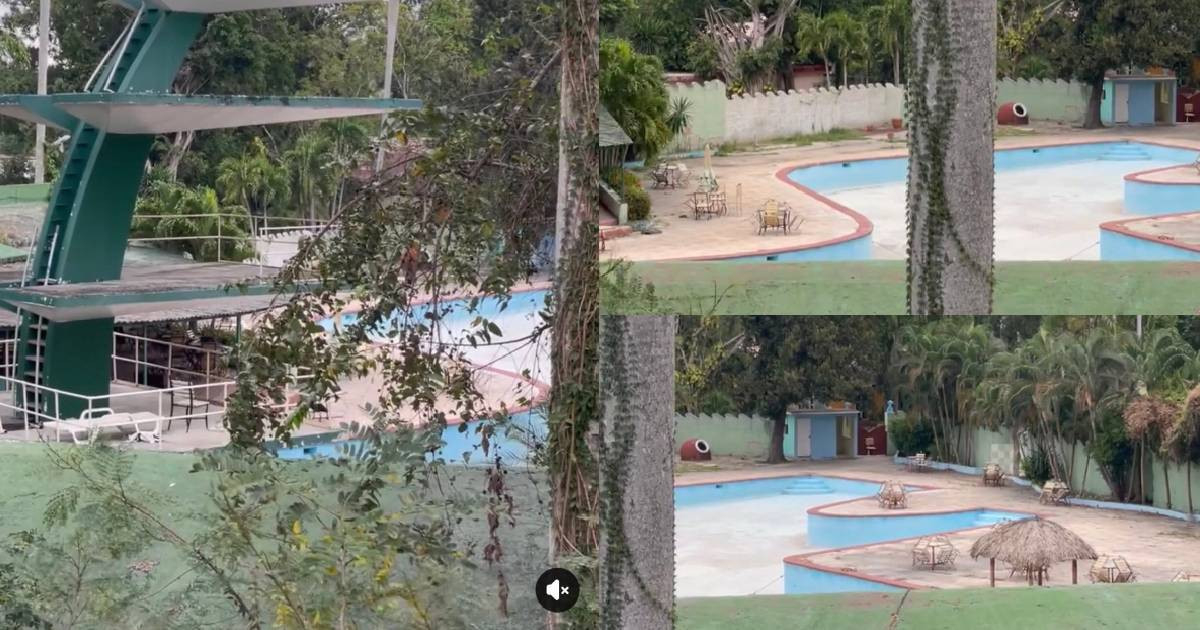
Photos circulating on social media reveal the once-vibrant Río Cristal Complex in Boyeros, Havana, now overtaken by neglect. The images show empty swimming pools, sports fields consumed by vegetation, and rusted diving platforms that serve no purpose.
These photos, shared by Santiago Miguel Díaz Herrera on Facebook, starkly contrast with the lavish renovation funded by the Cuban regime less than ten years ago.
In August 2017, after a 6.8 million peso investment, the complex reopened, featuring a restaurant for 140 guests, a swimming pool, a dance area, WiFi park, children's area, and entertainment rooms. Today, it stands unrecognizable.
Public reaction on social media was swift. "Neither River. Nor Crystal. Nor Rocks. Nor Nature. It's TOTAL Abandonment. CUBA is WOUNDED. With much PAIN," expressed one user.
Another shared a nostalgic reflection: "What pain. I used to go to that place full of Life. And Nature. Today it's Sadness."
Criticism was also directed at systemic contradictions. "But if you try to rent it for investment, everything's a problem, better to leave it in ruins," remarked one commentator, highlighting bureaucratic obstacles that hinder private management.
One user was more blunt: "Just wait until a retired general takes it over."
"Cuba is completely destroyed," summarized another, capturing the essence of what the Río Cristal images once again affirm.
The contrast with official rhetoric is striking. In July 2025, the state-run newspaper Tribuna de La Habana claimed Río Cristal was "making significant recovery progress," a statement the social media images utterly refute.
This situation is not unique. Recently, the historic Lincoln Hotel was reported as abandoned, closed, and windowless, just two years post-reopening.
The Raúl Díaz Argüelles Sports Complex, built for the 1991 Pan-American Games, was documented with rust, overgrowth, and flooded paths.
In April, historian Fabio Fernández declared the XI Festival Cinema in Alamar reached "total collapse," with rusted seats and plants growing among the debris.
This pattern repeats across the island: publicly funded renovations fall into disrepair within a few years, while tourism plummets.
In the first four months of this year, Cuba welcomed 328,608 international visitors, a 55.8% drop from the same period in 2025, with hotel occupancy at a mere 21.5%.
Understanding the Decline of Cuban Tourist Attractions
What led to the abandonment of the Río Cristal Complex?
The Río Cristal Complex fell into neglect due to systemic mismanagement and bureaucratic barriers that prevent effective private investment and maintenance.
How does the current state of Río Cristal contrast with its past?
Once a lively recreational area following a multimillion-peso renovation, Río Cristal is now a shadow of its former self, marked by decay and disuse.
Why is the decline of Cuban tourist facilities significant?
The deterioration of tourist facilities in Cuba highlights broader issues of economic instability and ineffective governance, impacting the country's appeal to international visitors.