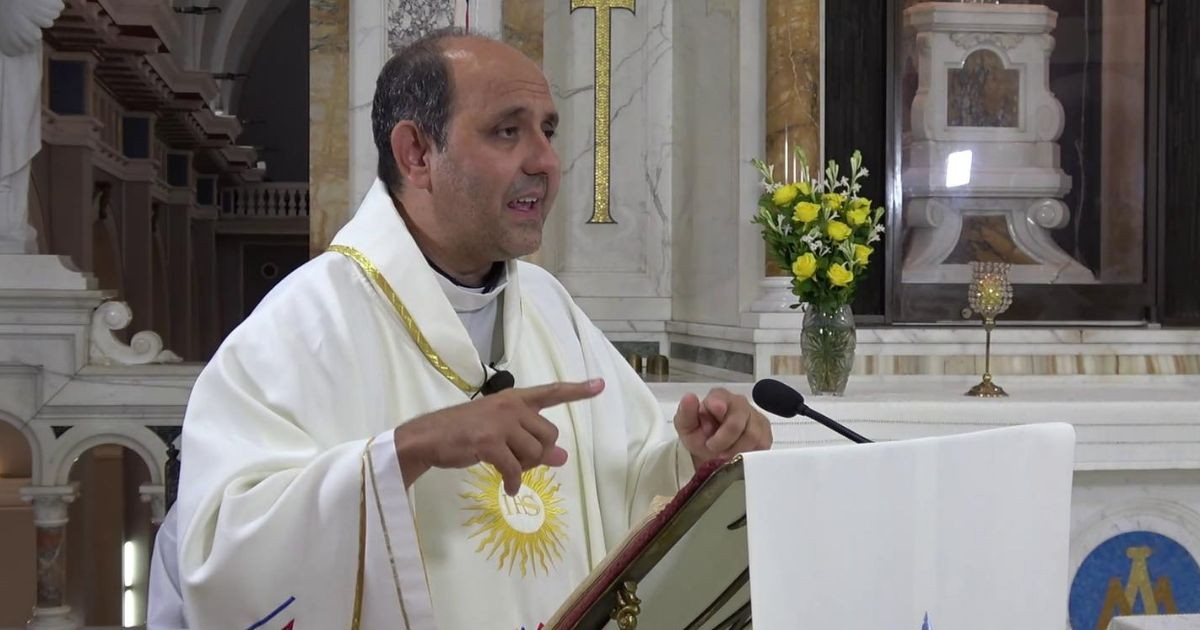
Father Rogelio Deán Puerta, parish priest at El Cobre and Rector of the Basilica Sanctuary of Our Lady of Charity, delivered a homily this Sunday with a strong pastoral and social message. He urged the creation of "those new realities we dream of, that new society we need," echoing the crisis currently facing Cuba.
Drawing on the Gospel of Matthew and the figure of the prophet Jeremiah, Father Deán Puerta reflected on collective fear, accumulated wounds, and the urgent need to heal through love. His homily was shared by the Archdiocese of Santiago de Cuba on social media.
Deán Puerta identified fear as a significant hurdle in today's society, emphasizing that it is not fear itself that is destructive, but the paralysis it causes. "What is genuinely dangerous? Staying in fear, remaining trapped by fear," he stated.
He further highlighted that the deepest fear is "the fear of not loving." He cautioned that those who believe forgiveness or reconciliation make them vulnerable are mistaken; it is precisely these attitudes that allow for the construction of something new.
The rector was candid in assessing society's condition: "I sometimes believe that this society on a global level is destroyed because we never tire of reacting from our limited humanity, from our wounds, and thus nothing good, nothing new, will ever be built."
As a solution, he proposed personal healing: "We cannot heal a society if we do not first have the courage, the bravery to, wherever we are, dare to heal ourselves. When we heal ourselves, our societies heal."
Deán Puerta also emphasized that any legitimate guidance must be rooted in love: "We need guidance, but guidance from love. There are no positive and constructive guides in the church that do not have love as their foundation. Anything built outside of love has nothing to do with Christ or his church."
This Sunday's homily is part of a series of pastoral interventions from the El Cobre Sanctuary that have addressed the Cuban situation with increasing candor. On June 14, the same priest described people as "buried alive, without light, without dreams, without hope" and confessed that "his heart breaks" seeing the suffering of the people.
On May 31, Deán Puerta urged unity among Cubans with the phrase "understanding is urgent," and on May 17, the Archbishop of Santiago de Cuba, Dionisio García Ibáñez, declared from the same sanctuary that "Cuba must change."
In January of this year, Cuban bishops warned of the "risk of chaos and violence" if the crisis persists and called for structural, social, economic, and political reforms.
Deán Puerta concluded his homily by invoking the Virgin of Charity of El Cobre—Cuba’s patron saint, whose image is kept in the sanctuary—as a model of one who "knows suffering" and who, "despite enduring the great injustice of her son's suffering and crucifixion, remained in love."
The priest's final message encapsulated the spirit of his entire reflection: "Sometimes it's important to love without understanding. God may not have all the answers, but in God, there is always all the love."
Understanding the Call for a New Society in Cuba
Why does Father Deán Puerta emphasize love in his homily?
Father Deán Puerta emphasizes love as the foundation for building a new society, suggesting that forgiveness and reconciliation are essential for overcoming fear and creating positive change.
What is the main obstacle identified by Father Deán Puerta in Cuban society?
He identifies fear, particularly the fear of not loving, as a significant obstacle that leads to paralysis and prevents societal progress.
How does Father Deán Puerta propose healing society?
He suggests that societal healing begins with personal healing, emphasizing the need for individuals to have the courage to address their own wounds before society can heal.