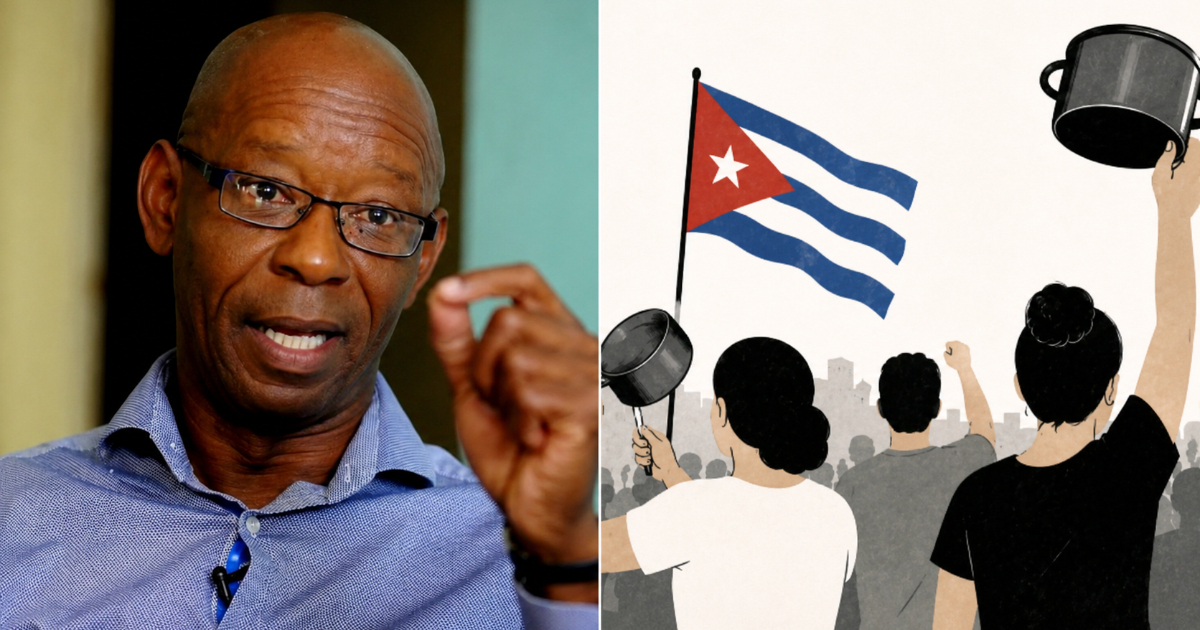
The death threat reported by Manuel Cuesta Morúa following his detention this past weekend reveals more than just a personal attack on the activist—it highlights a significant concern for Cuba's State Security.
According to a statement from the Council for Democratic Transition in Cuba (CTDC), officers involved in the operation against Cuesta Morúa threatened him with a shot to the head if he continued supporting the "pot-banging" protests and encouraging public demonstrations scheduled for July 11.
The severity of the threat is clear. However, the message's focus is equally telling. Instead of targeting partisan activities, opposition meetings, or international ties, the warning centered on the pot-banging protests and public dissent.
Understanding the Rising Concern Over Protests
This detail sheds light on the current mindset of Cuban authorities. In recent weeks, pot-banging has emerged as a prominent form of public discontent, driven by extended power outages, food shortages, deteriorating basic services, and the nation's ongoing economic crisis.
Contrary to traditional opposition methods, these protests often arise spontaneously in neighborhoods plagued by prolonged blackouts. They don't require complex organizational structures, visible leaders, or formal calls to action. The community's accumulated frustration is enough for dozens or hundreds to start banging pots from their homes or take to the streets.
Such spontaneity appears to be a growing concern for the regime. The government has contended with pot-banging protests and garbage fires in various parts of Havana and other provinces in recent months. Many of these incidents are triggered by power outages lasting over twenty hours a day, further fueling societal discontent.
Protests: A Persistent Challenge for the Regime
The Cuban Observatory of Conflicts recorded 1,311 protests in May 2026, one of the highest numbers in recent years, approaching the historical peak reported in December 2025. These figures indicate a consistent trend of civic dissatisfaction that authorities have failed to address through economic solutions or service improvements.
In this context, the specific reference to the "pot-banging" takes on a political dimension beyond Cuesta Morúa's case. The mention of July 11 is also significant, as the date holds symbolic weight since the historic protests of 2021 and remains a rallying point for many sectors of civil society and democratic opposition.
The threat reported by the CTDC suggests that State Security is particularly concerned about the potential for discontent stemming from power outages and the economic crisis to merge with calls for public mobilization.
Beyond Cuesta Morúa's individual situation, the episode reflects a broader reality: the Cuban regime faces an increasingly frustrated society, with protests that, rather than fading, continue to find new avenues of expression.
The warning attributed to State Security agents underscores that the noise of the pots echoes far beyond the neighborhoods where they first began to sound.
Key Questions About Recent Cuban Protests
What is the significance of the "pot-banging" protests in Cuba?
The "pot-banging" protests have become a prominent form of expression against prolonged power outages and economic hardship. They represent a spontaneous and community-driven form of dissent that doesn't rely on traditional organizational structures.
Why is July 11 significant in the context of Cuban protests?
July 11 is significant because it marks the anniversary of the historic protests that began in 2021, serving as a symbolic and rallying date for civil society and opposition movements in Cuba.