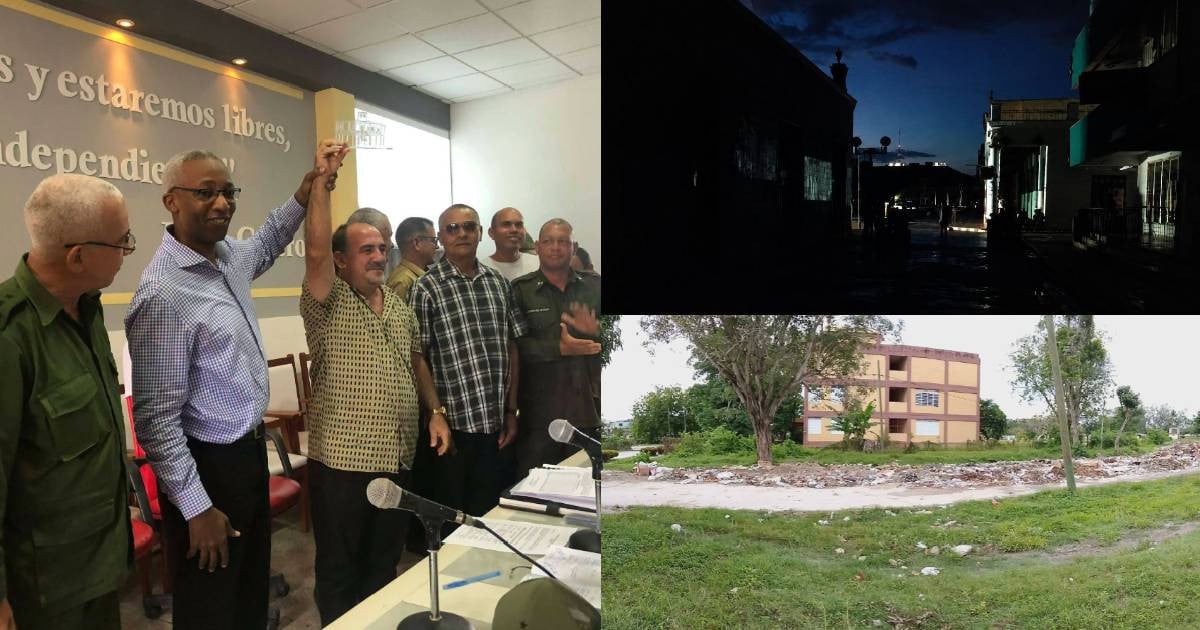
Despite facing severe power cuts, water shortages, and accumulating garbage, the municipality of Holguín was chosen this Friday to host the provincial celebrations for July 26th. This decision has sparked growing criticism among residents.
The announcement came from the Provincial Bureau of the Communist Party and the Government of Holguín, who selected the provincial capital as the site for the National Rebellion Day event. The celebration will mark the 73rd anniversary of the Moncada and Carlos Manuel de Céspedes barrack assaults and honor the centenary of Fidel Castro's birth, as reported by the Cuban News Agency.
Official Justifications vs. Resident Reactions
Authorities justified the choice citing Holguín's status as a surplus municipality, improved export behavior, advancements in educational institutions, food production exceeding targets, and a reduction in crime rates.
However, local reactions were overwhelmingly critical, with residents questioning these so-called achievements in light of their daily struggles. "What accomplishments are we talking about in Holguín? No power, no water, no garbage collection. Is this why we earned the hosting privilege?" commented a user on Radio Angulo's Facebook page.
Others directly questioned the rationale behind the celebration, attributing it more to political maneuvering than genuine progress. "Celebrating July 26 amidst an electrical, food, and medicine crisis," summarized another citizen on social media.
Power Crisis and Basic Services Collapse
The most pressing concern for Holguín residents is whether they will have electricity during the event. The province's Electric Company has acknowledged that many residential areas receive only three hours of power followed by 39 to 40 hours without.
Holguín's energy crisis underscores the depth of its troubles. Despite having 383,180 electric customers and a peak demand of 240 MW, the province only has access to 70 MW, less than 30% of the required capacity.
Ruber Reynaldo González, general director of the Electric Company, admitted that constant disconnections and reconnections are damaging infrastructure, leading to frequent transformer failures.
Compounding the power issues are reports of other essential services deteriorating. Across various municipalities, persistent garbage collection problems, makeshift dumps in public spaces, months-long sewer overflows, and severe drinking water shortages force many families to pay between 2,000 and 4,000 pesos for carted water supplies.
Regional Discontent and Broader Implications
This discontent extends to other recognized territories during the ceremony. Mayarí, another municipality, has seen protests over the lack of electricity and water, with reported outages lasting up to 51 consecutive hours. Residents have publicly denounced the dire living conditions resulting from the collapse of essential services.
While authorities portray the designation as proof of economic and social progress, many citizens see it as further evidence of the disconnect between official rhetoric and the harsh realities they endure in a province ravaged by energy shortages, infrastructure decay, and resource scarcity.
The Energy Crisis in Holguín: Key Questions Answered
What are the current power supply conditions in Holguín?
Holguín is experiencing severe power shortages, with many areas receiving only three hours of electricity followed by 39 to 40 hours without power.
Why was Holguín chosen for the July 26 celebrations?
Authorities selected Holguín as the host for its surplus status, improved export performance, educational advances, food production achievements, and reduced crime rates—despite local skepticism.
How are residents reacting to the announcement?
Many Holguín residents are critical, questioning the rationale behind the celebration amid ongoing crises in power supply, water access, and sanitation services.