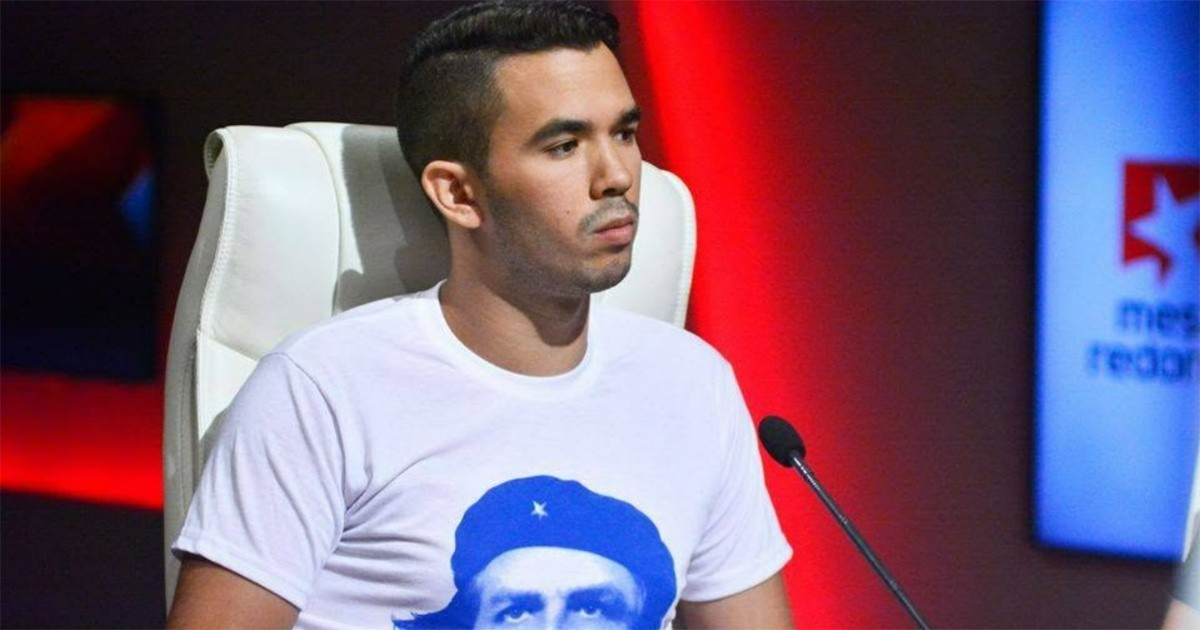
The Youth Communist League (UJC) has replaced Raúl Alejandro Palmero Fernández as the First Secretary of its Provincial Committee in Havana. This change comes exactly one year after Palmero sided with the regime’s oppressive stance during significant university protests, the likes of which had not been seen in Cuba for decades.
This decision was made during an Extraordinary Plenary Session of the UJC's Provincial Committee held on Friday in the capital. The official statement, true to the regime's euphemistic style, described Palmero's departure as a “release from his duties” and indicated that he would take on “new responsibilities” within the Communist Party of Cuba (PCC). This is a common strategy to reassign officials who have fallen out of political favor without publicly acknowledging their demotion.
Danhiz Díaz Pereira has been appointed to replace Palmero. Previously the president of the Marti Youth Movement, Díaz Pereira has built her entire career within the regime’s structures. She has held positions as the First Secretary of the UJC in the Marianao and Plaza de la Revolución municipalities and has been involved in PCC-affiliated student organizations.
Backdrop of Student Unrest
The political implications of this leadership change are tied to events from June 2025. During that time, university students joined a strike against ETECSA to protest a new tariff scheme that limited national recharges to 360 Cuban pesos per month and shifted additional consumption to dollar-denominated packages.
Instead of advocating for the students, Palmero echoed the Federation of University Students (FEU) leadership's statement, which accused “enemies of the Revolution” of trying to manipulate the unrest, thereby supporting the regime's repressive narrative rather than representing the youth base he was supposed to advocate for.
The Extent of the Protests
The protest began on June 4, 2025, at the Faculty of Mathematics and Computer Science at the University of Havana and quickly spread to at least 25 faculties in various provinces. At its peak, less than 5% of the student body attended classes at the University of Havana.
The state apparatus responded in two ways: the State Security threatened the student organizers with summons, potential expulsions, and home visits, while the FEU and UJC blamed external influences for inflaming the conflict.
The official student organization made 40 proposals to ETECSA, but these did not lead to immediate tariff reductions, and the silent repression gradually subdued the movement, as documented by El País.
Continuity in Leadership
Díaz Pereira's appointment, proposed by the UJC's National Bureau, follows the usual pattern of rotating loyal cadres within the youth communist apparatus. Her profile does not suggest any shift in political direction: under her leadership, the UJC will continue to serve as the PCC’s tool for maintaining political control over Cuban youth and preventing future dissent.
Palmero, who is a representative for Arroyo Naranjo in the National Assembly and a member of the UJC's National Bureau, has had a rapid rise within the regime's ranks since he was 23 years old.
Key Questions about UJC Leadership Changes and Student Protests
Why was Raúl Alejandro Palmero Fernández replaced?
Palmero was replaced following his alignment with the regime's repressive stance during major university protests, rather than supporting the students.
Who is Danhiz Díaz Pereira?
Danhiz Díaz Pereira, former president of the Marti Youth Movement, has been appointed as the new First Secretary of the UJC in Havana, with a career embedded in the regime's structures.
What triggered the student protests in June 2025?
The student protests were triggered by ETECSA's new tariff scheme that limited national recharges and forced additional consumption to be made in dollars, sparking widespread discontent.