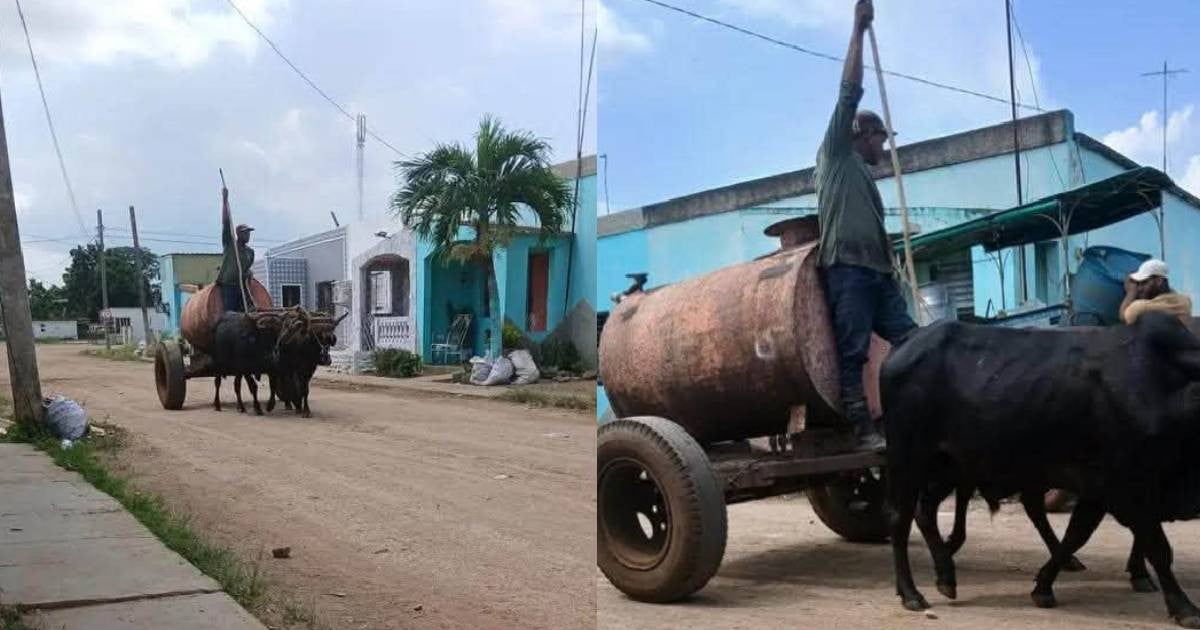
The residents of Real Campiña, a rural area in Aguada de Pasajeros, Cienfuegos, have taken to social media to voice their frustration over a dire situation. They have been without potable water for 27 days and have experienced power outages lasting up to three consecutive days, with no solutions offered by the authorities.
"The community is enduring harsh living conditions, and despite continuous complaints, there are no effective responses or solutions from officials," stated activist Idelisa Diasniurka Salcedo Verdecia on her Facebook profile.
The Root of the Water Crisis
A local resident revealed in comments that the root cause of the water shortage is a malfunctioning turbine, which has been problematic since the previous year.
"It's been 27 days since the turbine that supplied our community broke down. This problem has been ongoing because the equipment has been failing since last year, during which we were without water twice for three-month periods," the resident clarified.
Turning to the Informal Market
With no access to water services, families have been forced to rely on the informal market to meet their needs, Salcedo noted.
The cost of a water tank ranges from 1,000 to 1,500 Cuban pesos, while a tanker truck can cost up to 12,000 pesos, prices that are unaffordable for most households.
Images shared alongside the complaints depict a cart drawn by oxen carrying a cylindrical tank along dirt roads, illustrating the regression in living conditions.
Widespread Hardships Beyond Real Campiña
Comments from locals and Cubans from other provinces indicate that this crisis extends far beyond Real Campiña. A resident from San Antonio de Río Blanco in Jaruco, Mayabeque, described her situation starkly: "We've been without water for 19 days and have no clear information. The taps are dry, plus we have power outages lasting over 24 hours. They're asking for our endurance. It's a slow death."
Another resident from Holguín recounted paying 6,000 pesos for two 1,200-liter tanks and summarized the situation: "We're living in a concentration camp. No salary or pension can cover these expenses."
Desperation is echoed in shorter, yet equally poignant, comments: "This is a horror movie," one person wrote; "Between the power, the water, and sleepless nights, it's enough to drive you insane," another added.
"It's very sad what we're going through, without food, without water, without the basic necessities to survive. We're losing the best years of our lives, and what about our children's future?" a Real Campiña resident lamented, encapsulating the community's sentiment as they await a resolution nearly a month into the ordeal.
National Water and Energy Crisis
The situation in Real Campiña is part of a nationwide water and energy crisis that affects millions of Cubans as of June.
About 87% of the country's water systems rely on the National Electric System for pumping, causing each blackout to simultaneously disrupt water supply.
According to official reports, approximately 2.7 million people have no regular access to drinking water, and millions face intermittent supply, as the hydraulic system operates with only 37% of the required fuel.
In Cienfuegos, the crisis has documented precedents: water often arrives muddy and foul-smelling in several areas of the province due to potential cross-contamination between potable water and stormwater drainage systems, with no effective response from authorities.
Power outages further exacerbate the water crisis, with more than 40-hour blackouts reported in various parts of the country this week, while in Matanzas, residents endured 85 consecutive hours without electricity between June 14 and 17.
Understanding the Crisis in Real Campiña and Beyond
What caused the water shortage in Real Campiña?
The water shortage in Real Campiña is primarily due to a malfunctioning turbine that supplies water to the community. This issue has been ongoing since the previous year.
How are families coping with the lack of water?
Families are resorting to the informal market to purchase water, with costs that are prohibitively expensive for most, such as 1,000 to 1,500 pesos for a tank and up to 12,000 pesos for a tanker truck.