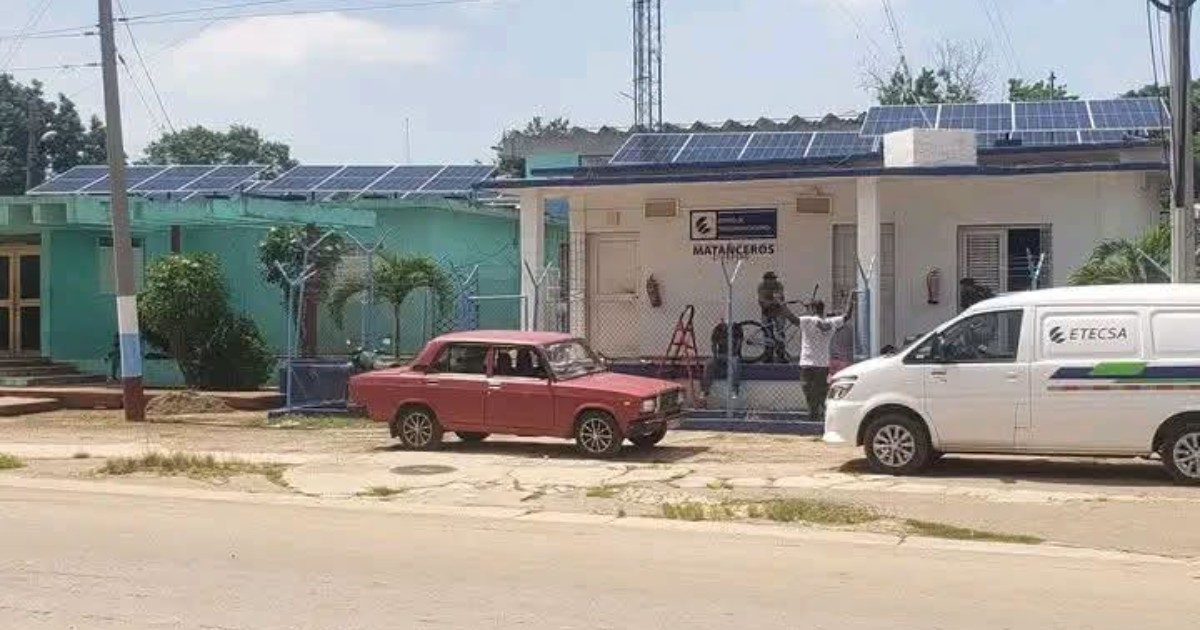
To combat the frequent blackouts plaguing the region, ETECSA has deployed a 24 kW solar panel system at the Telecommunications Center in Limonar, Matanzas province. This initiative aims to keep phone and data services operational, as reported by Periódico Girón on their Facebook page.
The setup includes five batteries, each with a 16 kWh capacity, totaling 80 kWh of storage. It operates independently from the national electricity grid, ensuring functionality even when the National Electric System fails.
This decision underscores the regime's clear priority: safeguarding the infrastructure of its telecommunications monopoly, a revenue generator for the military-controlled GAESA group, while the Cuban populace endures power outages affecting over 70% of telecom customers nationwide.
On the streets, the sentiment is blunt: "We must protect the golden goose that brings in the dollars," a phrase many Cubans use to describe ETECSA's preferential treatment amid the broader energy neglect experienced by society.
Expanding Solar Energy Across Matanzas
Jorge Caraballo, ETECSA's head of investments in Matanzas, announced the launch of a solar panel installation program at the end of May, targeting 30 radio base stations with completion expected by July.
The municipal capitals followed a phased installation: starting with Unión de Reyes, followed by Pedro Betancourt, then Martí, and now Limonar.
Comprehensive Provincial Plan
The provincial strategy features three distinct programs: 18 photovoltaic systems of 2 kW for small tech cabinets in municipalities like Cárdenas, Jovellanos, Jagüey Grande, and Colón; a second phase with kits ranging from five to seven kW for 29 radio base stations; and a third phase with systems between 16 and 24 kW for municipal capitals, including Limonar’s solution.
ETECSA executives in the province justified the initiative by stating, "This shift in the energy matrix seeks to reduce the vulnerability of telecommunications services to interruptions in the national electrical system and prioritizes the use of renewable sources in key technological sites in the territory."
Context of Investment Amidst Crisis
What the official narrative omits is the context surrounding these investments. Cuba is enduring its worst electrical crisis in recent memory, with a deficit peaking at 2,147 MW on May 25 and at least seven total system collapses over 18 months, including a nearly 30-hour nationwide blackout in March of 2026.
While ETECSA fortifies its infrastructure with solar energy, a wave of solar panel thefts has been reported in Santiago de Cuba since May, affecting radio bases and cabinets owned by the company and leaving three nodes out of service on June 13.
The regime has responded by labeling these thefts as sabotage, imposing severe penalties. Yet, the irony is not lost on anyone: Cubans are stealing ETECSA's solar panels because they are among the few accessible energy assets in a country where electricity is a privilege, not a right.
Following the so-called "tariff hike" by ETECSA a year ago, the company collected millions from Cubans and announced in 2026 additional dollar charges to, as they claimed, ensure the sustainability of their services.
Understanding ETECSA’s Solar Panel Initiative
What is the purpose of installing solar panels at ETECSA facilities?
The solar panels are installed to maintain operational phone and data services during frequent power outages, ensuring ETECSA's infrastructure remains functional even when the national grid fails.
How does ETECSA's solar initiative impact Cuban society?
While ETECSA secures its telecommunications infrastructure with solar energy, the broader Cuban society faces neglected energy needs, with over 70% of telecommunications customers affected by power outages.
What are the risks associated with ETECSA's solar panels?
There have been thefts of solar panels in Santiago de Cuba, which disrupts services and highlights the scarcity of accessible energy resources for the general population.