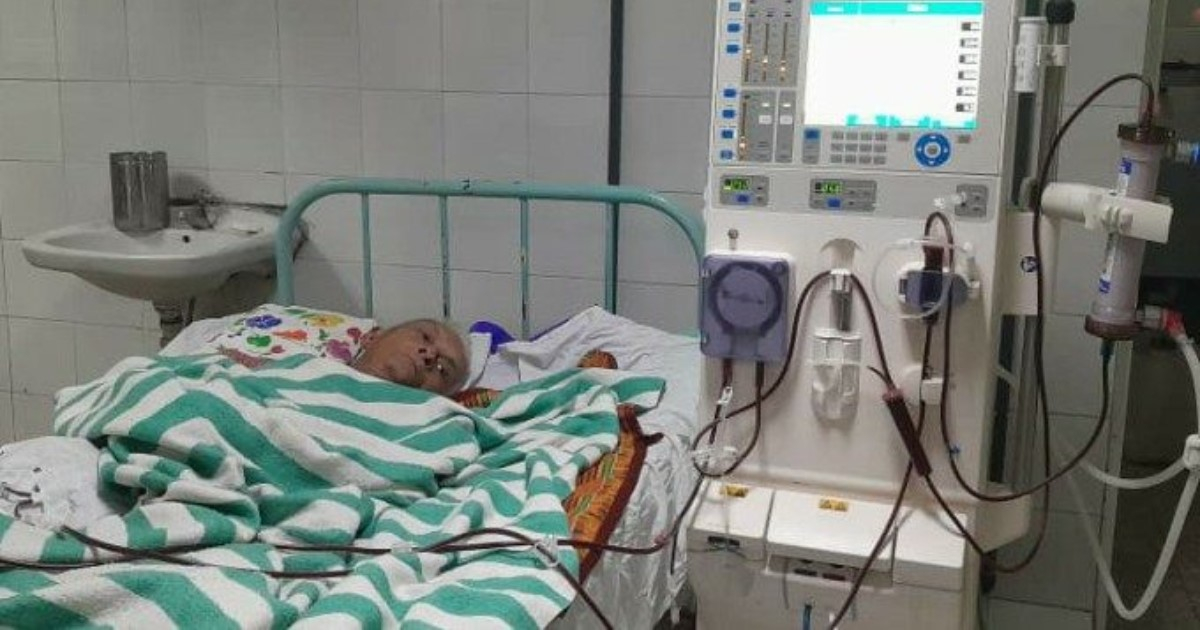
Patients suffering from kidney disease at the Manuel Ascunce Domenech Provincial Hospital in Camagüey have been left without hemodialysis treatment for almost a week. This disruption has occurred because the essential chemical supplies needed to operate the dialysis machines have run out, as reported by independent Cuban journalist José Luis Tan Estrada on Saturday.
The interruption started early on Saturday, June 14, during the 2 a.m. shift. The root of the problem is the shortage of acid concentrate and bicarbonate, crucial components mixed with purified water to create the dialysate fluid that is vital for the machines to function.
One frustrated patient summed up the dire situation: "The issue with the acid concentrate and bicarbonate persists. They're going to kill us all en masse."
Tan Estrada highlighted the severity of the situation: "A kidney patient without hemodialysis cannot wait. Their body can collapse within hours."
Currently residing in exile in Mexico, the journalist, originally from Camagüey, challenged the authorities: "Where is the hospital management? Where is the provincial Public Health? Where are the officials while patients wait their turn to die?"
This situation in Camagüey is not an isolated incident. According to Luis Pérez-Oliva Díaz, president of the Cuban Society of Nephrology, Cuba has around 3,000 patients reliant on hemodialysis across 56 units nationwide.
In recent months, transport services for hemodialysis patients have been halted in several provinces—Las Tunas, Granma, Pinar del Río, Ciego de Ávila, and Villa Clara—due to fuel shortages. In May, the government attempted to address this by announcing the introduction of 200 electric vehicles for patient transport, a measure many see as inadequate given the scale of the crisis.
The Camagüey Provincial Hospital itself has a troubling history of complaints from 2026: flooded basements, exposed wiring, mold, and rodent infestations, as documented by the Cuban Observatory for Human Rights. In February, the hospital admitted it lacked norepinephrine—a critical drug for treating septic shock—when a 26-year-old patient died.
The official diagnosis for Cuba's healthcare system is grim. In February 2026, Public Health Minister José Ángel Portal Miranda confessed that the system was "on the brink of collapse," with the Ministry of Public Health acknowledging disruptions in essential services, including hemodialysis, due to fuel shortages.
As authorities remain silent, kidney patients in Camagüey are still without treatment and without a clear date for the resumption of supply deliveries.
Key Concerns About Hemodialysis in Cuba
What are the essential components required for hemodialysis machines?
Hemodialysis machines require acid concentrate and bicarbonate, which are combined with purified water to create the dialysate fluid necessary for the machines to function.
How many patients in Cuba rely on hemodialysis?
Cuba has approximately 3,000 patients who depend on hemodialysis, distributed across 56 units throughout the country.
What has been the government's response to the transport issues faced by hemodialysis patients?
In May, the government announced the introduction of 200 electric vehicles to facilitate the transport of hemodialysis patients, a measure considered insufficient compared to the enormity of the problem.