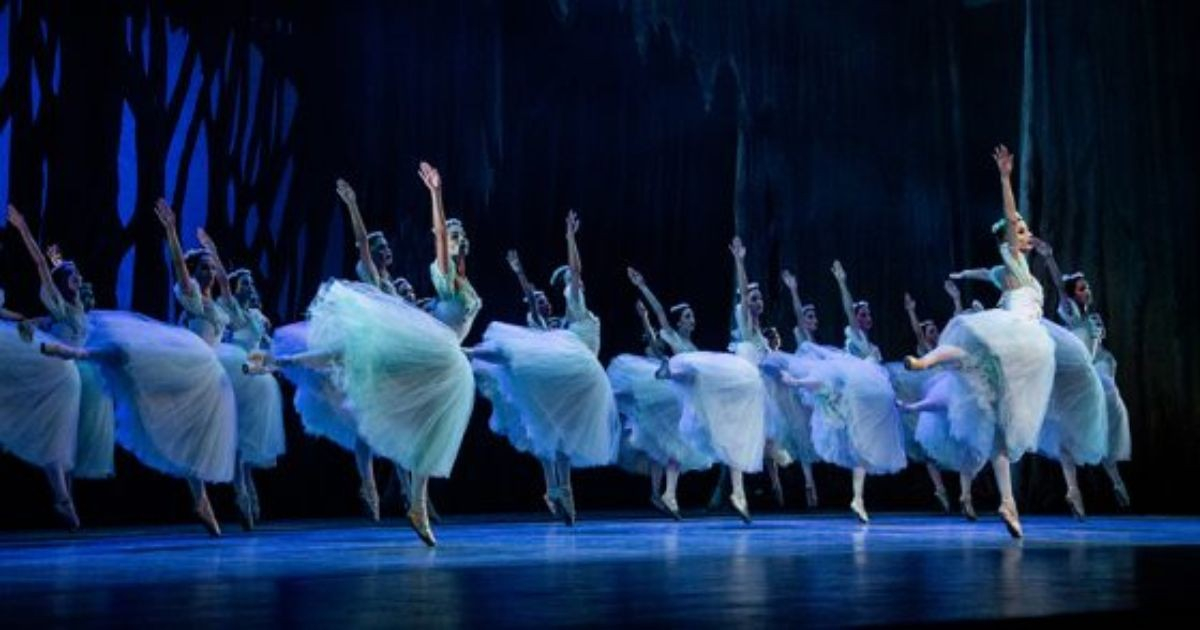
The National Ballet of Cuba announced the cancellation of two scheduled performances of Giselle on June 27 and 28 at the Avellaneda Hall of the National Theater. This decision, confirmed by the state-run outlet Cubadebate, was due to a malfunction in the theater's air conditioning system, which couldn't be repaired in time.
On June 19, the company's Press Department released a brief statement: "We regret to inform that the two performances of Giselle by the National Ballet of Cuba, originally set for Saturday, June 27 and Sunday, June 28, have been canceled due to the breakdown of the air conditioning system at the National Theater. Despite all efforts, the necessary repairs could not be completed to ensure the proper execution of the show."
Significance of the Canceled Shows
The canceled performances were of significant symbolic importance. The June 27 show was dedicated to the Cuban Academy of Language in honor of its centennial, while the June 28 show marked the 185th anniversary of Giselle's world premiere in Paris on June 28, 1841. Both events were scheduled for 5:00 p.m., with tickets available starting June 23.
The announced cast included prominent figures from the company: Alianed Moreno and Ányelo Montero for Saturday's performance, and Anette Delgado with Montero for Sunday, all under the general direction of Viengsay Valdés, who has led the National Ballet of Cuba since January 2020.
Broader Cultural Impact
This cancellation is not an isolated incident within Cuba's cultural scene. In May 2026, the Havana Grand Prix of Ballet was postponed due to power outages and pending repairs at its venue, with rescheduling set for July 2027. This reflects a recurring pattern: the nation's cultural infrastructure is crumbling amidst an unprecedented energy crisis.
The National Theater of Cuba, located in Havana's Plaza de la Revolución and inaugurated on September 3, 1979, had shown signs of deterioration even before this breakdown. In March 2023, leaks were reported during a performance, with both artists and instruments exposed to rain inside the venue. Similarly, the Gran Teatro de La Habana Alicia Alonso, another iconic venue, was closed in February 2023 due to termite damage and underwent further repairs in October 2025 due to additional structural issues.
Energy Crisis Exacerbates Challenges
The energy situation surrounding this suspension is dire. During the week of June 19, the Electric Union reported a deficit exceeding 2,000 MW against a demand of 3,050 MW, leading to blackouts affecting 65% of the country. Between 10 and 11 thermoelectric units were out of service, representing nearly 60% of the national power grid. The Antonio Guiteras thermoelectric plant, the largest in Cuba, experienced 11 disconnections by 2026.
Ordinary Cubans are bearing the brunt of this crisis. A Cuban content creator reported enduring 42 consecutive hours without electricity and water, summarizing the ordeal with a stark statement: "They are robbing life from us all." In Matanzas, residents faced outages lasting up to 85 hours, while in Havana, blackouts extended to 22 hours daily, with extreme cases of only 20 minutes of electricity throughout an entire day.
The lack of power also leads to water shortages: 87% of Cuban aqueducts rely on electricity for pumping, leaving nearly 2.7 million people without regular water supply. Residents of Granma pleaded with their Communist Party leader for a concession that underscores their desperation: "We want at least three hours of light."
Public Reaction and Future Prospects
Cubans took to social media to express their frustration over the cancellation of the Giselle performances, pointing out that the air conditioning failure at the National Theater is just another symptom of the widespread collapse. Some remarked on the impossibility of ensuring minimum standards in any public space. Living in the Island has become synonymous with counting "the minutes of respite a fan provides," as one Cuban, ironically named Giselle Rodríguez, recently put it on Facebook.
No new date has been set by the National Ballet of Cuba for the postponed performances.
Critical Questions on Cuba's Energy Crisis
What caused the cancellation of the Giselle performances?
The performances were canceled due to a malfunction in the air conditioning system at the National Theater, which couldn't be repaired in time.
How is the energy crisis affecting cultural events in Cuba?
The energy crisis is causing frequent blackouts, leading to event cancellations and worsening the condition of cultural infrastructure due to lack of necessary repairs.
What is the state of the National Theater of Cuba?
The National Theater of Cuba is experiencing significant deterioration, as evidenced by a recent air conditioning breakdown and previous issues such as leaks during performances.