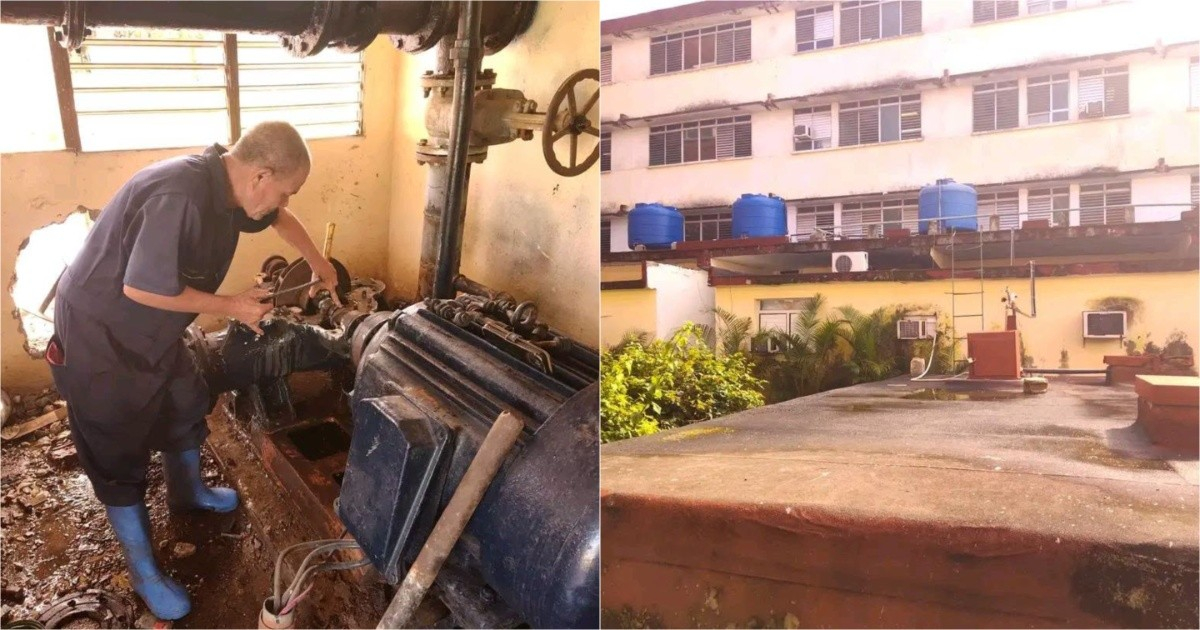
The Arnaldo Milián Castro Provincial University Clinical Surgical Hospital in Santa Clara, the premier healthcare facility in Villa Clara, faced a critical water shortage lasting more than 72 hours due to the breakdown of its pumping system turbines. This alarming situation was highlighted in a report received on June 17, describing dire sanitary conditions for both patients and medical staff.
During this period, the hospital experienced complete water outages at various times. Despite the regime's official narrative attempting to downplay the severity of the issue, reports from inside the facility painted a different picture.
According to eyewitness accounts, surgeons were forced to wash their hands with just a small bucket of water, while clinical doctors had no water access at all. "Surgeons had to cleanse their hands with a tiny amount of water, patients collected rainwater for bathing, and the price of bottled water skyrocketed by 100 pesos, only to run out," the report detailed.
Patients resorted to gathering rainwater for personal hygiene and flushing toilets, which deteriorated over time as they could not be cleaned. The hospital's small business unit took advantage of the crisis, raising the price of bottled water from 220 to 350 pesos—approximately half a dollar and 12.5% of a Cuban minimum wage—yet the supply was quickly depleted.
The whistleblower, with direct access to an angiologist at the hospital, warned that such issues were not new: "Patients were already contracting pseudomonas due to poor sanitary conditions; this is just another layer of collapse. In my opinion, the public health system has long been in a state of collapse, even if they refuse to acknowledge it."
The report also highlighted a chronic shortage of surgical gloves. It recounted a previous incident where a specialist had to manually drain a purulent wound after being told no gloves were available, performing the procedure barehanded.
On June 19, the Cuban News Agency, a state-run media outlet, claimed the issue had been resolved. Dr. Leydi Saray Rodríguez, General Director of Health in Villa Clara, stated that "water supply stability has been restored." Dr. Esteban Ring, the hospital director, told official media that "intensive care units and operating rooms continued to function," with limited water supply reaching only the first and second floors through a single pump.
This narrative conflicted with internal testimonies describing a total water supply collapse throughout the building, not just on the upper floors.
Systemic Issues in Cuban Healthcare
This incident is not isolated. Cuba's healthcare system teeters on the brink of collapse, a fact acknowledged in February by Health Minister José Ángel Portal Miranda in an AP interview. In April, the UN reported over 96,000 postponed surgeries in Cuba, including more than 11,000 involving children. It also noted that more than 80% of Cuba's water pumping equipment relies on electricity, highlighting the structural vulnerability of the nation's hospitals to water shortages.
During the same period, 461 out of 651 essential medications were unavailable in state pharmacies, and infant mortality reached 9.9 per 1,000 live births in 2025.
Earlier this year, the Arnaldo Milián Castro Hospital made headlines by disclosing international hemodialysis costs in response to patient complaints about hepatitis outbreaks and resource mismanagement.
The whistleblower accurately predicted the regime's response: "They will likely seek a solution if the issue gains enough attention; they are quite predictable." Just two days after the report surfaced, the regime announced repairs in the presence of the provincial vice governor and Villa Clara's top authorities.
Understanding the Water Crisis at Villa Clara Hospital
What caused the water shortage at the Arnaldo Milián Castro Hospital?
The water shortage was caused by the failure of the hospital's pumping system turbines, leading to a complete water outage for over 72 hours.
How did the hospital cope with the water crisis?
Surgeons had to wash with minimal water, patients collected rainwater for hygiene, and the price of bottled water increased significantly due to demand.
Has the water issue been resolved at the hospital?
According to state media, the water supply has been stabilized, although internal reports suggest ongoing challenges.