This past Friday, a Cuban journalism student publicly criticized the recent economic reforms, arguing that the stagnation in Cuba was more a result of political decisions than external limitations.
The student's social media post, made by Gabriel Hernández, sparked significant reactions for its sharp critique of Cuba's political and economic model. This came just a day after the National Assembly approved a package of 176 reforms aimed at restructuring the nation's economy.
Hernández wrote, "These changes could have been implemented long ago, but they are happening now because it either benefits them or they have no other option." He suggested that the newly announced reforms dismantle the official narrative that has long blamed the national crisis primarily on the U.S. embargo.
According to Hernández, the approval of these reforms reveals that "the people were never the reason for any aspirations to improve" and that there was a deliberate resistance to altering fundamental aspects of the system. "Yesterday proved the capability to bypass the blockade and open up," he stated.
Critique of Socialist Rhetoric
The student also challenged the regime's socialist rhetoric. He argued that several of the approved economic measures contradict principles that the state itself has defended for decades.
"It's about time they eliminate that socialism is irrevocable," he remarked, questioning the existence of companies that sell products inaccessible to a large part of the population.
In his reflection, Hernández painted a picture of reality marked by prolonged blackouts, food shortages, urban decay, and dependence on remittances from abroad. He claimed that without familial support from other countries, many Cubans find it impossible to maintain normal living conditions.
Concerns About Higher Education
The young man also raised concerns about higher education. He criticized virtual learning amid power outages and connectivity issues, rejected the notion of completely free education, and denounced the limitations faced by aspiring journalists who wish to practice their profession independently.
"When I graduate, the very laws of my country will prevent me from practicing free journalism, without following the dotted line," he wrote.
Healthcare and Living Conditions
Although he acknowledged the medical care received after heart surgery, Hernández contrasted his experience with the difficulties faced by Cuban patients, doctors, and families.
He also criticized the living conditions in university dormitories, affected by power cuts and shortages.
This denunciation aligns with complaints from Cuban university students to the Minister of Higher Education made in March 2026, which received no concrete response.
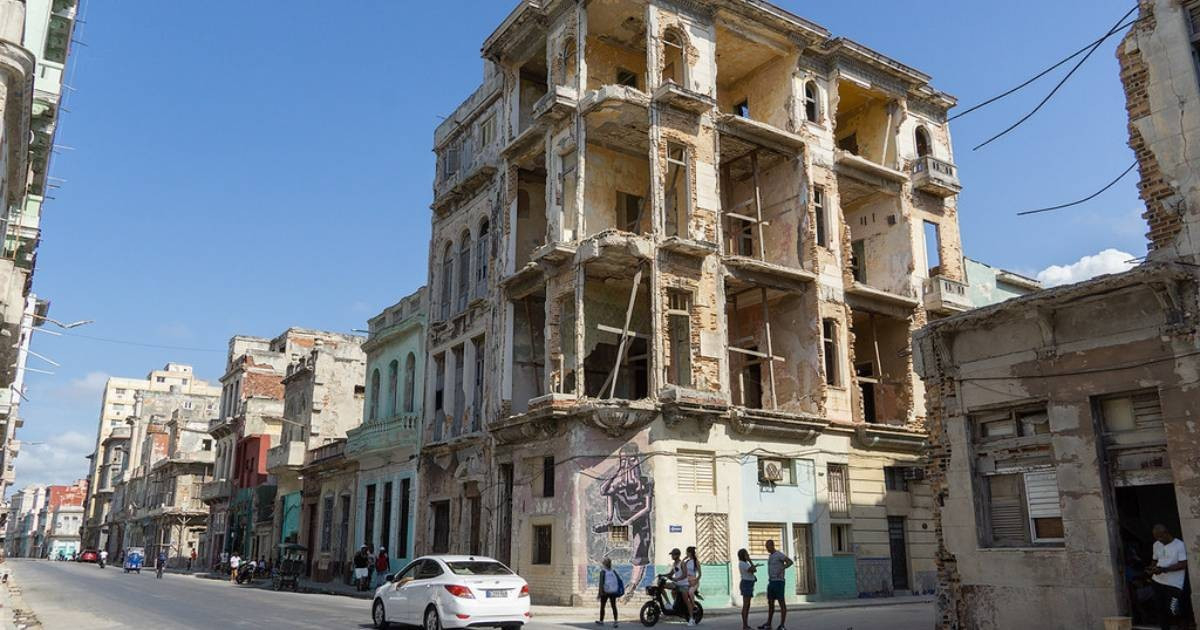
The post concluded with a general critique of the country's state, describing it as a nation marked by accumulated garbage in the streets, crumbling buildings, lack of water, the spread of diseases, vulnerable elderly, and the absence of spaces for expressing public dissatisfaction.
While he rejected any scenario of foreign intervention, Hernández maintained that international pressure ultimately influenced the adoption of reforms that, in his opinion, should have been implemented years ago.
His post concluded by directly pointing to external pressure as the catalyst for change: "Good thing the U.S. pressure made them do something, right?"
The student's reflection resonated with an admission by the ruling Miguel Díaz-Canel during the Communist Party Central Committee Plenary: "There are obstacles that do not come from outside or from blockades," acknowledging delays, bureaucracy, and postponed decisions for years.
Nevertheless, Hernández expressed doubts about the real impact of the measures and warned that they might only end up benefiting privileged sectors. "I hope I'm wrong," he concluded.
Cuban economist Rolando Luis Pérez Vizcaíno described the political system in April as a "stopped train pretending to move," an image that Hernández's text transforms into a citizen's argument with a name and face.
Frequently Asked Questions about Cuban Economic Reforms
What recent reforms were approved by the Cuban National Assembly?
The Cuban National Assembly recently approved a package of 176 reforms aimed at restructuring the country's economy.
Why does Gabriel Hernández criticize the Cuban government's response?
Hernández criticizes the Cuban government for prioritizing political interests over the welfare of its people, suggesting that reforms could have been implemented earlier to address the national crisis.
How does Hernández view the impact of international pressure on Cuba?
Hernández believes that international pressure, particularly from the United States, played a significant role in prompting the Cuban government to implement necessary reforms.