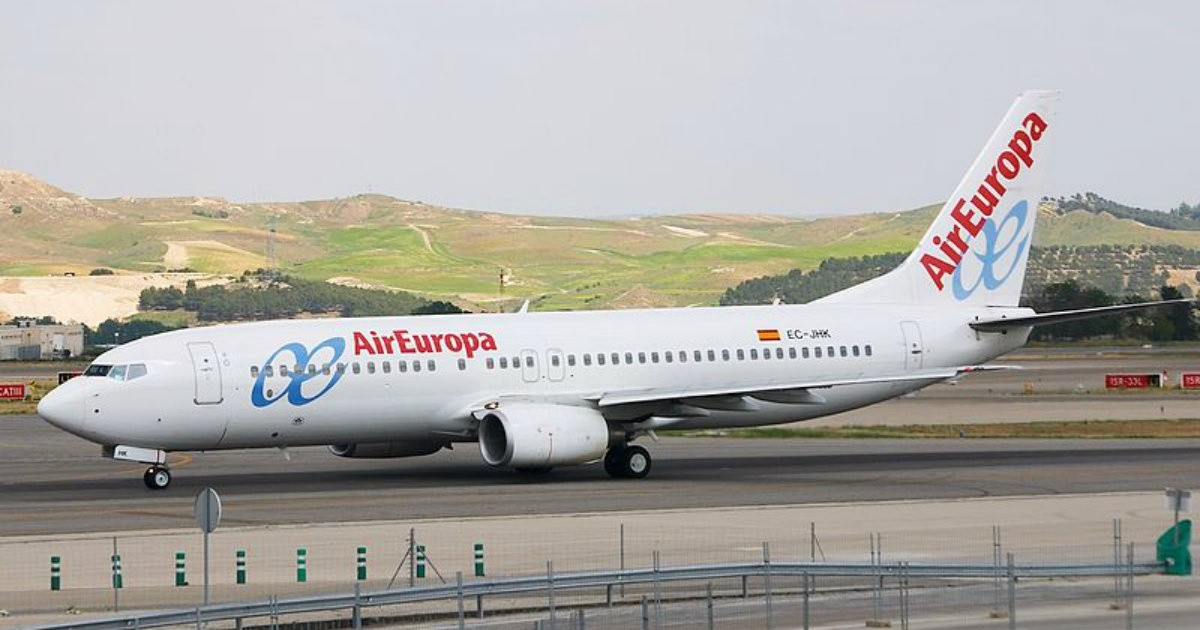
Air Europa announced on Friday an increase in its weekly flights on the Madrid-Havana route to four, starting in July, as confirmed by the company to Europa Press.
This move solidifies the airline as the sole direct air link between Spain and Cuba, at a time when the island is experiencing its most severe tourism downturn in decades.
Currently, Air Europa operates three weekly flights—on Wednesdays, Saturdays, and Sundays—and the new service will add a fourth day starting next month.
Air Europa Stands Alone
While Air Europa expands its operations, other Spanish airlines have been withdrawing from Cuba one after another.
Iberia ceased its direct Madrid-Havana route on June 1, 2026, after gradually reducing its frequencies since April.
The company described this measure as one that "exclusively affects Cuba, due to its exceptional situation," and did not rule out a possible return in November if conditions improve.
World2Fly, part of the Iberostar group, operated its last flight on May 20, and Cubana de Aviación canceled its link with Spain on May 12, citing risks from the Executive Order signed by the Trump administration on May 1, 2026.
In total, at least 11 international airlines have suspended flights to Cuba this year, with over 1,700 flights canceled.
The list includes Air Canada, WestJet, Sunwing, Air Transat, LATAM Peru, Magnicharters, Air France, Rossiya, Nordwind, and Turkish Airlines.
Skyrocketing Prices and Limited Options
The dramatic reduction in available flights has led to unprecedented price hikes.
A one-way ticket from Havana with Air Europa can exceed 800 euros—and in some cases, surpass 2,000 dollars—while round-trip flights in June and July have approached 4,000 euros.
From Madrid, only Air Europa and Air China (on its Beijing-Madrid-Havana route with two weekly frequencies on Wednesdays and Saturdays) offer a direct connection to the island.
As part of recent operational adjustments, Air Europa changed its refueling stop on return flights from Havana: as of June 13, planes now stop in Punta Cana (Dominican Republic) instead of Santo Domingo, where they had been refueling since February 2026.
Structural Causes of the Crisis
The operational trigger for the airline exodus was NOTAM A0356/26, issued on February 9, 2026, which warned of the unavailability of Jet A-1 fuel at nine Cuban international airports, including Havana's José Martí.
The alert was extended until at least April 10.
The underlying cause is the disruption of Venezuelan oil supplies, which covered two-thirds of Cuba's imports, worsened by Trump administration sanctions and the cessation of Pemex shipments.
Cuba produces only about 40,000 of the 110,000 barrels per day it needs.
The impact on tourism has been devastating: in the first four months of 2026, the island received just 328,608 international visitors, a 55.8% year-on-year drop, with hotel occupancy plummeting to 18.9%. The Meliá and Iberostar chains have also abandoned dozens of hotels on the island in compliance with U.S. sanctions.
Regarding future planning, Air Europa warned that "the schedule we have planned from November is an initial plan that could be adjusted based on these factors," leaving open the possibility of further cutbacks if the situation in Cuba does not improve.
Understanding Cuba's Tourism and Aviation Challenges
Why is Air Europa increasing its flights to Cuba?
Air Europa is increasing its flights as the sole direct air link between Spain and Cuba, despite a significant tourism crisis on the island.
What has caused the airline exodus from Cuba?
The exodus is primarily due to fuel shortages, exacerbated by political factors like U.S. sanctions and disruptions in Venezuelan oil supplies.
How has the tourism sector in Cuba been affected?
Tourism has suffered drastically with a 55.8% drop in international visitors in early 2026, leading to low hotel occupancy rates and the exit of major hotel chains.