Giselle Rodriguez, a Cuban citizen, took to Facebook to express the immense frustration shared by countless Cubans who endure up to 20-hour daily power outages amidst the island's severe energy crisis.
"Twenty hours in darkness, sweltering heat that tests both body and mind. It's not just about the lack of electricity; it's a blatant disregard for basic human life," Rodriguez wrote, encapsulating a dire situation the government under Miguel Díaz-Canel has failed to resolve.
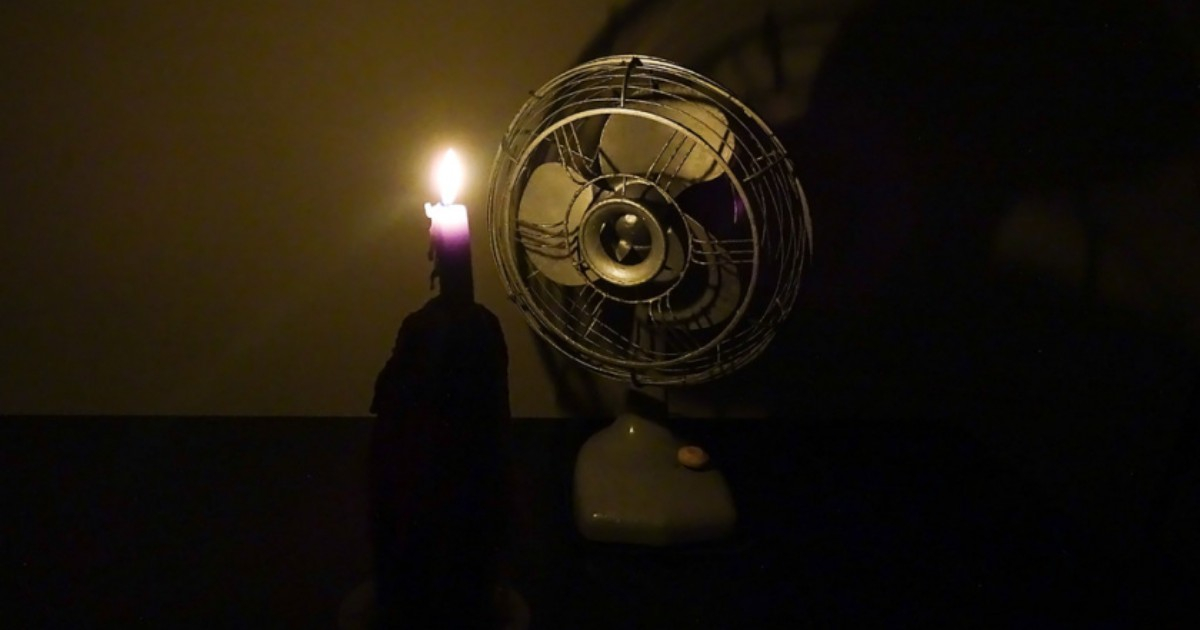
"Living by the minutes a fan grants us isn't living. It's an invisible strain, a daily torture that drains energy, patience, and dreams," she continued.
The Toll of Incompetence and Neglect
Rodriguez emphasized that while the heat is unbearable, the real pain stems from the incompetence of those in charge. She reminded everyone that the people have the right to rest, work, and live without their days being reduced to mere survival.
"There are limits that human resilience shouldn't be forced to cross. Living in perpetual blackout is not viable. Enough of this neglect!" she asserted.
She directly criticized the government: "No one, absolutely no one, has the right to condemn us to live in misery and exhaustion just because they are unwilling or unable to solve the country's fundamental problems."
A Crisis Beyond Power Outages
Rodriguez warned of the deeper danger posed by this situation: "The gravest threat isn't just the 20-hour blackouts; it's the expectation that we accept them as the norm."
Her message concluded with a sentiment that echoes the exhaustion of a worn-out society: "Abuse thrives on silence and complacency. But our patience has run out. We will not become accustomed to darkness, as we are meant to live with light, dignity, and peace. Enough with normalizing what is fundamentally unacceptable!"
Staggering Numbers and Human Impact
The statistics support her outcry. On Friday, the Unión Eléctrica (UNE) reported a mere 970 MW available against a demand of 2,650 MW, leaving 1,650 MW unmet. On Thursday, the projected shortfall exceeded 2,000 MW.
This isn't a temporary issue: 10 to 11 thermoelectric units remain offline, nearly 60% of the nation's generating capacity. Cuba's largest plant, the Antonio Guiteras, has faced 11 shutdowns this year, including five within just five weeks.
The human toll is devastating.
In Matanzas, residents reported outages exceeding 72 hours, with some circuits enduring up to 85 consecutive hours without power. In Santiago de Cuba, the local electric company admitted it couldn't even assure two hours of power daily in some areas. In Havana, entire neighborhoods experience 20 to 24-hour daily cuts.
Social Unrest and Desperation
All of this occurs amid temperatures ranging from 75°F to 88°F with high humidity, making nights unbearable. Families have resorted to camping on Guanabo Beach to escape the heat within their homes.
The lack of electricity also disrupts water supply, food preservation, school operations, and internet access. The telecommunications company ETECSA admitted that power outages are leaving phone services down.
Social media is flooded with expressions of anger, which have spilled out into the streets. Thursday and Friday witnessed cacerolazos and protests in Havana neighborhoods, with streets being blocked in defiance.
Understanding Cuba's Power Crisis
What is causing the power outages in Cuba?
Cuba is facing severe power outages due to a combination of outdated infrastructure, lack of maintenance, and a substantial portion of the country's thermoelectric units being offline. This has led to a significant gap between electricity demand and supply.
How are Cubans coping with the power outages?
Cubans are struggling to cope with the power outages by resorting to extreme measures, such as sleeping in tents on beaches to escape the heat in their homes. The lack of electricity is affecting all aspects of life, including water supply, food preservation, and communication.
What has been the public response to the crisis?
The public response has been one of mounting frustration and anger. Social media is rife with complaints, and there have been public protests, known as cacerolazos, in Havana and other cities as citizens demand an end to the power crisis.