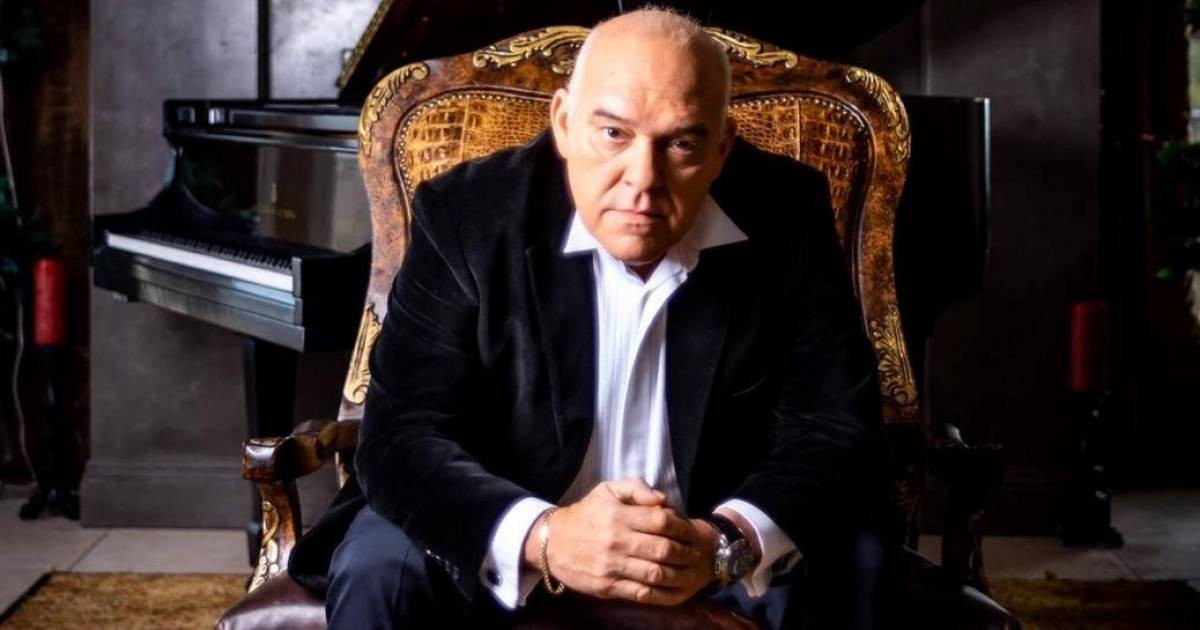
Renowned baritone and cultural advocate Ulises Aquino Guerra took to Facebook to criticize a statement made by Miguel Díaz-Canel during the Extraordinary Plenary Session of the Central Committee of the Communist Party of Cuba. Díaz-Canel had remarked, "What depends on us, we must change ourselves, and we need to change it now."
Aquino’s response was both direct and scathing.
Aquino's Critical Inquiry
"If it was up to us, why wasn't it changed earlier?" Aquino wrote, questioning the regime's credibility and the long delay in taking action. He added, "People have been telling you for years. Did they have to take us through this ordeal to finally understand?"
While acknowledging that the proposed reforms are a step forward, Aquino deemed them insufficient: "There are many things missing for the previous conditions to change. What guarantees are there? Will there be a separation of powers?"
Díaz-Canel's Admission and Aquino's Skepticism
During the meeting, Díaz-Canel conceded that internal factors contribute to the crisis and announced a reform package that the National Assembly formalized into 176 measures across 23 strategic areas. However, for Aquino, the delay calls for tangible political consequences: "If there were so many hurdles and you didn’t remove them despite knowing the consequences, the honorable and logical action would be to resign."
Rejection of External Pressures
Aquino also dismissed the notion that reforms are a response to external pressures—specifically countering Díaz-Canel's claim that "we are not doing this due to pressure from the Yankees." He emphasized that the Cuban people should not allow exile communities to dictate terms either.
"This wasn't about pleasing Trump or Rubio; it was about listening to us. Nor is it about accepting norms from the exiles or from you. It’s about everyone's right to create those norms and conditions," Aquino stressed.
Critique of Leadership and Priorities
One of Aquino's most pointed criticisms targeted Raúl Castro, who participated via videoconference and signed the reform proposals: "These changes depended on the signature of the true leader, and you approve the type of Socialism that suits you."
According to Aquino, this dependency underscores the project's incompletion: "We need those same openings and freedoms to think, express, and live. Therefore, it can't function well; there's still much that needs to be done."
The artist also questioned the regime’s priorities with a phrase that captures the sentiment of countless Cubans: "It’s very sad that they care more about what they call Socialism than about the people."
He concluded his post with three words summarizing his view on decades of inaction: "They started backwards."
A History of Criticism
Aquino’s critical stance against the regime is well-documented. In 2012, the government shut down his community project, Ópera de la Calle—founded in 2006 with over 200 artists and 130 families reliant on it—on charges of "enrichment." Aquino blamed the closure on the PCC's Ideological Department.
Last week, Aquino published an article titled "The Cuba I Want," demanding an end to political exclusion, a popular consultation, and a government that accommodates all political views.
His skepticism is not an isolated sentiment.
Economist Pedro Monreal described the reforms as "belated pragmatism" and warned that Cuba missed the opportunity for gradual reforms akin to those in China or Vietnam. Meanwhile, as the Plenary took place, reports of protests emerged from Santiago de Cuba, Santa Clara, and several Havana neighborhoods.
Understanding the Reforms and Public Reaction
What prompted Ulises Aquino's criticism of the Cuban regime?
Ulises Aquino criticized the Cuban regime for its delayed response to necessary reforms, questioning why changes weren't made earlier despite years of public demand and the evident consequences of inaction.
What are the main points of Aquino’s critique regarding the reforms?
Aquino argues that the announced reforms are insufficient and lack guarantees for genuine change, such as the separation of powers. He also asserts that the reforms should not be influenced by external pressures or exiles but should reflect the will of the Cuban people.
How has the public responded to the announced reforms in Cuba?
The public response to the reforms has been mixed, with skepticism from figures like Ulises Aquino and economist Pedro Monreal. Additionally, protests have been reported in various Cuban cities, indicating dissatisfaction with the government's actions.