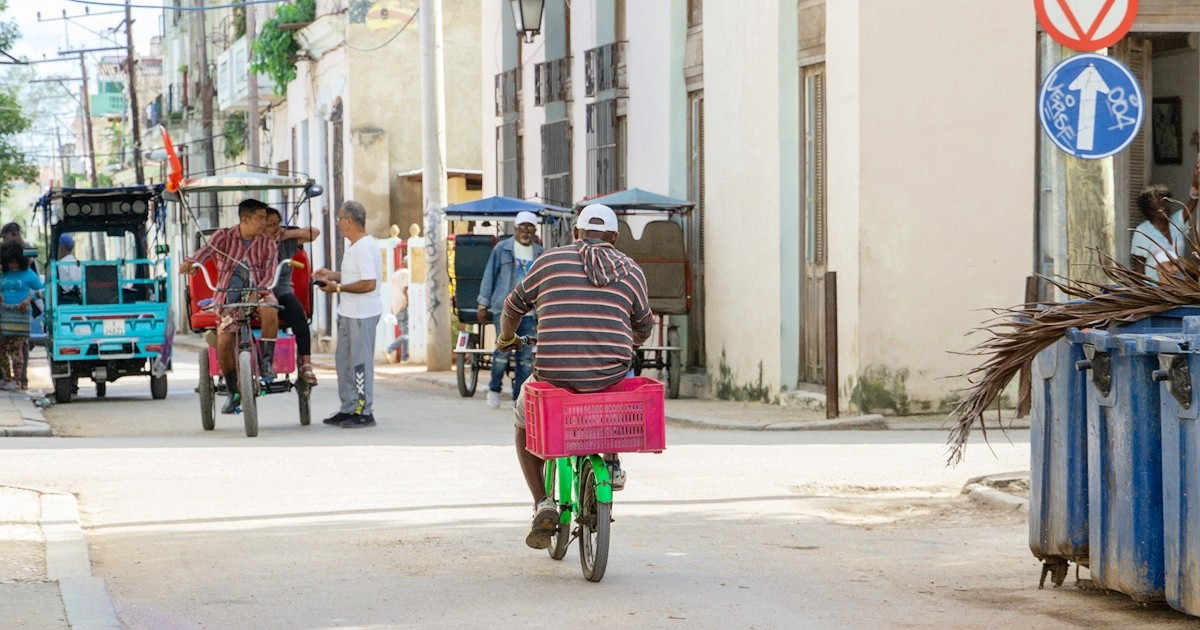
The Cuban regime has recently sanctioned street vending of goods such as coffee, cigarettes, and second-hand items, as part of a comprehensive set of economic reforms ratified during the Third Extraordinary Session of the National Assembly of People's Power (ANPP), which took place at the Convention Palace in Havana.
Prime Minister Manuel Marrero Cruz introduced a document containing 176 proposed reforms organized around 23 core themes, which the government itself has described as the most extensive since the reforms of the Sixth Congress of the Communist Party of Cuba in 2011.
The session included virtual participation from Army General Raúl Castro, who endorsed the changes, and the attendance of President Miguel Díaz-Canel in person.
Formalizing a Long-Standing Practice
This authorization effectively legitimizes a practice that had been informally conducted, serving as a vital lifeline for many Cubans, especially elderly individuals receiving minimal pensions.
The regulation of street vending has been inconsistent: in 2017, the government eliminated the "carretillero" license and halted issuing new permits for several self-employment categories.
In 2020, Resolution 13 reinstated the role of "street vendor of goods" within the labor system, albeit with certain limitations. More recently, Decree-Law 91/2024 imposed fines up to 72,000 pesos for those operating without a license.
Broader Economic Measures
Apart from street vending, the approved package encompasses other significant measures: the removal of the 100-worker cap for private micro, small, and medium enterprises (MSMEs), allowing Cubans residing abroad to invest on equal terms through Decree-Law 117/2026, and reducing the number of ministries from 27 to between 20 and 21.
Additionally, municipalities are now permitted to import, export, and manage foreign currency without state intermediaries, and the salary scale within the state enterprise system has been abolished, replaced by a minimum wage linked to inflation levels.
Context and Criticism
Marrero Cruz framed these reforms as a reaction to "the most complex context the country has faced since the Special Period," attributing the crisis to U.S. sanctions disrupting fuel supplies and foreign currency income, while also acknowledging government errors and shortcomings.
The Prime Minister presented these changes with the guiding principle of "doing what is necessary to preserve what is essential," emphasizing they do not represent a retreat but rather a sovereign adjustment of development tools to the country's specific circumstances.
However, according to an analysis by Diario Las Américas, experts deem the reforms as "partial," "incremental," and "insufficient," describing them as a "tactical readjustment" that fails to liberate the system's power.
Of the 390 proposals received during the consultation process, the regime accepted 66.7%, and incorporated an additional 69 recommendations from the Political Bureau to finalize the document presented to the ANPP.
Frequently Asked Questions About Cuba's Economic Reforms
What are the key changes in Cuba's recent economic reforms?
The recent economic reforms in Cuba include the formalization of street vending, removal of the worker limit for private enterprises, permitting foreign investment by Cubans living abroad, and reducing the number of governmental ministries.
How do these reforms affect street vendors in Cuba?
These reforms officially recognize street vending as a legitimate practice, offering a formal avenue for many Cubans who have relied on this informal economy, though it still requires proper licensing to avoid fines.
Why are the recent reforms considered insufficient by some experts?
Experts view these reforms as insufficient because they see them as minor adjustments that do not fundamentally change the power dynamics within the Cuban system, labeling them as tactical rather than transformative.