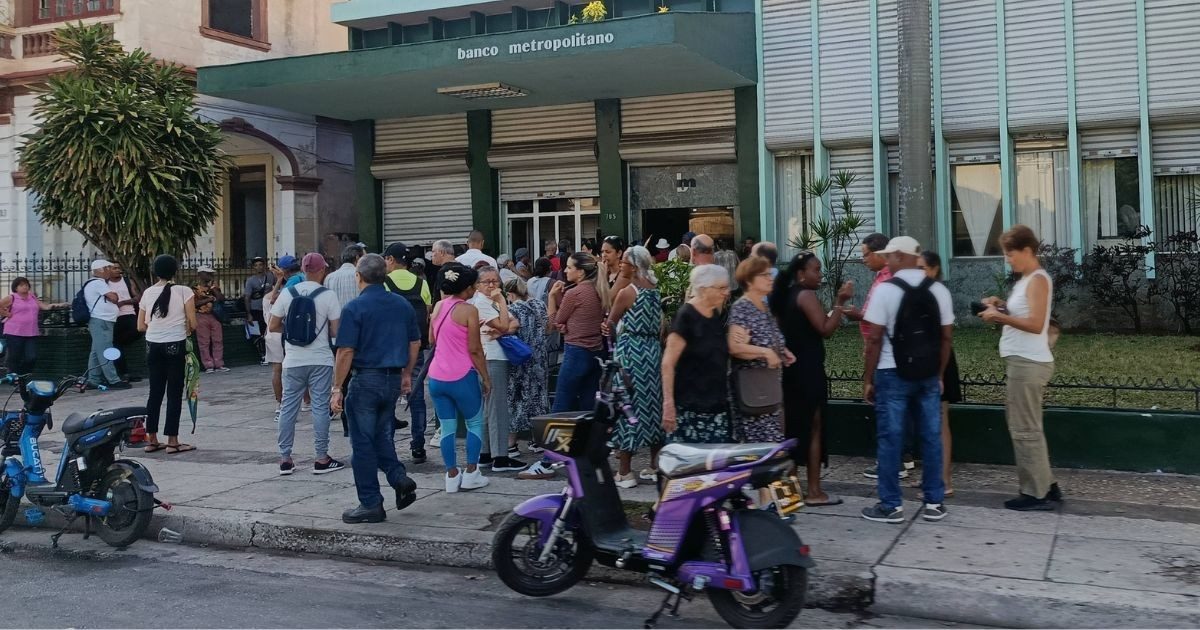
On Thursday, the Cuban government announced a new policy allowing small and medium-sized enterprises (SMEs), cooperatives, and other non-state actors to deposit foreign currency in cash into bank accounts and withdraw it in the same currency, bypassing the mandatory conversion to Cuban pesos. This was unveiled by Prime Minister Manuel Marrero Cruz during the Third Extraordinary Session of the National Assembly of People's Power.
Outlined in the first section of a comprehensive reform package, the measure stipulates that deposits must be subject to a "declaration of the legal origin of funds and the right of withdrawal," according to the official document presented at the session held at the Palacio de Convenciones in Havana.
This policy change reverses the previous regulation implemented on June 21, 2021, when the Central Bank of Cuba halted the acceptance of U.S. dollar cash deposits within the banking system. This move had severely impacted private businesses reliant on foreign currency from tourism and remittances.
The announcement is part of a broader set of 176 transformative proposals grouped into 23 sectors, described by the regime as the most significant since the Special Period of the 1990s.
Banking Reforms and Private Capital Inclusion
In the banking and financial domain, the reforms propose allowing both legal entities and individuals to open foreign currency accounts without prior administrative approval. Additionally, they encourage private capital involvement in banking with corporate and universal licenses available for private companies, cooperatives, and foreign investment.
The package also includes establishing a real-time digital exchange market with authorized agents, a system for currency auctions, and formalizing remittances through "last-mile payment agent" channels within the private sector.
Financial Devaluation and Economic Adjustments
One of the most radical measures in the financial sector is the implementation of "successive devaluations of the national currency to reduce exchange rate disparities," alongside a cautionary note that businesses unable to withstand these devaluations will face liquidation.
The government further announced plans to expand the scope of partial dollarization in business and commercial transactions and to remove caps on bank transfers and withdrawals for both individuals and entities.
Expanding Opportunities for Non-State Enterprises
For the non-state private sector, the reforms abolish the 100-employee limit, recognizing businesses exceeding this number as private enterprises. It also allows an individual to own multiple companies and hold shares in several at once.
The session was attended virtually by Raúl Castro and in-person by Miguel Díaz-Canel. Marrero Cruz presented the reform package as a response to what he described as "the most complex context the country has faced since the Special Period," attributing the crisis mainly to U.S. sanctions while ignoring the long-standing effects of the centralized economic model.
Initially announced by Díaz-Canel on June 12, the reform package was debated at the Communist Party Central Committee Plenum on June 17 and formally presented to the National Assembly this Thursday, under the State Council's Agreement 599-X.
The proposals still require debate and approval by the deputies; of the 390 proposals received, the regime accepted 66.7% and included 69 additional recommendations from the Politburo in the final document.
Understanding Cuba's Economic Reforms
What is the significance of allowing dollar deposits and withdrawals in Cuba?
This policy change is significant because it reverses a previous rule that required currency conversion to Cuban pesos, allowing private businesses greater flexibility in handling foreign currency, which is crucial for sectors like tourism and remittances.
How will the new banking reforms impact the Cuban economy?
The reforms aim to liberalize the banking sector by permitting foreign currency accounts without prior approval and encouraging private investment in banking, potentially increasing economic activity and foreign investment.
What challenges might arise from the proposed currency devaluations?
The proposed devaluations could lead to significant financial strain on businesses unable to cope with changing exchange rates, potentially resulting in closures and economic instability.