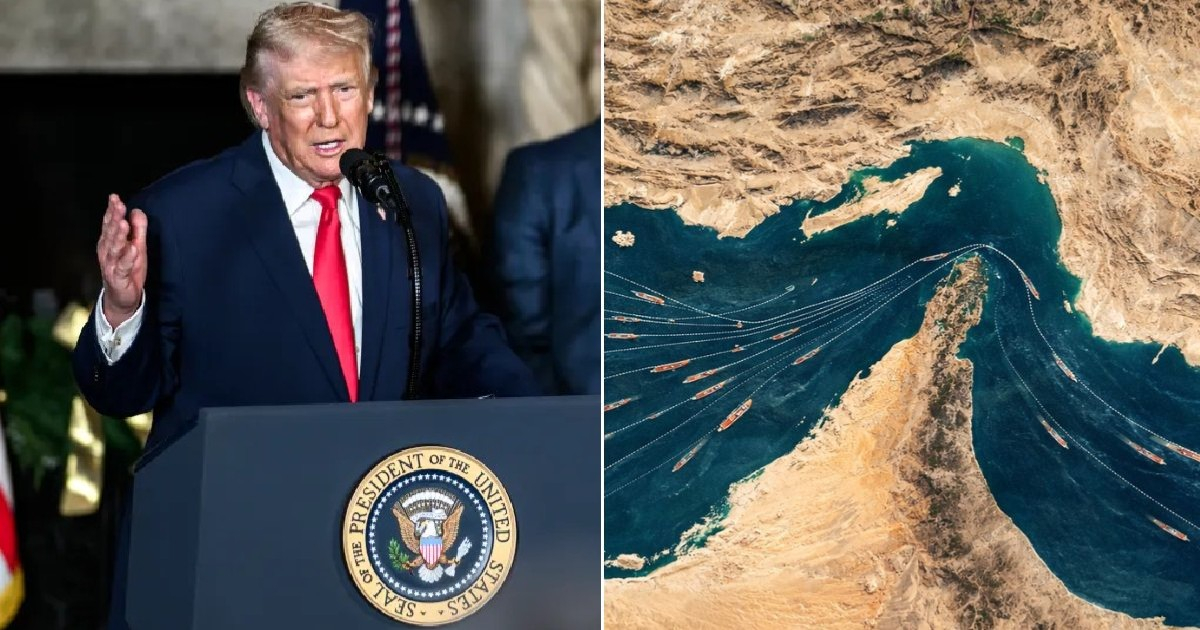
The United States military has lifted the naval blockade on Iran's ports and coastal areas, following a directive by President Donald Trump after the signing of a peace agreement. This was confirmed by the United States Central Command (CENTCOM) in an official statement on Thursday.
The announcement from the U.S. military came just a day after Trump digitally signed a Memorandum of Understanding with Tehran during a gala dinner at the Palace of Versailles, hosted by French President Emmanuel Macron as part of the G7 Summit. The U.S. President confirmed the agreement with a brief statement: "It's signed, yes. We signed it in Versailles. I just signed it."
CENTCOM disclosed on its social media platforms that "U.S. forces have lifted the blockade on all maritime traffic entering and exiting Iran's ports and coastal regions, in accordance with the President's instructions."
The command clarified that "all U.S. military efforts enforcing the blockade have ceased," but it was noted that large U.S. warships will remain in the general area "to ensure all aspects of the agreement are upheld, respected, and fully in force and effect."
Strait of Hormuz Reopens Amidst Complex Diplomacy
The memorandum between Washington and Tehran, which Vice President JD Vance described as "barely a page and a half" and deliberately vague in its technical commitments, mandates the immediate reopening of the Strait of Hormuz — a crucial passage for 20% of the world's oil supply — and the cessation of hostilities on all fronts, including Lebanon.
The document also provides a 60-day window to negotiate a final agreement covering Iran's nuclear program, sanction relief, and asset unfreezing. Additionally, the deal includes a $300 billion reconstruction fund financed by regional powers, with the U.S. agreeing to unlock at least $12 billion in frozen Iranian funds.
Background and Reactions to the Agreement
The blockade of the Strait of Hormuz was initially imposed on April 13 by Trump's order as an economic pressure tool against Iran. During its two-month enforcement, CENTCOM reported diverting 142 commercial vessels and disabling nine ships that did not comply with orders.
The conflict that led to the blockade began on February 28 with Operation Epic Fury, a coordinated air offensive by the U.S. and Israel against Iranian nuclear facilities in Natanz, Isfahan, and Fordow. Iran declared a halt to its military operations on June 8, with Qatar and Pakistan playing pivotal roles as mediators in the so-called "Islamabad negotiations."
Within Trump's circle, the newly signed pact raises concerns: Secretary of State Marco Rubio, Defense Secretary Pete Hegseth, and CIA Director John Ratcliffe have expressed doubts about Tehran's commitment to its nuclear pledges. Meanwhile, Israel requested to view the agreement's text but was denied access by Washington.
Iranian President Massoud Pezeshkian hailed the agreement as a survival triumph for the regime, while Foreign Minister Abbas Araqchi cautioned that future negotiations would be conducted "based on distrust, past commitment breaches, and previous experiences."
A formal ceremonial signing of the memorandum is scheduled for Friday at the Bürgenstock complex in Switzerland, with Vice President Vance in attendance.
Understanding the U.S.-Iran Agreement
What does the Memorandum of Understanding entail?
The memorandum involves the immediate reopening of the Strait of Hormuz, cessation of hostilities, and a 60-day period to negotiate a final agreement covering Iran's nuclear program, sanction relief, and asset unfreezing.
Why was the Strait of Hormuz initially blocked?
The blockade was imposed by President Trump on April 13 as an economic pressure tool against Iran, following tensions over Iran's nuclear activities.
What are the reactions to the agreement?
Reactions are mixed, with some U.S. officials expressing skepticism about Iran's compliance, while Iranian leaders see it as a victory. Israel has shown interest in the agreement's details but was denied access.