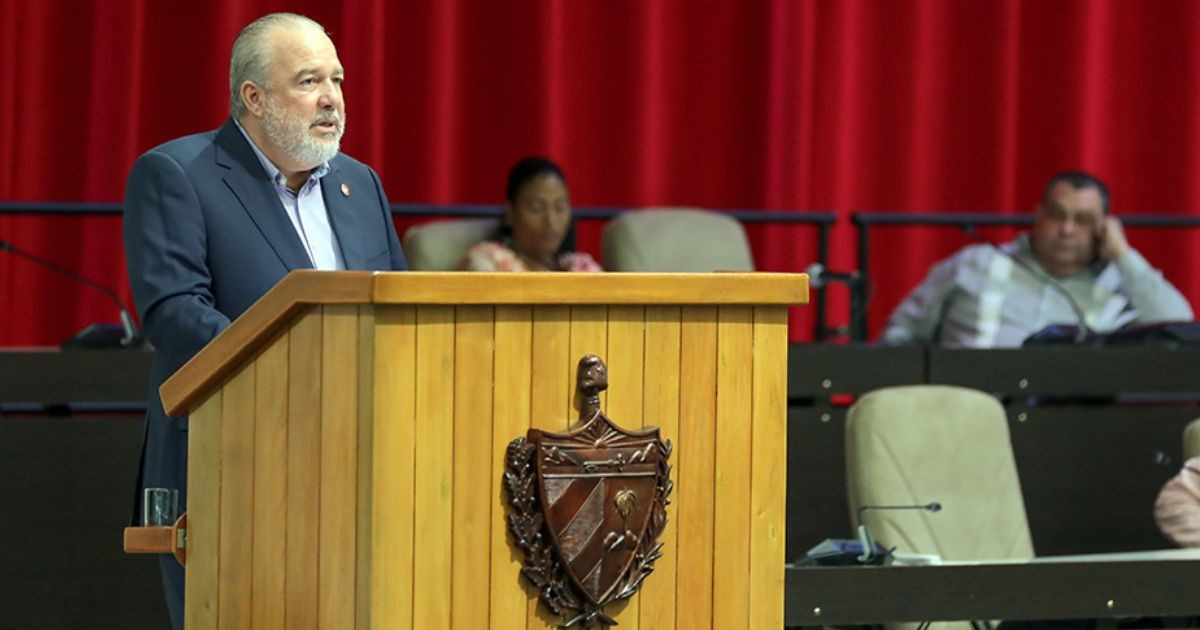
On Thursday, Prime Minister Manuel Marrero Cruz declared an immediate increase in Cuba's minimum wage to 3,210 pesos. This announcement was made during the Third Extraordinary Session of the National Assembly of People's Power at the Palacio de Convenciones in Havana.
This decision is part of a sweeping set of 176 proposals for economic and social transformations, organized into 23 key areas. It's the most ambitious reform package the regime has introduced in years.
Alongside the new minimum wage, Marrero Cruz revealed plans for a comprehensive salary reform in the budgeted sector. However, he did not specify the amounts or timeline for this broader change.
The revised minimum wage marks a 53% increase from the previous 2,100 pesos, which had been in place since January 2021. Yet, this increase remains negligible compared to the cost of living; studies cited in June 2026 estimated that basic needs required approximately 96,000 pesos monthly, while the official average salary barely reached 6,930 pesos in 2025.
Marrero Cruz acknowledged to the deputies that "the disruption in fuel supplies and the impact on all foreign currency income sources have significantly contributed to the deterioration and instability of the energy infrastructure, thereby affecting the quality of life for millions of Cuban citizens."
The head of government admitted to the regime's own mistakes but largely blamed the crisis on the tightening of U.S. sanctions since mid-2019, overlooking six decades of failed economic management under the communist system.
The 176 measures emerged from the evaluation of 390 proposals, 66.7% of which were accepted, involving input from economists, academics, and representatives of the Party and National Assembly commissions.
Among the most significant structural changes is the removal of the wage scale in the state enterprise system, to be replaced by a minimum wage negotiated among administrations, workers, and unions based on each entity's financial capabilities.
Further proposals include opening up to direct foreign investment in the private sector and small and medium-sized enterprises (SMEs), authorizing agricultural SMEs for the first time, allowing companies to exceed the 100-worker limit, and reducing the number of ministries from 27 to between 20 and 21.
Additionally, there's a proposal to allow Cubans residing abroad to invest on equal terms and for individuals to own more than one private business.
Marrero Cruz defended these reforms with the principle of "doing what is necessary to preserve what is essential," emphasizing that they are not a departure from socialism but a response to the country's current challenges.
The pace of the process is striking: Díaz-Canel introduced the package on June 12, the Party's Extraordinary Plenary endorsed it on June 17, and the Assembly was summoned to ratify it just 24 hours later, highlighting the urgency with which the regime perceives the economic deterioration.
Understanding Cuba's Economic Reforms
What is the new minimum wage in Cuba?
The new minimum wage in Cuba has been raised to 3,210 pesos.
How does the new minimum wage compare to the cost of living in Cuba?
Despite the wage increase, the new minimum wage remains insufficient compared to the estimated 96,000 pesos needed monthly to cover basic living expenses.
What other significant economic reforms were announced?
The reforms include abolishing the wage scale in state enterprises, enabling foreign investment in private sectors, authorizing agricultural SMEs, and reducing the number of ministries, among others.