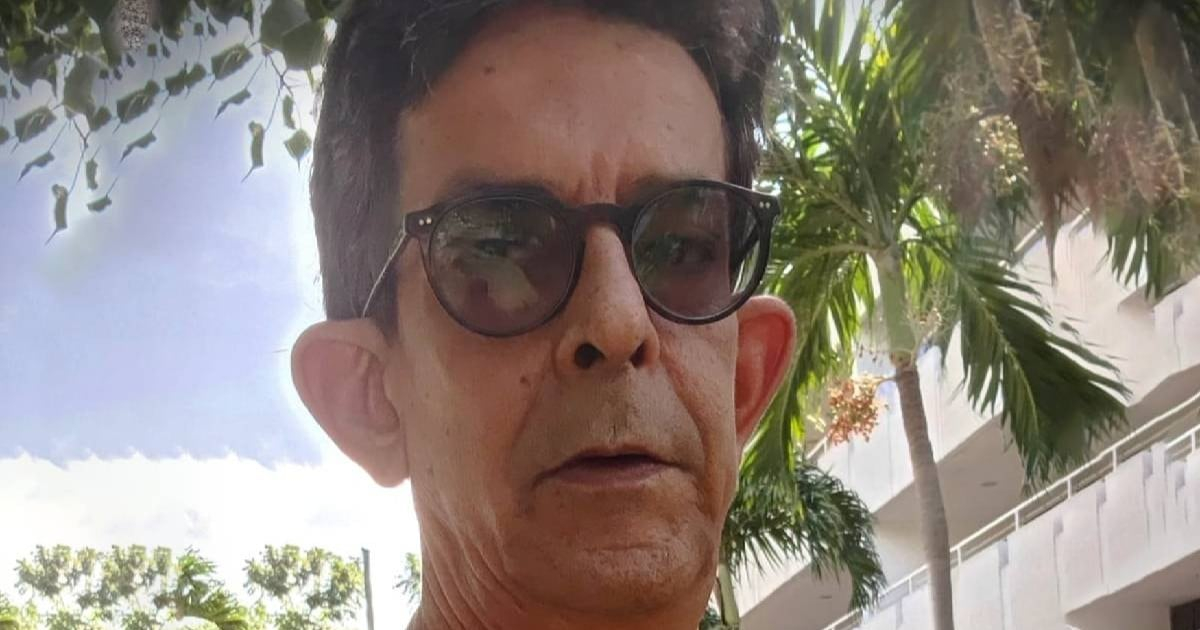
Cuban comedian Ulises Toirac recently took to Facebook to launch a satirical contest, inviting users to "name the New Measures" introduced by the regime. This contest serves as a direct jab at the latest economic reform package presented by Cuba's government.
The contest rules are as sarcastic as they are specific: suggested names cannot include terms like "error," "rectification," "improvement," or "reordering," phrases the Cuban government has repeatedly used in successive policy packages that have failed to resolve the country's deep-rooted crisis.
Additionally, the name cannot be a dactylic phrase or contain words with more than six syllables, "so it can be written and repeated without mistakes by even the most modest online fighters," according to Toirac's own contest guidelines.
The third requirement takes aim at the official rhetoric: the chosen name must convey "confidence, security, and absolute certainty that NOW IT WILL WORK, DAMN IT."
The contest prizes are perhaps the most biting aspect of the post, as they revolve around the energy crisis crippling Cuba in 2026.
The gold medal is a "solar cell plant with a capacity for 30 hours of blackout at full load"; the silver, an Ecoflow "for six hours of blackout powering two fans, a refrigerator, a TV, and four charging mobile phones."
The bronze prize is "a bike generator with the capacity for one fan," with a tongue-in-cheek suggestion: "point it at the person pedaling."
The timing of this reference is deliberate. Cuba is experiencing one of the worst energy crises in recent history, with blackouts lasting up to 22 hours daily in Havana, an electricity deficit exceeding 2,174 MW during peak nighttime hours on May 14, and a total disconnection from the national electric grid on March 16, the sixth such occurrence in 18 months.
The contest was launched days after Toirac had already expressed his views on the reforms with similar force. On June 15, he wrote that the measures are coming "late and reluctantly" and that "they won't work today either," arguing that the business diaspora is already disillusioned by the regime's unpaid debts.
On that same day, when some users labeled him a "mercenary" for his criticisms, he responded with his usual humor: "Look at my belly! Nobody can be paying me."
The package Toirac mocks was endorsed last Thursday by the extraordinary plenary session of the Central Committee of the PCC, and it includes over 20 measures: increased municipal autonomy, opening to foreign investment in small and medium-sized enterprises, elimination of state intermediaries in foreign trade, reduction of ministries from 27 to between 20 and 21, and opening to investment by Cubans residing abroad.
President Díaz-Canel justified the shift with a phrase circulated by the regime: "reality imposes changes on us."
For months, Toirac has been using social media to highlight the gap between official discourse and the daily lives of Cubans. In May, he criticized the government for prioritizing the "My Signature for the Homeland" campaign over solving the power outages, and in June, he warned that the Social Communication Law acts as a "Sword of Damocles" over comedians due to its subjective enforcement.
Even Díaz-Canel acknowledged in the Central Committee plenary last Thursday that there are "obstacles that don't come from outside or the blockade," an unusual admission that didn't stop Toirac's contest from circulating as the most accurate summary of what many Cubans think about the umpteenth promise of change.
Understanding the Cuban Economic Reforms
What is the purpose of Ulises Toirac's contest?
Ulises Toirac's contest is a satirical initiative aimed at mocking the Cuban government's latest economic reform package by inviting the public to propose humorous names for it.
What are the main rules for the contest?
The contest rules specify that the proposed name should not include certain repetitive government terms, should be simple enough to be easily repeated, and must convey a sense of confidence and certainty.
What are the prizes for the contest?
The prizes humorously focus on the energy crisis, including solar panels, an Ecoflow for short blackouts, and a bike generator, all underscoring the ongoing power issues in Cuba.