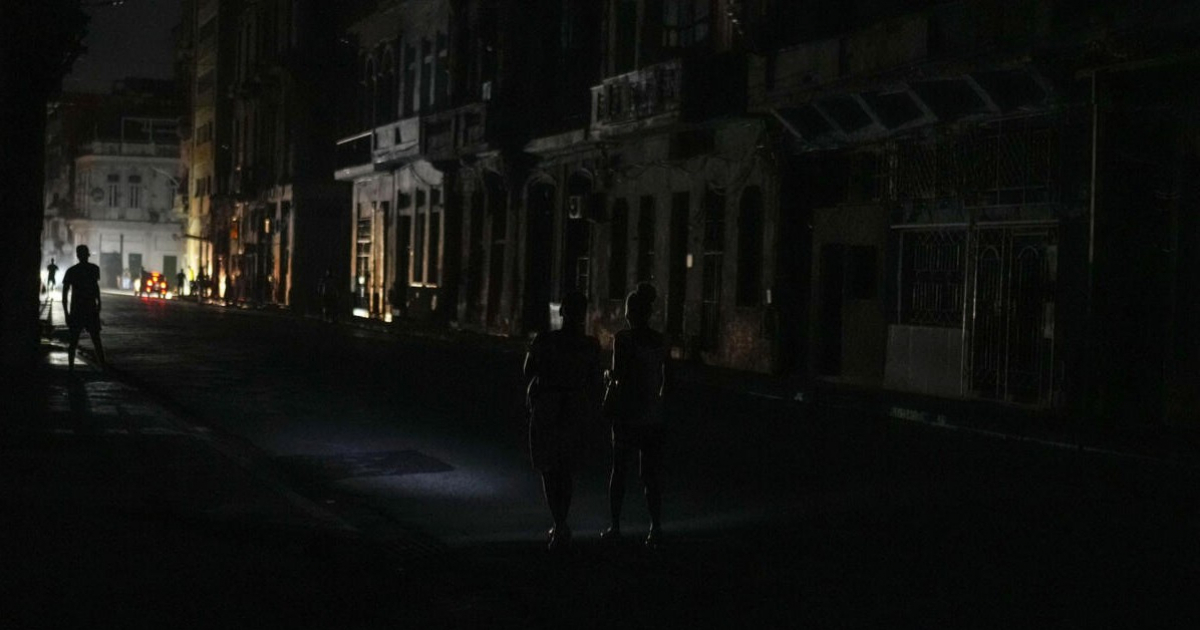
The Electric Company of Santiago de Cuba admitted on Thursday that it is unable to adhere to its previously announced blackout schedule, which was set just two days earlier. The company stated it would only restore power to circuits with the longest outages, providing "up to two hours of service," without even guaranteeing this minimal supply.
The official statement points out that "due to the reduction in authorized demand in the province by the National Load Dispatch, it is impossible to fulfill the scheduled plan." The shortfall is attributed to "the decrease in available generation within the National Electric Power System."
This announcement underscores the worsening energy crisis in the country and hints that the National Electric Power System is once again at risk of a complete breakdown.
Immediate Context Exacerbates the Crisis
The severity of the situation is heightened by its immediate context: on Tuesday, June 16, the same company had reorganized blackouts into nine blocks—eight for residential circuits and one for essential services such as hospitals and water pumps—allowing just one or two hours of electricity per day per zone, applicable for June 16, 17, and 18.
This plan already left residents of Santiago without power for 22 hours or more each day. Now, even that minimal supply is not assured, opening the possibility of outages lasting more than 24 consecutive hours.
Strained National Electric System
The national electric system's figures corroborate the impending collapse. As of 6:00 a.m. on Thursday, the National Electric Power System had merely 970 MW available against a demand of 2,650 MW, with 1,650 MW already impacted. For the nighttime peak, the Electric Union projected an availability of 1,015 MW versus a demand of 3,050 MW, leaving a shortfall of 2,035 MW and a projected impact of 2,075 MW.
Public Outcry and Historical Context
The deterioration isn't sudden. On May 31, Lester Salvador Cedeño, director of the provincial Electric Company's dispatch, had already publicly warned that "we might not even provide two hours of service," acknowledging that actual service deliveries were merely an hour and 30 minutes or an hour and 45 minutes per block.
The situation has exhausted residents' patience. From Wednesday night to Thursday morning, pot-banging protests erupted in various neighborhoods of Santiago de Cuba due to the blackouts, and more demonstrations occurred throughout Thursday.
On Sunday, June 15, residents of San Ricardo had already protested after several days without electricity, and on Thursday, June 12, the José Martí Urban Center witnessed a demonstration with demands for electricity, food, and freedom.
The crisis stems from structural issues dating back to at least 2024. In October of that year, the company reported providing only three hours of electricity with 21 hours of blackout; in November, it promised at least five hours daily, a commitment it could not uphold.
In April 2026, the UN labeled Cuba's energy crisis as having a systemic humanitarian impact, affecting health, water, sanitation, food, education, transportation, and telecommunications.
The statement from Tuesday, June 16, had already warned that "the fulfillment of this schedule is subject to the daily performance of the SEN, which could lead to adjustments in the planned hours and blocks." Just two days later, that warning became a reality: even the announced minimum cannot be met.
Understanding the Cuban Energy Crisis
What led to the current energy crisis in Santiago de Cuba?
The crisis has its roots in a systemic decline of the National Electric Power System, aggravated by a decrease in available generation capacity and increased demand, leading to prolonged outages.
How are residents responding to the power outages?
Residents have resorted to protests, including pot-banging demonstrations, to express their frustration over the persistent blackouts and the government's failure to provide basic services.
What are the broader implications of this energy crisis?
The energy crisis in Cuba has far-reaching humanitarian impacts, affecting essential services such as healthcare, education, and water supply, and contributing to social unrest.