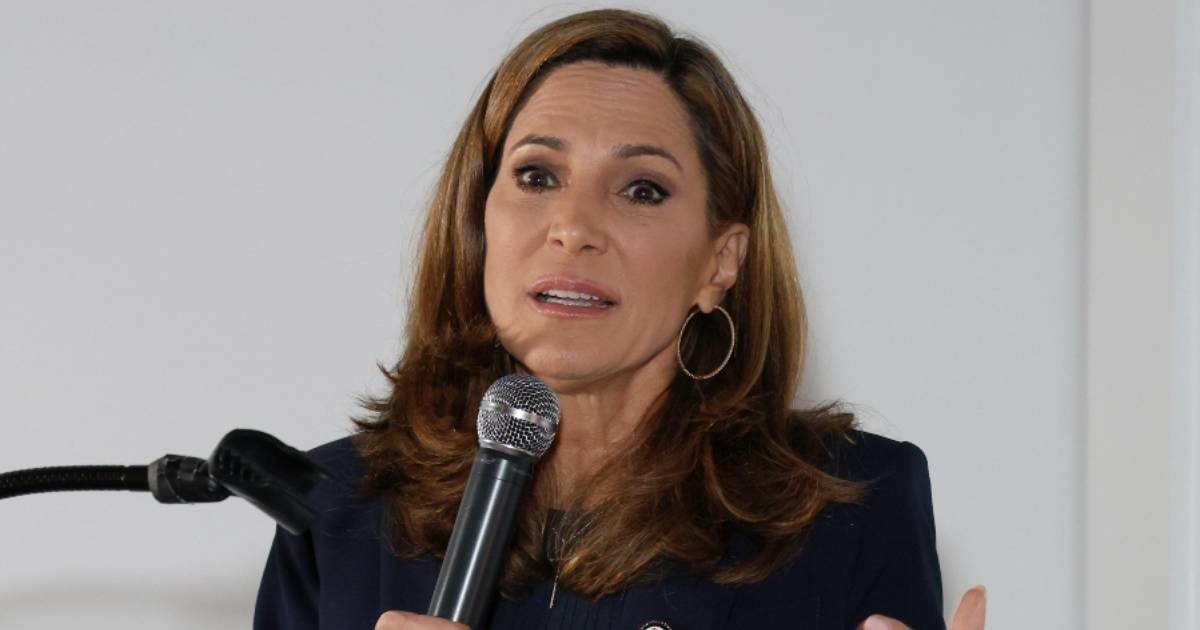
Republican Congresswoman María Elvira Salazar has formally addressed a letter to the Secretary of Homeland Security, Markwayne Mullin, urging him to take decisive action to resolve the immigration limbo affecting thousands of Cubans. These individuals received an I-220A form instead of a parole when crossing the border during the Biden administration.
In her letter shared on her X account, Salazar highlighted that she had previously raised this issue with former Secretary Kristi Noem without receiving any response or corrective measures. The ongoing crisis in Cuba, she emphasized, makes a solution for these families more critical than ever.
Inconsistencies in Cuban Migrant Processing
At the heart of the issue is a systemic inconsistency in processing Cuban migrants. While some were granted parole—which allows them to apply for permanent residency under the Cuban Adjustment Act of 1966 after a year and a day in the U.S.—others, even within the same family and under identical circumstances, were issued an I-220A form. This form is not recognized as parole and thus does not provide the legal pathway for residency.
Salazar's letter points out, "Instead of granting parole to Cubans, which would have enabled them to benefit from the Cuban Adjustment Act as Congress intended, many were released under an Order of Release on Recognizance (Form I-220A)."
A Two-Tier System and Overloaded Courts
This disparity has resulted in what Salazar describes as a two-tier system within families: some members have a path to residency, while others do not, leading to unnecessary asylum claims that burden already overwhelmed immigration courts.
"The I-220A should not mean legal limbo. For years, thousands of Cuban families have lived in uncertainty because the government treated similar cases differently. That is not justice, and I will continue to fight until these families receive the fair treatment they deserve under the law," the congresswoman declared in an official graphic released alongside the letter.
The Impact on Skilled Professionals
Journalistic estimates suggest that between 400,000 and 500,000 Cubans are affected by the I-220A, though no official public figure exists. Among them are highly skilled professionals: at least 300 Cuban doctors with an I-220A have their work permits frozen until 2026, despite having passed all revalidation exams.
Salazar notes in her letter that an April guideline from the U.S. Citizenship and Immigration Services (USCIS) exempted doctors from processing delays, yet "there has been no real implementation of that guidance in Florida" as of her writing.
Concrete Steps Demanded
The congresswoman calls on the Department of Homeland Security to take three specific actions: consider granting parole-in-place to Cubans with I-220A who have no criminal records, ensure fair and consistent treatment under the Cuban Adjustment Act, and restore stability and unity for Cuban families in Miami and across the nation.
This is not Salazar's first push for a solution. Since September 2023, she has sent letters and advocated for legislation to regularize these migrants' status, yet no concrete action has been taken by DHS.
On the legal front, the 11th Circuit Court of Appeals in Atlanta held an oral hearing in December 2025 regarding the legal status of the I-220A, but as of the letter's date, no final ruling has been issued.
With Mullin confirmed as Secretary of Homeland Security on March 24, 2026, replacing Noem, he is now the recipient of Salazar's demands. Her frustration with the institutional lack of response over the years is evident.
FAQs on Cuban Immigration and I-220A
What is the Form I-220A?
Form I-220A, or Order of Release on Recognizance, is a form issued to some Cuban migrants, allowing them to stay in the U.S. temporarily without providing a pathway to permanent residency.
How does the Cuban Adjustment Act benefit migrants?
The Cuban Adjustment Act of 1966 allows Cuban migrants to apply for permanent residency in the U.S. after residing in the country for one year and one day, provided they were granted parole upon entry.
Why is there a call for parole-in-place for Cubans with I-220A?
Parole-in-place is being considered to provide a legal pathway to residency for Cubans with I-220A who lack the parole status necessary to benefit from the Cuban Adjustment Act.