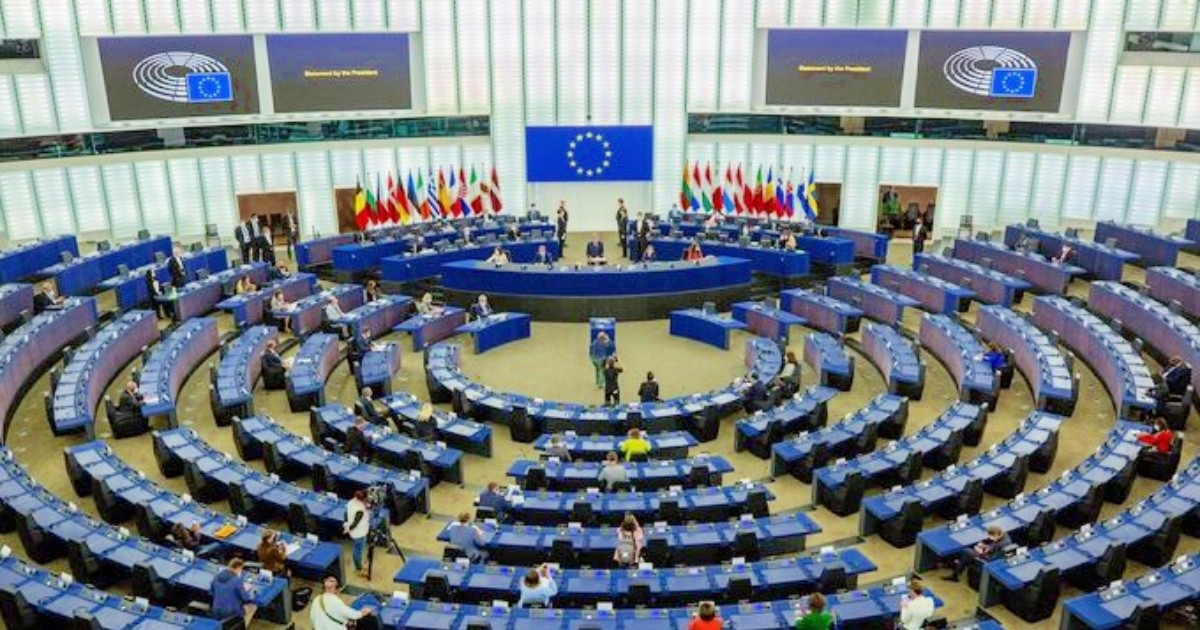
The European Parliament has taken a significant step by passing a historic resolution on Thursday that denounces the ongoing repression in Cuba. The resolution urges the European Union to impose individual sanctions on President Miguel Díaz-Canel and recommends halting the bilateral agreement that has connected Brussels with Havana since 2016.
With 283 votes in favor, 199 against, and 85 abstentions, the resolution represents the European Parliament's strongest stance on Cuba in many years.
Impending State Failure in Cuba
The resolution leaves no room for doubt, asserting that after five decades under a communist regime, Cuba is on the brink of becoming a "failed state." It highlights that 89% of Cuban families live in extreme poverty, emphasizing that this dire situation is not due to external factors. Rather, the humanitarian crisis results directly from the failures of the Cuban regime itself.
Additionally, the Parliament noted that as of late May 2026, Cuba had amassed a record number of 1,281 political prisoners, including minors, according to Prisoners Defenders.
Targeted Sanctions on Cuban Leaders
The resolution calls on the EU Council to impose individual sanctions under the European global human rights regime, akin to the Magnitsky Act, targeting those responsible for the repression, starting with Díaz-Canel. It also seeks measures against leaders of GAESA, the military conglomerate controlling about half of Cuba's economy, which includes sectors like tourism, ports, and remittances.
This vote comes just two weeks after the United States sanctioned Díaz-Canel for the first time, placing him on the OFAC SDN list alongside his wife Lis Cuesta and Alejandro Castro Espín, as part of Executive Order 14404 signed by Donald Trump on May 1, 2026.
Suspension of the EU-Cuba Agreement
MEPs warn that without clear progress towards democratic transition, the EU must suspend the Political Dialogue and Cooperation Agreement signed with Cuba in December 2016. This agreement features a human rights clause that allows for suspension in cases of serious violations, a clause long demanded by opposition and civil society in Cuba.
Back in May 2026, EU High Representative Kaja Kallas had admitted to Parliament that the agreement "has not yielded the expected results" after nearly a decade in effect. Opposition leader José Daniel Ferrer described it as "aspirin for a terrible cancer" in May when addressing the European Parliament's Foreign Affairs Committee.
Democratic Transition and Humanitarian Aid
The resolution demands the immediate and unconditional release of all political prisoners, an end to torture and ill-treatment, and redress for victims. MEPs stress that the only way out of Cuba's hardship, poverty, and isolation is through profound economic and political changes.
The Parliament advocates for a full, multi-party democratic transition led by Cubans themselves, including those on the island and in exile, urging the regime to allow the return of exiles without repercussions. Simultaneously, it calls on the European Commission and member states to develop humanitarian channels to deliver energy, food, and medicine directly to the Cuban people.
Condemnation of Support for Russia and Belarus
The resolution also criticizes Cuba's material support for Russia's war of aggression against Ukraine, which includes recruiting Cuban citizens to fight alongside Moscow's forces, and condemns the strengthening of military cooperation with Russia and Belarus.
Spanish MEP Hermann Tertsch (VOX/Patriots for Europe), one of the resolution's main proponents, summed up the sentiment before the vote: "The time for warnings and threats is over. Action is needed."
Understanding the European Parliament's Resolution on Cuba
What prompted the European Parliament to pass this resolution against Cuba?
The resolution was passed in response to the systematic repression by the Cuban regime, the humanitarian crisis, and the rise in political prisoners, demanding sanctions and the suspension of the EU-Cuba agreement.
What are the implications of suspending the EU-Cuba agreement?
Suspending the agreement would signal a significant shift in EU-Cuba relations, potentially isolating the Cuban regime further while pressing for democratic reforms and adherence to human rights.
How does the European resolution relate to recent US actions against Díaz-Canel?
The resolution aligns with recent US sanctions against Díaz-Canel, showcasing a unified Western stance against Cuba's current leadership and its policies.