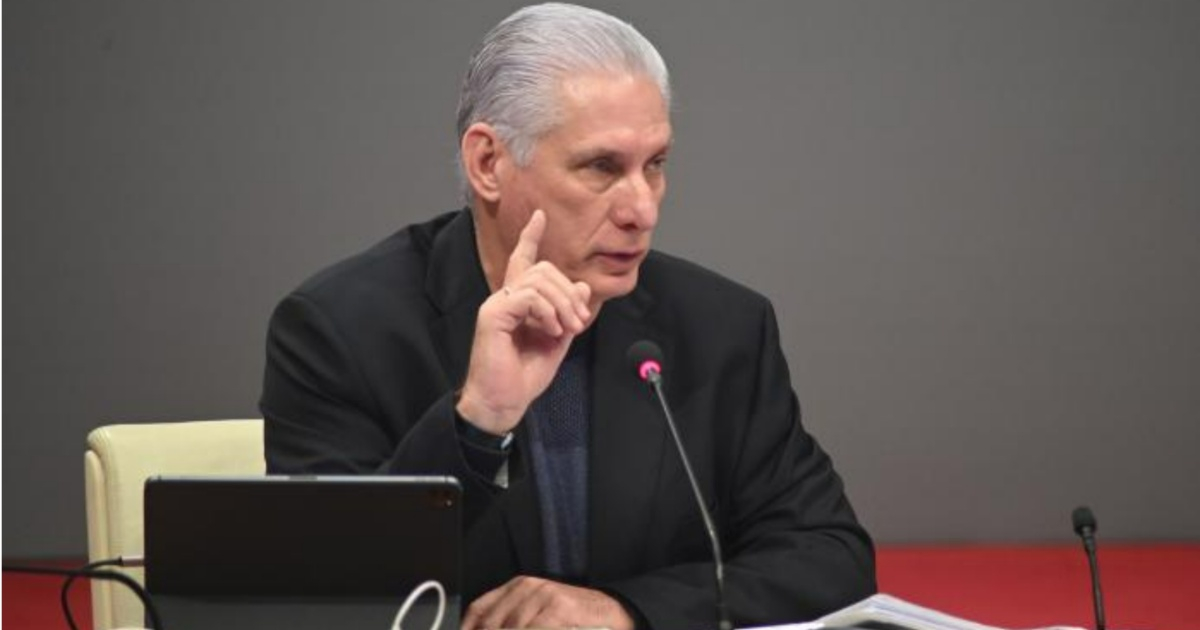
The U.S. military operation on January 3, 2026, in Venezuela, which led to Nicolás Maduro's capture and the death of at least 32 Cuban soldiers guarding him, signified a pivotal shift for Havana's regime.
An article in El Confidencial released this Thursday outlines how Miguel Díaz-Canel's government perceived this intervention as a direct warning, subsequently heightening its defensive rhetoric consistently.
Heightened Military Activities in Cuba
Following Maduro's capture, a series of warning signals in Cuba unfolded chronologically:
On January 11, 2026, the National Defense Day and the "Meteoro 2026" exercise commenced a sequence of maneuvers involving tanks, shooting drills, anti-aircraft defense, and training against mass destruction weapons, repeated over successive weekends. The regime decreed that every Saturday would be devoted to military, political, and ideological preparation.
Díaz-Canel's Military Presence and International Tensions
From January to June 2026, Díaz-Canel frequently appeared in military attire. Training sessions for reservists were organized as part of the "War of the Entire People" campaign. In May, foreign media reported on a map showing U.S. intelligence aircraft—MQ-4C Triton drones, RC-135 Rivet Joint, P-8 Poseidon, and E-3G Sentry planes—flying near Cuba.
On May 29, General Francis L. Donovan, head of the U.S. Southern Command, met with General Roberto Legrá and other senior Cuban military officials at the Guantanamo Naval Base. On June 10, U.S. Secretary of War Pete Hegseth visited Guantanamo and trained with soldiers, demonstrating the physical prowess of the U.S. military compared to Cuba's FAR leaders.
Military Weaknesses and Economic Challenges
Cuban military displays have revealed more weaknesses than strengths. El Confidencial notes that they merely showcased relics from the Cold War era, highlighting the isolation and military frailty of the Castro regime.
The elements cited include aged Soviet weaponry, limited aviation capabilities, and visible signs of malnutrition among Cuban troops.
Economic Crisis and Rising Protests
While the regime intensified its war rhetoric since January, Cuba's economic and social situation has deteriorated, fueling growing discontent. Some alarming indicators include:
- The black market dollar rate reached 660 Cuban pesos, and the euro hit 760 CUP.
- Official annual inflation hit 15.89% in May 2026.
- The cost of basic groceries soared to around 21,060 pesos, over three times the average monthly salary.
- Power outages exceeded 20-25 hours daily, with electrical deficits up to 2,153 MW.
- CEPAL forecasts a 6.5% GDP contraction in 2026, while The Economist Intelligence Unit predicts a more significant drop of 7.2%.
- Foreign companies are leaving Cuba due to fears of U.S. sanctions.
- Tourism is plummeting, with numerous hotels closing down.
- Gasoline prices in Havana have surpassed $5.00 per liter.
- Cubans must obtain state permits to travel outside their provinces amid the transport crisis.
- The regime has enacted new laws in sensitive sectors such as housing and the economy.
This economic downturn and energy crisis are fueling a wave of protests across the country.
Protests and Civil Unrest
This year has seen protests in every municipality of the capital. Some demonstrators have resorted to burning garbage and setting up barricades to block police access.
The Cuban Conflict Observatory recorded 953 demonstrations in January, 1,245 in March, 1,133 in April, and 1,311 in May 2026, with pot-banging and street protests centered in Havana, Santiago de Cuba, Matanzas, and Ciego de Ávila.
Cubalex documented at least 14 arrests in Havana related to power outage protests since March 6.
Diplomatic Engagement with the United States
Amid the social crisis, Cuba and the United States have confirmed ongoing diplomatic talks, yet these discussions haven't yielded substantial outcomes.
On the Cuban side, Raúl Guillermo Rodríguez Castro, Raúl Castro's grandson and affiliated with the GAESA military conglomerate, has been identified as the leader of these "negotiations." In the U.S., Marco Rubio, Secretary of State, directly oversees the efforts.
Analysts suggest Washington aims to replicate the Venezuelan model in Cuba: a transition managed internally by the regime itself. However, Rubio stressed they have yet to identify an internal leader to facilitate political transition. "If you ask me for a name, I don't have one," he stated.
Miguel Díaz-Canel declared there would be no political transition but rather a continuation of the revolution. He accused the U.S. of considering three scenarios for Cuba, the last being military intervention. Last Friday, the leader announced new economic reforms and later supervised military exercises in the Santa Fe Defense Zone.
This week, these reforms were approved by the National Assembly with Raúl Castro's consent, who in a letter "greenlighted" the economic transformations during this "critical moment" for the country.
Cuba's Current Political and Economic Landscape
What was the outcome of the U.S. military operation in Venezuela in January 2026?
The operation resulted in the capture of Nicolás Maduro and the death of at least 32 Cuban soldiers protecting him.
How has the Cuban regime reacted to Maduro's capture?
The Cuban government interpreted the intervention as a direct warning, escalating its defensive rhetoric and military preparedness.
What are the current economic challenges facing Cuba?
Cuba is facing severe economic issues, including high inflation, a depreciating currency, significant power outages, and a decline in tourism and foreign investment.
What steps are being taken in response to the economic and social crisis in Cuba?
The Cuban regime has announced new economic reforms, and there have been ongoing military exercises and diplomatic talks with the United States.