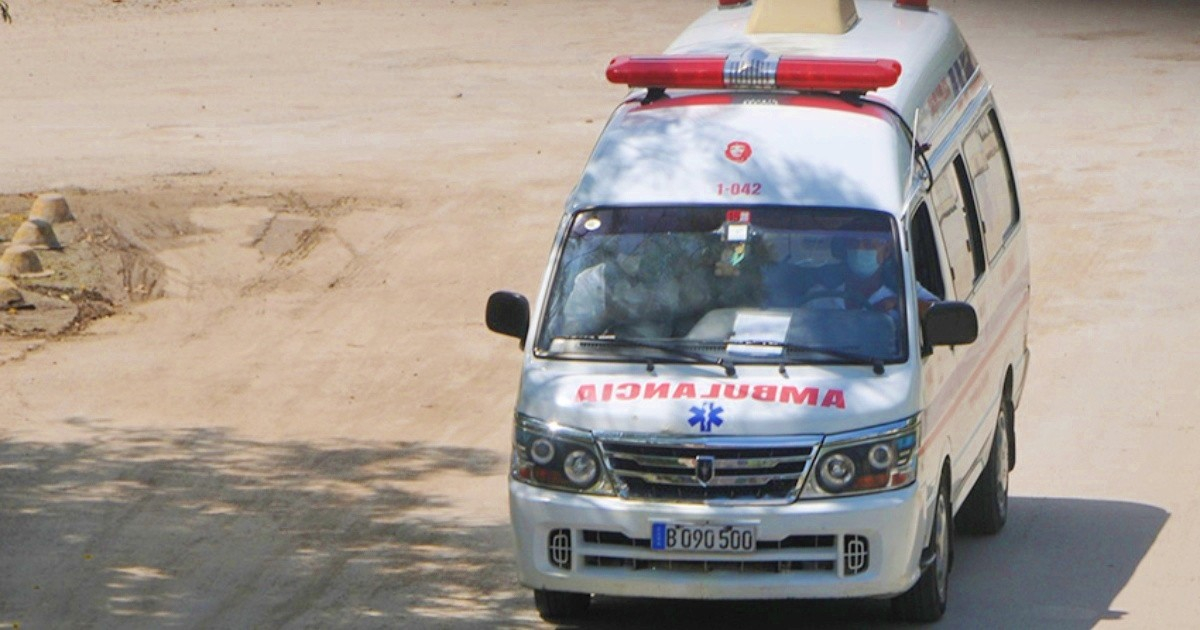
In a tragic incident, two employees from the Labiofam Company in Villa Clara lost their lives on Tuesday after being exposed to toxic gases while cleaning a molasses tank. The incident was reported by Francisnet Díaz Rondón, a journalist from Villa Clara and a personal friend of one of the victims, on Facebook.
Díaz Rondón, who writes for the state-run newspaper Vanguardia in Santa Clara, shared the news on Wednesday, June 17, the day he attended his friend's burial at the local cemetery.
The Deadly Trap in the Workplace
The journalist explained that one of the victims, known as Luis Díaz or "Yunior," was tasked with cleaning a tank containing molasses—a byproduct of sugar cane known as miel de pulga in Cuba—when he was overcome by the toxic gases inside.
"The concentrated toxic gases began to asphyxiate him, his strength gave out, and he couldn't escape that deadly trap," Díaz Rondón wrote.
Tragically, a colleague who attempted to rescue him also perished.
"Even more painful was that another friend and co-worker, Eduardo, tried to help him and also died instantly. Two lives lost, children left fatherless, devastated partners, and two grieving families due to a workplace accident that should never have happened," lamented the journalist.
Understanding the Risks of Molasses Tanks
It's important to note that molasses can ferment and release gases such as carbon dioxide, which are heavier than air and accumulate at the bottom of sealed tanks, displacing oxygen and causing asphyxiation in minutes.
International standards for confined spaces mandate prior ventilation, gas measurement, and protective equipment before any entry.
Preventing the Preventable
While not directly blaming Labiofam's management, Díaz Rondón pondered the preventability of such tragedies.
"Sometimes we label situations as accidents when they are entirely preventable, as all measures and protections are insufficient for risky tasks. In these matters, the 'Before' is more crucial than the 'After,'" he noted.
The journalist described Yunior as a noble and hardworking man from Cascajal.
"Yunior tirelessly fought to provide the best for his family. When not engaged at Labiofam, he would sell cilantro, cachucha peppers, and other spices on the streets, earning his living honestly," Francisnet shared.
Díaz Rondón also recounted how he had met his now-deceased friend.
Outrage on Social Media
The post triggered widespread criticism over the company's lack of safety measures.
"What a tragic event and what irresponsibility from the company for not taking the necessary steps to protect the lives of two workers!" one commenter wrote.
"Such accidents are undoubtedly preventable, causing immense pain to their families due to someone else's negligence," others remarked. "And who is responsible?"; "Sometimes accidents aren't really accidents," some internet users added.
"A very sad loss, a great man with great values. Luis left his mark everywhere he lived and worked," wrote someone who knew him.
As of the closure of this article, no further details about the incident have been made available. Neither the company in Villa Clara nor state-controlled media have commented on the tragic event.
A Troubling Pattern
This incident is not isolated. In recent years, as Cuba's economic crisis has deepened, the number of workplace accidents has surged, with many being fatal, especially in the electrical sector.
Recently, electrician Osmani Rosales Núñez was electrocuted in Cárdenas, Matanzas, while repairing a fault.
Adding to this, another recent tragic accident occurred on May 26, when two people died in Baracoa after inhaling toxic gases from a motor pump while cleaning a well, in circumstances eerily similar to those described by Francisnet in the Labiofam case.
The statistical context is alarming: according to the National Office of Statistics and Information (ONEI), there were 934 workplace accidents in Cuba in 2024, with 52 fatalities—one per week—and a mortality rate that increased by nearly 60% compared to the previous year.
FAQs on Workplace Safety and Accidents in Cuba
What caused the deaths of the workers at Labiofam?
The workers died due to asphyxiation from toxic gases while cleaning a molasses tank at Labiofam.
How can molasses tanks become dangerous?
Molasses can ferment and release gases like carbon dioxide, which are heavier than air and can displace oxygen in confined spaces, leading to asphyxiation.
What safety measures are required for entering confined spaces?
International standards require prior ventilation, gas measurement, and the use of protective equipment before entering confined spaces.
Are workplace accidents common in Cuba?
Yes, workplace accidents have increased in recent years in Cuba, with many being fatal, especially in sectors like electricity.