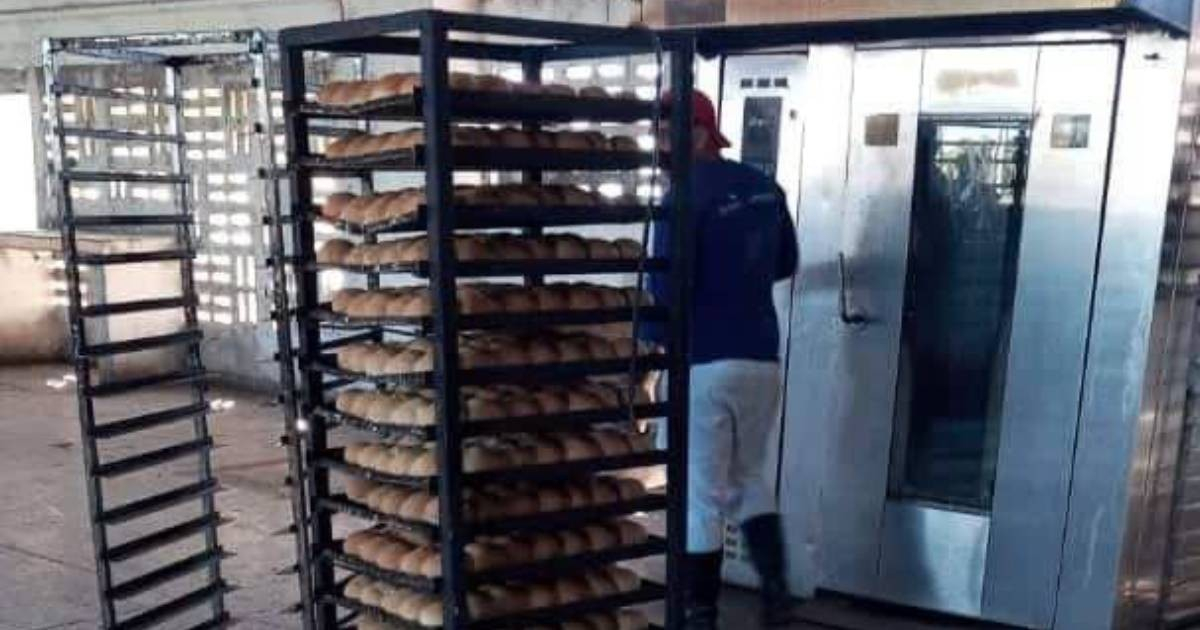
Residents in several localities of Sandino, a municipality in Pinar del Río, face uncertainty as their basic bread supply is secured for only the next five days. Local authorities have acknowledged the delivery of a restricted amount of wheat flour to the area, highlighting a precarious situation.
According to Radio Sandino, the communities of Manuel Lazo, Las Martinas, and La Grifa are among the hardest hit. These remote areas not only rely on flour availability but also on securing fuel and transportation to distribute it.
Reinier Puentes Corrales, director of the Basic Food Unit of Sandino, explained, "The units in Manuel Lazo, Las Martinas, and La Grifa will receive wheat flour for five days, dependent on transportation and fuel to reach each location."
Local Authorities Strive to Maintain Bread Production
Efforts are underway to coordinate with the municipal government to keep producing bread for the regulated family basket and prioritized organizations. This comes after these communities went several days without flour.
Meanwhile, the main bakery in Sandino is in a slightly better position. It hasn't faced production delays, having previously received its allocated raw materials. Yet, available reserves were only expected to last until the day following the report's release.
Nationwide Supply Crisis
The situation in Sandino is symptomatic of broader issues plaguing Cuba, notably the scarcity of wheat flour and fuel shortages necessary for transportation and processing.
Earlier this year, the Minister of the Food Industry, Alberto López Díaz, admitted that wheat mills were either halted or operating at minimal capacity due to raw material shortages. Of more than six planned wheat shipments for the year, only three had arrived. Cuba requires about 20,000 tons of flour monthly just to meet the regulated bread production needs.
Resorting to Alternative Solutions
In Pinar del Río, these shortages have prompted emergency measures. Since the beginning of the year, numerous bakeries have started using power generators or wood-fired ovens to maintain output. In municipalities like Guane and La Palma, all facilities have resorted to this method.
Similar scenes unfold across other provinces. In some parts of Guantánamo, mules are used to transport flour to isolated communities, while in areas like Ciego de Ávila, deliveries have barely sufficed for a few days of consumption.
Fuel shortages exacerbate the situation. In May, the Minister of Energy and Mines, Vicente de la O Levy, openly stated that the country was facing a severe fuel shortage.
This scarcity makes distributing flour as challenging as the lack of the product itself. For the residents of Manuel Lazo, Las Martinas, and La Grifa, the arrival of this shipment offers only temporary relief, with daily bread production still dependent on resources that remain scarce across Cuba.
Challenges of Flour and Fuel Shortages in Cuba
What is causing the bread supply issue in Sandino?
The bread supply issue in Sandino is due to limited deliveries of wheat flour compounded by challenges in securing transportation and fuel to distribute it to remote communities.
How are bakeries in Pinar del Río adapting to flour shortages?
In response to flour shortages, many bakeries in Pinar del Río have begun using power generators and wood-fired ovens to continue bread production.
What measures are being taken to ensure bread supply in affected areas?
Local authorities are coordinating with the municipal government to maintain bread production for the regulated family basket and prioritized organizations.