As the 22nd Congress of the Central de Trabajadores de Cuba (CTC) approaches, a state-run newspaper has for the first time openly acknowledged that wages remain a major source of discontent among Cuban workers. This issue has persisted for years without resolution, leading to a significant exodus of qualified personnel from crucial sectors.
This admission was made in an article by the government-controlled newspaper Invasor, the official publication of the Communist Party in Ciego de Ávila, under the headline "Aligning Wages." The article concedes that flaws in the remuneration system continue to adversely affect productivity, job stability, and workers' purchasing power.
The article features statements from Edilberto Acosta Ramos, a veteran unionist with four decades of experience in the railway sector. He candidly discusses the severe consequences of low wages in the nation.
"The wage issue leads to serious consequences such as demotivation, workplace indiscipline, and the migration of skilled individuals to other entities or sectors offering better pay," Acosta Ramos stated.
Acosta Ramos warned that the loss of trained workers is particularly damaging to specialized sectors like the railway industry.
"A train operator is not trained overnight, and we are losing qualified personnel not just in railroads," he emphasized.
The Impact of Wage Issues on Cuban Sectors
The union leader also criticized a long-standing principle of the Cuban labor system, stating, "Not always, nor everywhere, is one paid according to the quantity, quality, and complexity of the work," directly challenging the state's wage model.
Invasor itself notes that this issue was previously discussed during the CTC Congress held in 2019 and remains unresolved seven years later.
These remarks were made at the Ferroazuc Basic Business Unit, one of the most efficient in the Cuban Railways Union. However, the halt of the 2025-2026 sugar harvest has left many of its workshops and locomotives idle, forcing the reallocation of workers to different roles.
"Transporting other loads by rail does not generate enough revenue to pay our team, alternatives must be sought," Acosta Ramos acknowledged.
Wage Concerns Dominate Union Talks
Wage concerns also dominate union discussions in the province. According to the article, four of the seven issues deemed "worrisome and recurring" are directly linked to workers' income: the loss of purchasing power due to inflation, payment delays because of banking liquidity issues, the shortage of ATMs, and the decline in goods and services production.
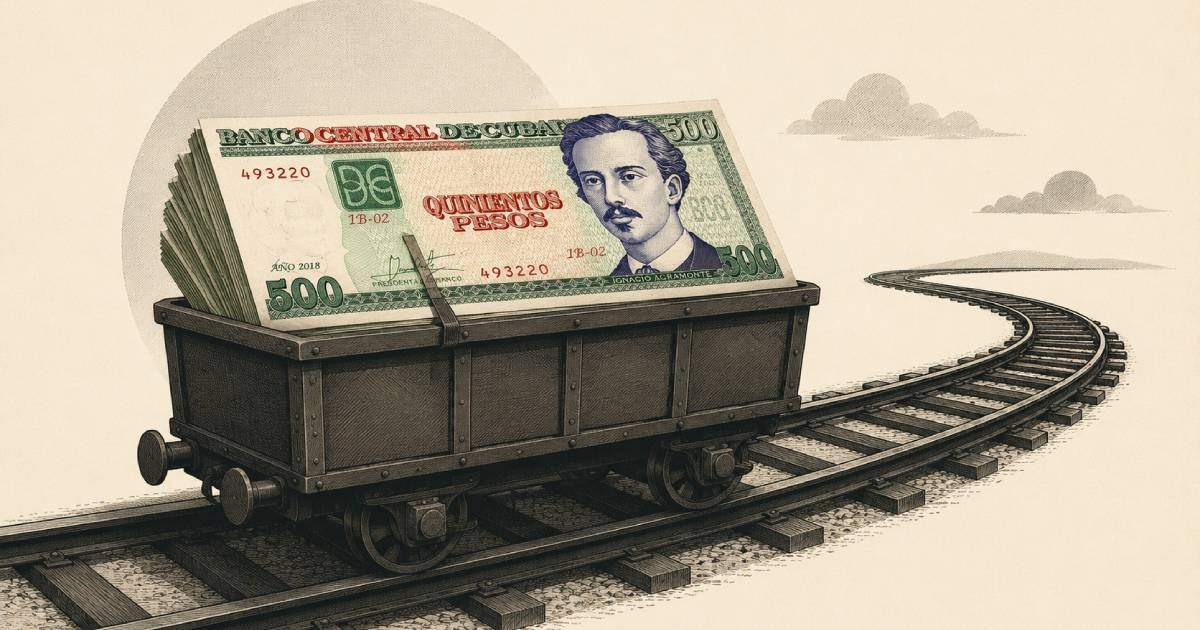
Numbers shed light on the discontent. The official average salary in Cuba closed in 2025 at 6,930 pesos per month, equivalent to just over ten dollars at the informal exchange rate. Meanwhile, a recent study by economist Javier Pérez Capdevila estimated that an individual needs approximately 96,060 pesos monthly to cover basic expenses for food, housing, and other essential goods.
The gap between income and living costs has driven an increasing number of workers away from the state sector. Education began the 2025-2026 school year with more than 24,000 vacant teaching positions; the healthcare system lost over 24,000 workers; and thousands of employees also left the electric sector seeking better-paying opportunities.
Upcoming CTC Congress and Government Measures
In this context, the 22nd CTC Congress will convene on June 26 and 27 via videoconference from all provinces, with limited physical presence in Havana. Authorities justified the format citing the country's economic difficulties and the need to proceed with "austerity and rationality."
Days prior to the meeting, Miguel Díaz-Canel announced new measures aimed at making payment systems in state enterprises more flexible and removing certain wage caps. However, these reforms do not provide an immediate solution for workers in the budgeted sector, where a significant portion of public employment in Cuba is concentrated.
The conclusion of the Invasor article captures a problem that even official media can no longer conceal.
"We need to align wages and other missteps that the labor Congress can address," Acosta Ramos wrote, reflecting the growing frustration of Cuban workers as their earnings increasingly fall short of covering the real cost of living.
Frequently Asked Questions About Cuban Wage Discontent
Why are wages a major concern for Cuban workers?
Wages in Cuba have remained stagnant and insufficient to cover basic living expenses, leading to demotivation and migration of skilled workers to better-paying opportunities.
What are the consequences of low wages in Cuba?
Low wages result in worker demotivation, indiscipline in the workplace, and a brain drain from crucial sectors as workers seek better pay in other fields.
What steps are being taken to address the wage issue in Cuba?
The Cuban government has announced measures to make payment systems more flexible and remove certain wage caps, although these do not immediately resolve issues in the budgeted sector.