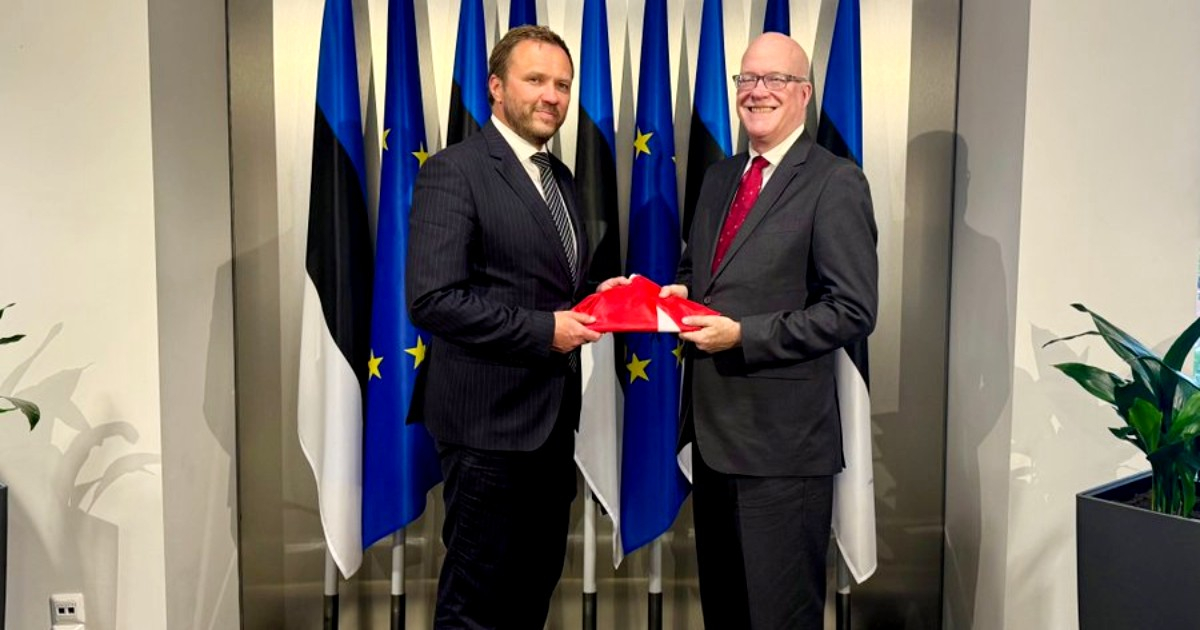
Estonia's Foreign Minister, Margus Tsahkna, engaged in talks on Wednesday in Tallinn with Dr. Orlando Gutiérrez-Boronat, Secretary-General of the Assembly of the Cuban Resistance (ARC). Following their meeting, Tsahkna took to social media to declare unequivocally, "The Cuban people deserve freedom, democracy, and respect for human rights."
This meeting coincided with a period of intensified diplomatic efforts by the ARC across Europe. Just a day earlier, Gutiérrez-Boronat attended the International Conference on Western Hemisphere Freedom in Lithuania's Parliament, where he demanded the cessation of European funding to the Cuban dictatorship, highlighting the ongoing protests by Cubans that had persisted for 70 consecutive days.
Urgency for Democratic Reforms
Tsahkna described the meeting as a chance to explore how to support a peaceful democratic future for Cuba. He identified three critical reasons for immediate reforms: the ongoing imprisonment of political dissidents, restrictions on fundamental freedoms, and Cuba's support of Russian aggression against Ukraine.
"These reforms are crucial for Cuba to unlock its potential and build a more prosperous future for its people," the Estonian Foreign Minister added.
European Parliament's Stance
The Tallinn meeting took place as the European Parliament in Strasbourg debated a resolution scheduled for a vote on Thursday. This resolution calls for the immediate release of over 1,200 political prisoners in Cuba, sanctions against those responsible for repression and leaders of the military conglomerate GAESA, and potentially suspending the EU-Cuba Political Dialogue and Cooperation Agreement.
This resolution follows an amendment approved in January 2026 by the European Parliament, which passed with 331 votes in favor, advocating for a review of privileged cooperation with Havana, citing, among other reasons, the deployment of more than 1,076 Cuban fighters to Ukraine in support of Russia.
Estonia’s Firm Stance
Estonia has maintained a particularly firm stance against the Cuban regime. In January 2026, Tsahkna formally requested the EU to review a Cuban state digitalization project valued at 441,000 euros, citing concerns over its potential political misuse.
In February, Estonia's e-Governance Academy halted the shipment of technological equipment to Cuba and suspended the "Digital Cuba" project.
Momentum for Change
Gutiérrez-Boronat arrived in Tallinn after speaking in Vilnius, where he described the current moment as the closest Cuba has been to change. "The driving force of change is the Cuban people," he stated, in front of officials from the United States, Ukraine, Poland, Armenia, Moldova, and the United Kingdom who supported the cause at the conference.
The opposition leader emphasized the nature of the protests: "They are not shouting for electricity, nor for lifting the embargo; their cries are for those in power to leave, for they are fed up with them, down with communism, freedom."
Ongoing Advocacy Efforts
Since at least 2023, the ARC has been continuously advocating before European institutions. In 2026, these efforts have intensified with presentations in Brussels, Madrid, Rome, and the Italian Senate, promoting the Liberation Agreement for Cuba alongside Rosa María Payá's Steps to Change initiative.
"This is a regime that failed to protect Maduro but can imprison and kill Cubans, which is why we have thousands of political prisoners," warned Gutiérrez-Boronat in Vilnius, encapsulating the central argument of the Cuban resistance brought to every European capital they visit.
Key Questions on Cuba's Path to Freedom
What are Estonia's main concerns about Cuba?
Estonia is primarily concerned with the imprisonment of political dissidents, restrictions on basic freedoms, and Cuba's support for Russian aggression against Ukraine.
Why is the European Parliament considering a resolution on Cuba?
The European Parliament is considering a resolution to demand the release of over 1,200 political prisoners, impose sanctions on those responsible for repression, and possibly suspend the EU-Cuba agreement due to Cuba's political actions and human rights violations.
How has the ARC been advocating for change in Cuba?
The ARC has been actively engaging with European institutions, holding presentations and discussions in several capitals, and promoting the Liberation Agreement for Cuba to increase international pressure for democratic reforms.