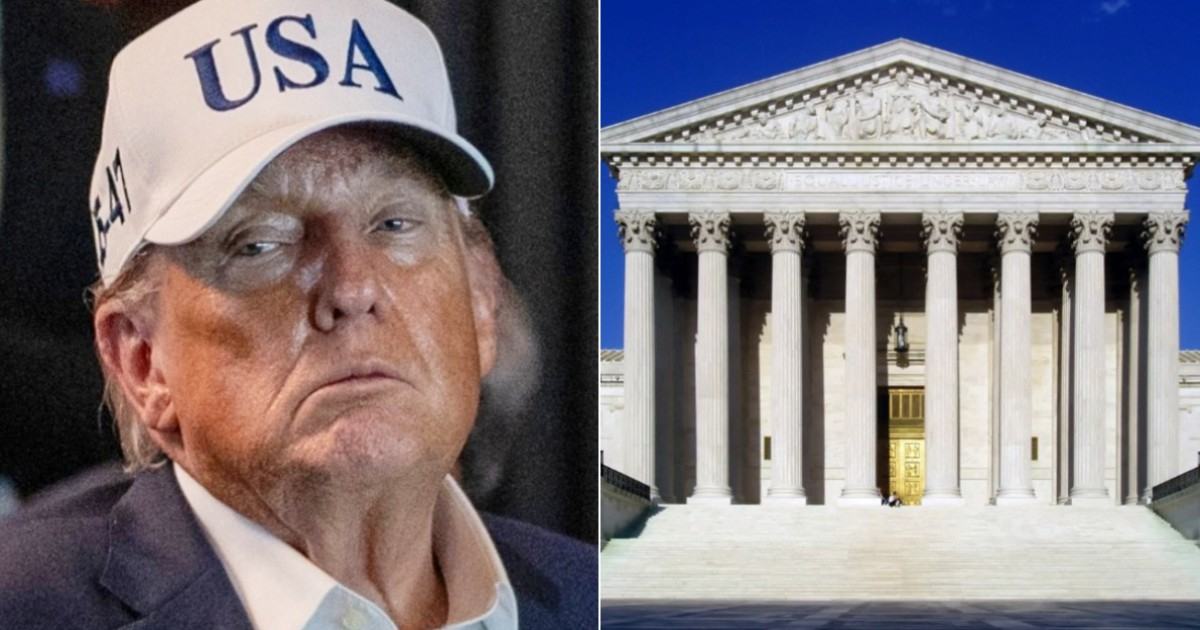
The U.S. Supreme Court is expected to deliver rulings in the coming weeks on at least five cases directly tied to former President Donald Trump's immigration policies, with the first set of decisions anticipated this Thursday, as reported by NBC News.
With a conservative majority of six to three, the court still has 20 cases pending in the current judicial term, which wraps up at the end of June. The outcomes could significantly reshape presidential authority and the immigration landscape for hundreds of thousands of people.
Key Case on Birthright Citizenship
The most pivotal case is Trump v. Barbara, focusing on an executive order signed on January 20, 2025, aimed at denying automatic citizenship to children born in the United States to parents who are either undocumented or hold temporary status.
All lower courts that reviewed the order have deemed it unconstitutional, and legal experts widely anticipate the Supreme Court to rule against the president on this issue.
Trump personally attended the oral arguments on birthright citizenship on April 1, marking a rare occasion for a sitting president, and has since openly voiced his displeasure.
"America cannot bear the burden of birthright citizenship. It's unsustainable economically and otherwise," he posted on Truth Social last week.
According to estimates from the Migration Policy Institute and Pennsylvania State University, more than 250,000 babies born annually in the U.S. could be impacted if the order were upheld.
Temporary Protected Status and Asylum Cases
Regarding Temporary Protected Status (TPS), the court will address Mullin v. Doe and Trump v. Miot, which will decide if the government can terminate these protections for about 350,000 Haitian immigrants and nearly 6,000 Syrians.
The Ninth Circuit already approved the termination of TPS for approximately 51,000 Hondurans and 3,000 Nicaraguans in February 2026, ending protections in place since 1999.
Additionally, the case Noem v. Al Otro Lado will determine if the government can physically block asylum seekers at ports of entry before they can submit their applications. During the March 24 oral arguments, most justices appeared sympathetic to the government's stance.
Impact on Cuban and Other Immigrant Communities
This context is particularly significant for the Cuban community: a federal court ruling on June 5 in Rhode Island overturned Trump's immigration policies—including the suspension of asylum and freezing of immigration benefits—for nationals of 39 countries, including Cuba, Venezuela, and Haiti.
However, depending on the Supreme Court's upcoming decisions, this ruling could be rendered moot.
Key Questions About Supreme Court Immigration Decisions
What is the significance of the Trump v. Barbara case?
The Trump v. Barbara case is crucial as it challenges an executive order aiming to deny birthright citizenship to children born in the U.S. to non-citizen parents. A decision could redefine citizenship rights and impact thousands of families.
How might the Supreme Court's decisions affect Temporary Protected Status?
The court's rulings in Mullin v. Doe and Trump v. Miot will decide if TPS can be revoked for hundreds of thousands of immigrants, affecting their ability to stay in the U.S. and maintain their legal protections.