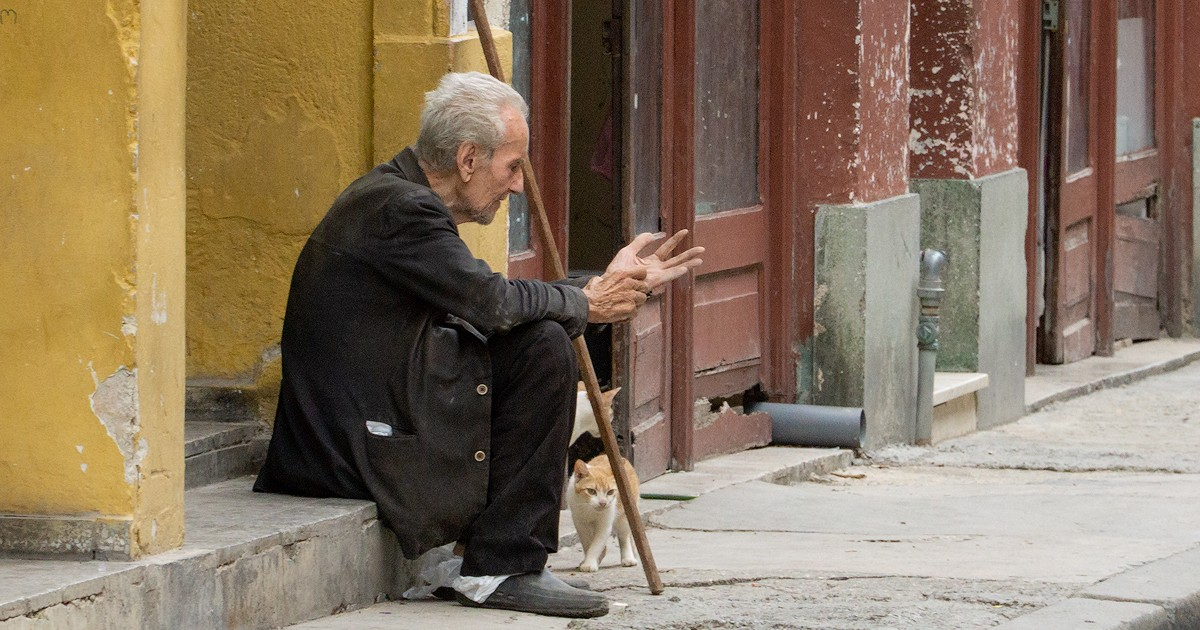
A report by the state-run Cubadebate on the Family Care System (SAF) has sparked a wave of backlash on social media, with Cubans both on the island and abroad condemning the rosy picture it painted of a program that, according to critics, barely survives amid shortages, corruption, and government neglect.
Cubadebate's article depicted SAF as a network of approximately 1,445 units serving over 76,000 vulnerable individuals across the nation, offering five-course daily menus—rice, protein, soup, tubers, salad, and dessert—along with bolero gatherings, communal birthdays, and integrated medical care.
The reaction on Facebook was swift and fierce. "More inflated information," summarized one commentator, a phrase that quickly became the popular epitaph for the report.
"There's one at the corner of my house... protein? dessert? birthdays? seriously? It looks more like a cave than a dining place; let's not talk about hygiene, and it's pitiful because those who go there have no other option," another user wrote.
The critiques highlighted a stark divide between the official narrative and everyday reality. "It seems like the Cubadebate writers don't live in Cuba or have never seen an SAF, they're all empty and don't provide the services they were created for," another commentator remarked.
Specific cases were pointed out: "The elderly in Bejucal are starving," and "The one in Güines is a national disgrace." A visually impaired person claimed they had never heard of the program, and another user mentioned that their 20-year-old disabled son was also unaware of its existence.
Corruption was another frequent target. "The better stuff gets stolen," one user noted. This is not an unfounded accusation: Granma itself reported in March 2026 that a Gastronomy director and an administrator of an elderly dining hall were diverting rice and oil meant for the most vulnerable.
Despite its triumphant tone, the Cubadebate report inadvertently revealed signs of the real crisis. The SAF 0204 Villanueva in Boyeros has been cooking with wood for five months due to a lack of liquefied gas. Its director, Bárbara Mediaceja Hernández, admitted that local private businesses stopped collaborating since December 2025: "They say inspectors are too frequent, and they issue too many fines."
The SAF is surrounded by structural collapse. According to the Cuban Citizen Audit Observatory, 79% of those over 70 can't manage three meals a day, and 99% of retirees acknowledge their pensions don't meet basic needs, set at 4,000 pesos—less than $10 on the informal exchange—compared to the estimated 30,000 pesos needed for basic monthly nutrition.
The program survives partly thanks to external donations: the World Food Program delivered 106 tons of canned meat to SAF in Villa Clara in May 2026, and the Canary Islands government donated 75 tons of canned chicken in April. The regime itself admitted in March 2026 that "there are no resources to care for vulnerable people."
"Stop publishing empty words and conduct field reports, visit the sites, investigate, see for yourself so that one day you won't regret having written so many lies, which, moreover, will be archived as evidence," demanded a commentator, capturing the frustration of those who see the official report as an insult to Cuban elders facing hunger daily.
Understanding the Family Care System in Cuba
What is the Family Care System (SAF) in Cuba?
The Family Care System (SAF) in Cuba is a government program designed to provide meals and care to vulnerable individuals, including the elderly and disabled, through a network of units across the country.
Why is the SAF facing criticism?
The SAF is criticized for failing to deliver on its promises due to systemic issues like corruption, inadequate resources, and government neglect, leading to a significant gap between the official narrative and the reality experienced by Cubans.
How does the SAF sustain itself amid these challenges?
The SAF relies on external donations to sustain itself, with contributions from international organizations and foreign governments helping to fill some of the gaps left by inadequate local resources.