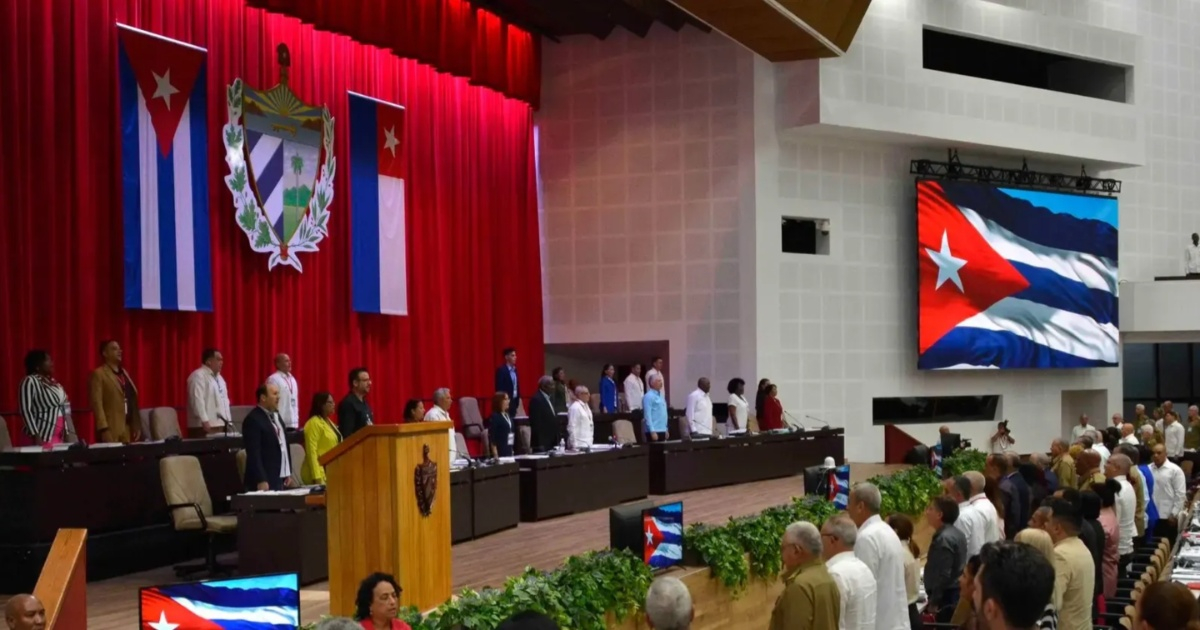
The Council of State announced the Agreement 599-X/2026 in the Extraordinary Official Gazette No. 72 this Tuesday, summoning the National Assembly of People's Power for its Third Special Session of the 10th Legislature on Thursday, June 18, at 2:00 p.m.
The session's primary goal is to examine the "Economic and Social Transformation Proposals" unveiled by Miguel Díaz-Canel on June 12, which the regime has described as the most significant reform announcement in recent years.
Juan Esteban Lazo Hernández, president of the National Assembly and the Council of State, signed the call to session, referring to Article 122, section d) of the Constitution and Article 257, section d) of Law 131 concerning the organization and functioning of the National Assembly.
The agreement text states: "Summon the Third Special Session of the National Assembly of People's Power in its 10th Legislature, for June 18, 2026, at 2:00 p.m., to evaluate the 'Economic and Social Transformation Proposals.'"
The regime's institutional process is notably expedited: the public announcement of the reforms took place on June 12, the PCC Political Bureau convened an Extraordinary Plenary of the Central Committee for Wednesday, June 17, and the parliamentary session is set for the following day.
Díaz-Canel himself hinted on Facebook that the measures would be processed "very swiftly" by the Political Bureau and then by the National Assembly, confirming a three-step cadence within less than a week.
The proposals are structured around six pillars: economic management system, municipal autonomy, business autonomy, agricultural recovery, foreign trade and investment, and social policy.
Among the most noteworthy points is the possibility for municipalities to directly import, export, and manage foreign investments, alongside granting state enterprises greater autonomy over wages, currency retention, and access to the foreign exchange market.
The plan also proposes that Cubans residing abroad can invest on equal footing with state companies, cooperatives, micro, small, and medium enterprises (MSMEs), and foreign capital, a level of openness the regime had not formalized until now.
Other measures involve restructuring the state apparatus with a reduction in ministries and administrative positions, incentives for the agricultural sector, and a gradual transition from generalized subsidies to targeted aid for vulnerable individuals.
The regime positions these transformations as a response to the severe economic crisis facing the island, intensified by years of centralized management and U.S. sanctions, although critics argue they are insufficient given the scale of the collapse.
Thursday's session will mark the third special call of the National Assembly's 10th Legislature, an entity that effectively rubber-stamps Communist Party decisions without real debate or internal opposition.
Key Aspects of Cuba's Proposed Reforms
What are the main objectives of the proposed economic and social transformations in Cuba?
The proposals aim to restructure economic management, enhance municipal and business autonomy, boost agricultural recovery, improve foreign trade and investment, and refine social policies.
How will the proposed changes affect Cuban municipalities and enterprises?
Municipalities will gain the ability to directly import, export, and manage foreign investments, while state enterprises will receive greater autonomy over wages, currency retention, and market access.
What is the significance of allowing Cubans abroad to invest in Cuba?
This reform opens up investment opportunities for Cubans living overseas, allowing them to invest on equal terms with state companies, cooperatives, MSMEs, and foreign investors, marking a significant policy shift.