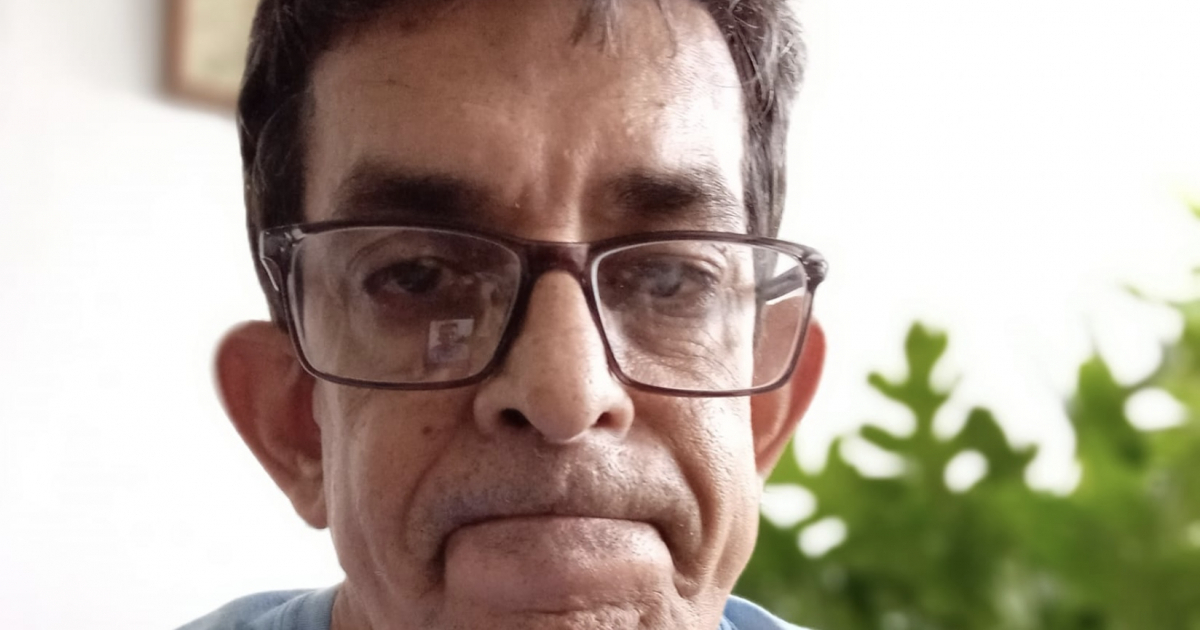
Cuban comedian and actor Ulises Toirac took to Facebook on Tuesday to openly criticize the dual power structure in Cuba's political system. He questioned the existence of both the Cuban Communist Party (PCC) and the People's Power (PP) as parallel government entities funded by the public amid an unprecedented crisis.
"There are two governments: PCC and PP. Both have a structure that spans from the grassroots to the national level. Thousands of salaries. Thousands of properties, cars, trips (both domestic and international)...," Toirac wrote, noting that he decided to speak out after being told, "If you have a better idea, share it."
Toirac contrasted this bureaucratic machine with the daily struggles faced by Cubans: "There's hunger in this country, no medicines, no functioning electric system, no resources of any kind. These two structures are being maintained that APPARENTLY duplicate efforts. And it's all paid by Liborio."
The term "Liborio" — a popular figure symbolizing the ordinary Cuban citizen — encapsulates who bears the financial burden of these dual structures, while the island endures power outages lasting up to 20 hours a day, with electric deficits surpassing 2,100 MW in May and a water system operating at only 37% of its capacity.
Toirac concluded his post with a rhetorical question summarizing his point: "Doesn't it seem like one of them is unnecessary... or...?"
The critique targets a structural reality enshrined since the 1976 Constitution, whose Article 5 identifies the PCC as "the supreme guiding force of society and the State."
This architecture effectively creates two overlapping chains of command in every province and municipality: one ideological-party and the other administrative-governmental, each with its own payrolls, vehicles, properties, and budgets.
The post is part of a consistent pattern of public criticism by the comedian against the Cuban government throughout 2026.
On March 18, he stated, "The decisions of this government are what set the economy ablaze," and on May 2, he questioned why the regime prioritized mobilizations and propaganda events over addressing tangible issues like trash and blackouts.
On June 13, just days before this publication, Toirac remarked that reforms announced by Díaz-Canel arrived "late and grudgingly" and that "today they won't work either."
On Monday, in response to a user who called him a "mercenary," Toirac stood firm in his criticism of the governmental apparatus without backing down.
The comedian's consistent stance is that Cuba's main problem is not due to external factors like the U.S. embargo, but rather the internal management of its government and its structural inability to address the daily crisis faced by its citizens.
The New York Times reported in January 2026 that monthly food rations "barely lasted ten days" and obtaining medicine was "nearly impossible" without foreign aid, adding weight to the question Toirac poses to the regime: if resources for the people are scarce, can Cuba afford the luxury of maintaining two governments simultaneously?
Understanding Cuba's Dual Government System
What are the two government structures in Cuba?
Cuba's two government structures consist of the Cuban Communist Party (PCC) and the People's Power (PP), both serving as parallel entities with their own bureaucratic systems.
Why does Ulises Toirac criticize the dual government system?
Ulises Toirac criticizes the dual government system because he believes it is an unnecessary duplication of resources, which burdens the Cuban people financially during a time of severe crisis.
What challenges are Cubans facing due to the dual government system?
Cubans are facing challenges such as food shortages, lack of medicines, and frequent power outages, exacerbated by the financial burden of maintaining two government systems.