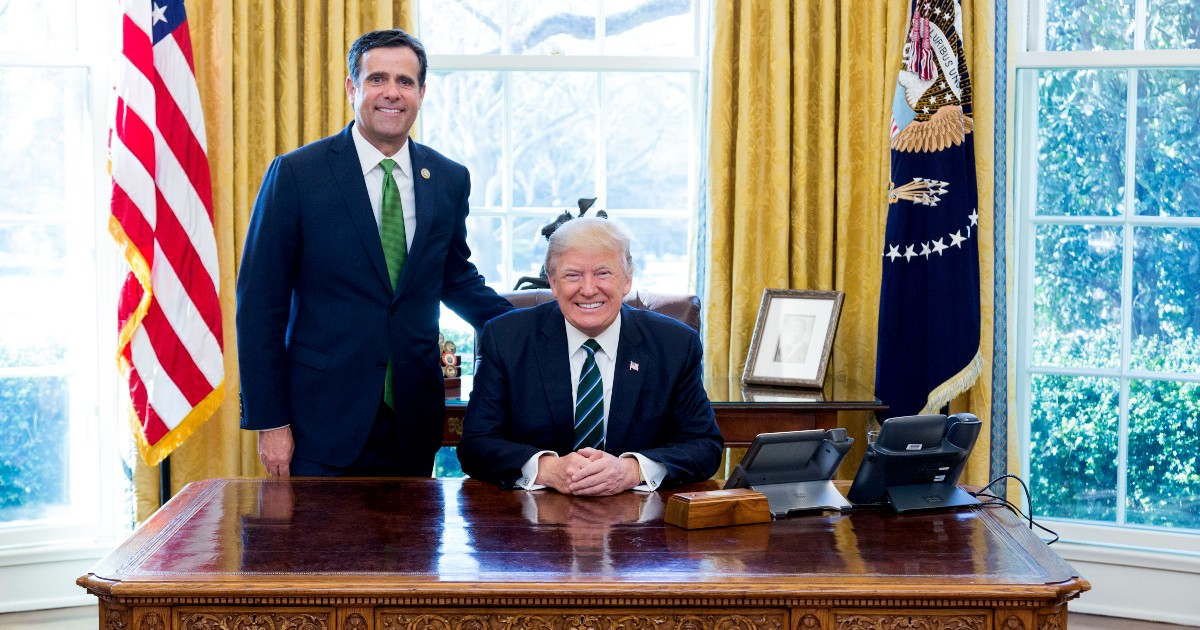
John Ratcliffe, head of the Central Intelligence Agency (CIA), has alerted President Donald Trump and other top officials that intelligence gathered by multiple U.S. agencies raises significant doubts about Iran's willingness to make the nuclear concessions demanded by Washington for a final agreement. This information was disclosed to Axios by three sources familiar with the discussions.
Ratcliffe's skepticism follows the recent announcement by the U.S. and Iran of a 14-point memorandum of understanding last Sunday. While the full text of the memorandum has not been released, it is intended to prolong the ceasefire and initiate 60 days of negotiations aimed at finalizing a nuclear deal.
Internal Concerns Over Consistency
The intelligence reviewed reveals that Iranian officials are discussing the agreement internally in ways that do not align with what they are conveying to mediators and the U.S.
"The intelligence indicates that Iranian intentions are inconsistent with their commitments under the agreement," an anonymous source familiar with the internal discussions stated.
Division Within the Trump Administration
Ratcliffe is not alone in his skepticism. Secretary of State Marco Rubio and Secretary of Defense Pete Hegseth have also voiced concerns about the memorandum in internal discussions. Conversely, Vice President JD Vance and envoys Steve Witkoff and Jared Kushner have defended it, according to two of the sources.
The White House has responded cautiously to the situation. "President Trump listens to all opinions on any matter, but everyone understands that he is the final decision-maker," a White House official stated, adding that the memorandum "meets all the red lines that the administration has long articulated."
Contentious Points of the Memorandum
Internal critics argue that Iran stands to gain more than it gives under the memorandum unless it agrees to a nuclear deal on U.S. terms.
Among the most contentious points is the release of frozen Iranian funds, which the memorandum addresses ambiguously, and the creation of a $300 billion fund for Iran's reconstruction and economic development, conditional on Tehran dismantling its nuclear program.
In the immediate term, the memorandum includes the reopening of the Strait of Hormuz. Iran will ensure the safe passage of commercial vessels without charge for 60 days, while the U.S. will gradually lift its naval blockade within 30 days.
Future of the Negotiations
A senior U.S. official indicated that in two to three weeks, it will become clear whether Iran is serious about the nuclear concessions. If not, the process could be halted without Tehran gaining significant benefits.
On Monday, Trump claimed that Iran had agreed never to possess a nuclear weapon, although the final terms have yet to be finalized.
The agreement follows months of tension. The conflict between the U.S. and Iran began on February 28, 2026, with coordinated attacks by Washington and Israel, and previous negotiations in Islamabad failed in April due to disagreements over the duration of the uranium enrichment moratorium.
Republican Senator Lindsey Graham summarized the lingering doubts: "I am somewhat concerned because the Iranian vision of the deal seems different from what the U.S. negotiating team is asserting," he told Axios, while calling for the immediate publication of the document.
Vance, Witkoff, and Kushner are scheduled to meet with the Iranian Parliament's President, Mohammad-Bagher Ghalibaf, and Foreign Minister Abbas Araghchi this Friday to discuss the next phase of negotiations.
Questions About the U.S.-Iran Nuclear Deal
Why is the CIA skeptical about Iran's intentions?
The CIA, led by John Ratcliffe, has raised concerns based on intelligence that suggests Iranian officials are not aligned with their commitments as conveyed in the agreement discussions.
What are the main points of contention in the memorandum?
Key issues include the ambiguous language regarding the release of Iranian funds and the conditional $300 billion fund for Iran's reconstruction, which depends on dismantling its nuclear program.
What are the immediate implications of the memorandum?
The memorandum proposes reopening the Strait of Hormuz with Iran ensuring safe passage for commercial vessels, while the U.S. will start lifting its naval blockade within 30 days.