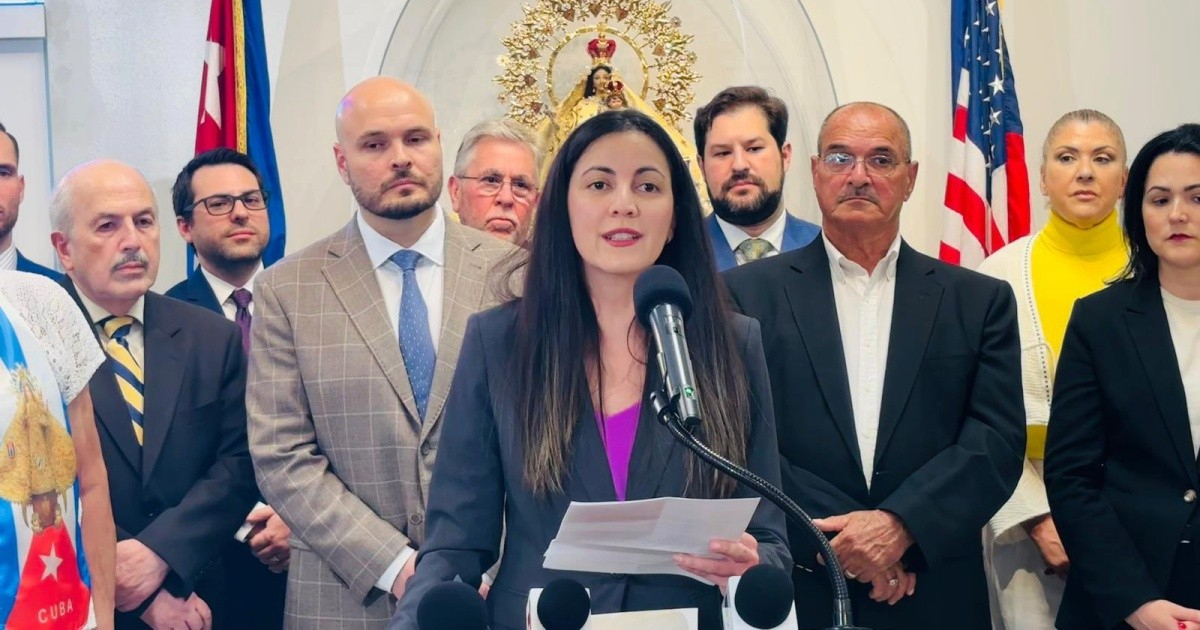
A strategic alliance has been announced between the Cuban Liberation Agreement—a broad coalition of Cuban opposition groups—and the Cuban American Bar Association (CABA) in Miami. Their joint mission is to create the necessary legal framework for a prospective democratic transition in Cuba.
During a press conference, Rosa María Payá, the coordinator of the Cuban Liberation Agreement; Jordi Martínez-Cid, president of CABA; and José Daniel Ferrer, a prominent opposition leader and founder of the Patriotic Union of Cuba (UNPACU), shared their vision for the future.
Preparing for a Post-Regime Cuba
Payá emphasized the urgency of addressing what will happen after a political shift in Cuba: "We are laying the legal foundations of a democratic Cuba even before a regime change occurs. Our focus is on preparing the laws for transition and establishing the rule of law to be ready from day one," she stated.
She highlighted the potential danger they aim to prevent: "When a dictatorship collapses, it often leaves a void. We're working to ensure Cubans aren't left facing that void."
According to the official statement from Cuba Decide, CABA will provide strategic legal advisory support to the coalition's working groups and the future provisional government.
Key Initiatives of the Alliance
The partnership will drive three main initiatives:
- Adapt CABA's transition law to meet the mandate of the Agreement.
- Establish a network of qualified legal advisors.
- Deploy specialized attorneys within working commissions.
Operational Readiness and Legal Expertise
Payá described the partnership as a significant step in the organizational maturity of the opposition: "This is what operational readiness entails. We're moving from a unified political roadmap to gathering the institutional management capacity to implement it, with volunteer lawyers from the diaspora joining this effort through CABA."
Among the priorities for the provisional government on day one, Payá listed the release of political prisoners, dismantling the regime’s repressive apparatus, and restoring the rule of law.
Martínez-Cid highlighted CABA's extensive experience: "For over fifteen years, CABA has worked on legal proposals for a potential transition, including a legislative project developed with exiled and dissident groups. By aligning our vast network of legal professionals with the operational mandate of the Liberation Agreement, we transcend activism and move towards concrete preparation. We are ready to provide the structural legal framework necessary for a fair, orderly, and lasting transition to democracy."
Founded in 1974, CABA stands as the most prominent voluntary association of lawyers in the Cuban diaspora, comprising judges, attorneys, paralegals, and law students.
Ferrer Emphasizes the Importance of Legal Framework
Ferrer, who entered exile after years of political imprisonment for his involvement in the July 11 protests, described the alliance as "momentous." He asserted, "Without a strong legal framework, rebuilding Cuba is impossible. Freedom cannot exist without an independent judiciary and respect for the rule of law."
Progress of the Liberation Agreement
The Liberation Agreement was signed by over 30 Cuban exile organizations in early March in Miami. It outlines a three-phase roadmap—Liberation, Stabilization and Reconstruction, and Democratization—aiming to culminate in Cuba's first free elections in over seventy years.
Since its signing, the Agreement has garnered increasing support: Florida officially recognized the Liberation Agreement in April through a proclamation by State Senator Alexis Calatayud, marking the first formal legislative endorsement by an elected state official.
The plan was subsequently presented in Madrid and before the Italian Senate in Rome.
According to Human Rights Watch, more than 700 political prisoners remain detained in Cuba, while the regime refuses the U.S. ultimatum to release high-profile detainees.
Payá summarized the project's ambition: "We want to be ready to govern, to lead, and to support the transition at the moment power fractures in Cuba."
Key Aspects of the Cuban Transition Plan
What is the Cuban Liberation Agreement?
The Cuban Liberation Agreement is a coalition of over 30 Cuban opposition groups aimed at fostering a democratic transition in Cuba. It outlines a roadmap consisting of three phases: Liberation, Stabilization and Reconstruction, and Democratization.
What role does CABA play in the transition plan?
CABA acts as a strategic legal advisor, providing expertise and a network of legal professionals to support the coalition’s initiatives. Their role is to ensure the legal framework necessary for a democratic transition is in place.
Why is a legal framework crucial for Cuba’s transition?
A strong legal framework is essential for establishing the rule of law, ensuring freedom, and maintaining an orderly transition to democracy. It provides the foundational structure needed for governance and justice after a regime change.