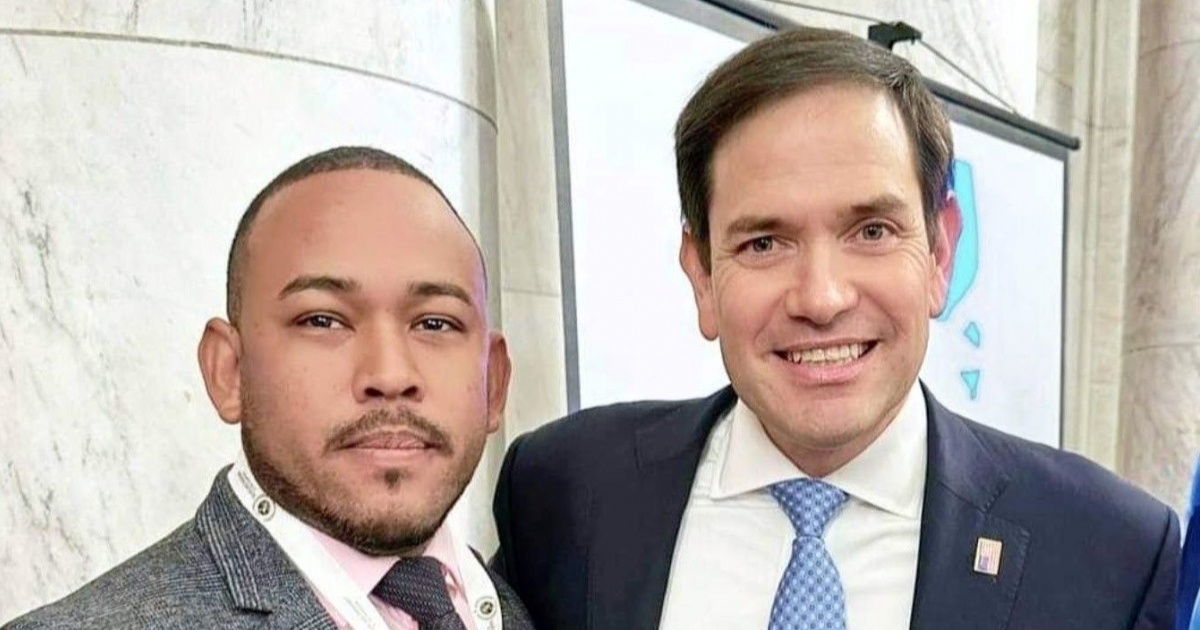
Independent Cuban journalist Yosmany Mayeta Labrada issued a desperate plea from Washington D.C. yesterday. He addressed his appeal to Secretary of State Marco Rubio and Cuban-American congress members Mario Díaz-Balart, María Elvira Salazar, and Carlos Giménez, urging them to step in and prevent his potential deportation before July 1, the date he is scheduled to appear in Immigration Court.
An immigration judge has denied a motion for postponement submitted by his pro bono attorneys, Yelena Guerra and Liudmila Armas Marcelo. This decision forces Mayeta to attend the court hearing in just 15 days, a session that could result in a deportation order.
Legal Challenges and Immigration Status
The legal complexities of Mayeta's case are tied to Section 212(e) of the Immigration and Nationality Act. He arrived in the United States in 2019 on a J-1 visa associated with a journalism fellowship, a category that mandates a two-year residency in his home country before adjusting his immigration status, unless the State Department grants a waiver. This waiver has been pending for years, leaving him in immigration limbo for nearly seven years.
Given Rubio's position as the head of the State Department, Mayeta specifically requests expedited handling of his waiver before the July 1 deadline.
Mayeta's Plea and Background
"I am not someone who entered this country illegally or with the intent to break the law. I arrived with proper documentation, fulfilled my obligations, and have been waiting for an institutional response that has yet to come," Mayeta stated.
Mayeta is recognized for his involvement in the "Kuba x Dentro" project and for reporting on issues such as blackouts, political repression, and living conditions from Santiago de Cuba. His decade-long career in independent journalism in Cuba led to threats, harassment, and persecution by the regime. "My work resulted in threats, harassment, and persecution by regime agents. I came to this country seeking the freedom denied to me in Cuba," he remarked.
Risks of Deportation and Broader Context
The journalist warns that deportation would return him to a country where his safety and well-being are genuinely at risk, fearing imprisonment upon arrival in Cuba. "Deportation would mean returning me to a country where my safety is in real and documented danger. MY LIFE IS AT RISK," he emphasized in his plea.
On June 6, Mayeta personally visited the Capitol to deliver letters to the offices of the three Cuban-American congress members, but as of yet, there has been no public response from any of them.
His case is not unique. In August 2025, 13 Cuban activists, including Anamely Ramos and El Funky, also wrote to Rubio and Florida congress members requesting a halt to their deportation orders. According to Human Rights Watch, between January 2025 and March 2026, the United States deported approximately 4,353 individuals of Cuban origin to Mexico, due to Cuba's refusal to accept them directly.
Mayeta has also reached out to media outlets, journalists, activists, and human rights organizations to raise awareness of his situation. "I am not asking for special treatment or for procedures to be overlooked. I am simply asking for a fair chance: for the pending waiver to be processed in time so I can continue my life in the country where I've resided for the past seven years, far from the regime that tried to silence my voice and work for over a decade," he concluded.
Key Questions on Yosmany Mayeta's Case
Why is Yosmany Mayeta facing deportation?
Mayeta's possible deportation is due to the denial of a motion for postponement by an immigration judge, and his pending waiver application under Section 212(e) of the Immigration and Nationality Act.
What is the significance of Section 212(e) in Mayeta's case?
Section 212(e) requires J-1 visa holders to reside in their home country for two years before adjusting their immigration status, unless granted a waiver by the State Department. Mayeta's waiver has been pending, contributing to his immigration uncertainty.
How has Mayeta contributed to journalism in Cuba?
Mayeta is known for his work in the "Kuba x Dentro" project and his reporting on issues like blackouts and political oppression in Santiago de Cuba, earning him persecution from the Cuban regime.