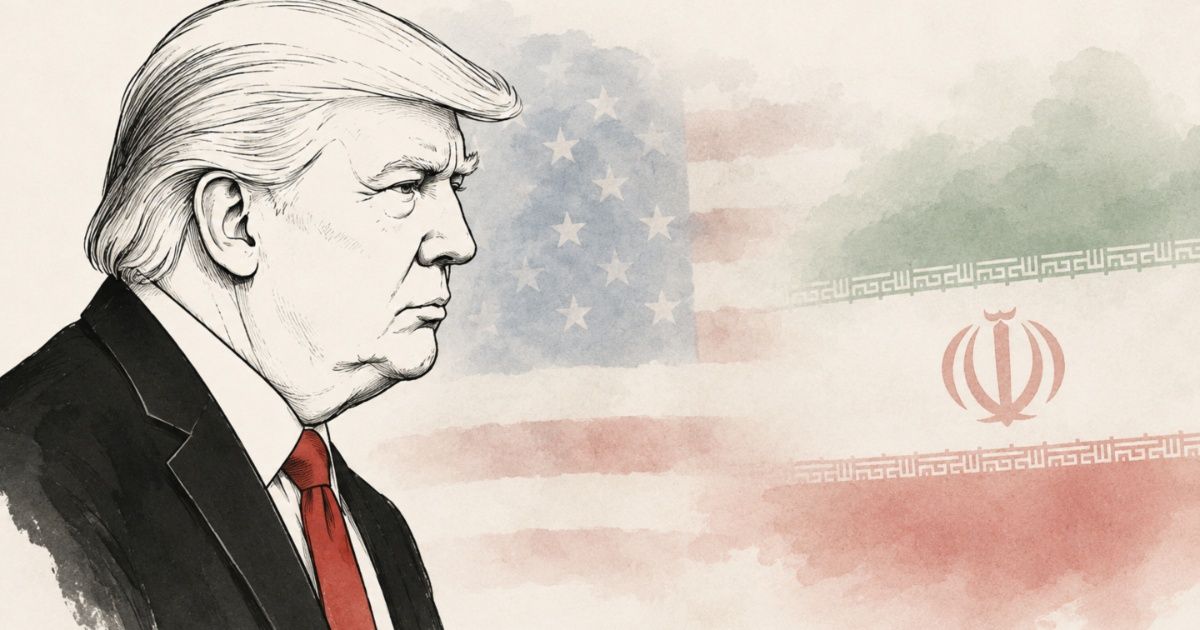
On Monday, former President Donald Trump took to his platform, Truth Social, to announce that "Iran has agreed to never develop a nuclear weapon," touting this commitment as the cornerstone of a peace agreement between Washington and Tehran.
In the same post on Truth Social, Trump dismissed as "Fake News" the reports suggesting that the United States would pay Iran $300 million, attributing such claims to the Democrats.
This announcement came just a day after Trump declared the deal as concluded, using his characteristic phrase, "Let the oil flow!"
Last Sunday, Trump revealed on Truth Social that negotiations with Iran had reached completion, granting unrestricted passage through the Strait of Hormuz and lifting the U.S. naval blockade immediately.
Pakistani Prime Minister Shehbaz Sharif, who alongside Qatar, Saudi Arabia, and Turkey served as an official mediator in the process, also stated that the peace agreement had been "ACHIEVED," with an immediate and enduring ceasefire on all fronts.
The official signing ceremony is scheduled for Friday, June 19, in Switzerland.
Uncertainty Surrounds the Agreement
However, significant uncertainties remain within the agreement. According to a draft leaked to Reuters, the deal would involve suspending Iran's nuclear program and destroying highly enriched materials in exchange for lifting oil sanctions and releasing frozen assets valued between $12 billion and $25 billion.
The document further outlines a 60-day period to finalize the terms, with ongoing disputes over the duration of the enrichment moratorium: Washington demands 20 years, while Tehran suggests a period ranging from five to 15 years.
Iranian President Masoud Pezeshkian has not officially confirmed the agreement, though he did mention that "the path of dialogue must continue."
A Rocky Path to Negotiation
The negotiation process faced numerous hurdles. Iran paused the talks on June 1 due to Israeli attacks in Lebanon, and on June 8, it declared a conditional ceasefire contingent upon Israel halting its actions in Lebanese territory.
The conflict initially erupted on February 28, 2026, with "Operation Epic Fury," a coordinated aerial offensive by the United States and Israel targeting Iranian nuclear and military sites.
In retaliation, Iran launched missiles and drones and closed the Strait of Hormuz—through which 20% of the world's oil passes—triggering a global energy crisis. The United States imposed a naval blockade starting April 13, 2026.
Trump's assertion that Iran "agreed to never develop a nuclear weapon" reflects his political interpretation of the agreement. However, the final nuclear terms were not solidified at the time of his statement, and Iran's missile program and support for regional militias were not addressed in the initial pact.
Key Questions About the Iran Nuclear Agreement
What did Trump announce about the Iran deal?
Trump announced on Truth Social that Iran has agreed to never develop a nuclear weapon, considering it a major success of the peace deal between Washington and Tehran.
What are the key components of the reported agreement?
The draft agreement reportedly includes suspending Iran's nuclear program and destroying highly enriched materials, while lifting oil sanctions and releasing frozen assets worth $12 billion to $25 billion.
Why was the negotiation process challenging?
The negotiations faced challenges such as Iran suspending talks due to Israeli attacks in Lebanon and demanding Israel stop its actions there as a condition for a ceasefire.