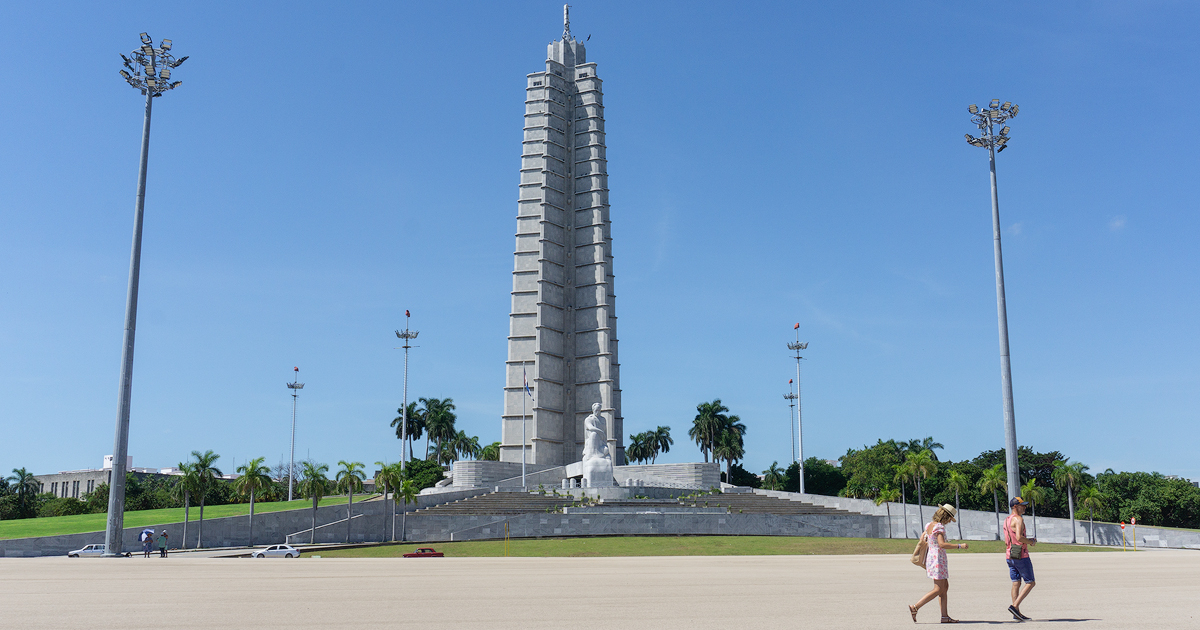
In an alarming downturn, Cuba welcomed a mere 30,883 international visitors in May 2026, marking the lowest monthly figure in years, according to official statistics released by the National Office of Statistics and Information (ONEI) on Monday.
Between January and May, the island hosted 359,491 international tourists, a staggering 58.4% decline compared to the same period in 2025, translating to 505,706 fewer visitors, as reported by the same source.
The Steep Decline of Key Markets
The downturn is widespread across all major source markets. Canada, traditionally the top contributor, saw a dramatic drop from 387,396 visitors in January-May 2025 to just 126,239 during the same period in 2026, a fall of 67.4%.
Canada's collapse is particularly stark on a monthly basis: from 99,724 tourists in January to a mere 795 in May, effectively vanishing from the market within weeks.
Russia experienced a similar fate, with arrivals plummeting from 15,688 in January to just 86 in May, culminating in a total of 21,136 visitors, reflecting a 62.5% decrease from 2025.
The United States also saw a decline, with numbers dropping from 57,233 to 25,572 visitors between January and May, a 55.3% reduction, although the monthly flow stabilized around 4,500 visitors.
Cuban Diaspora: A Resilient Segment
The only segment showing resilience was the Cuban diaspora, which increased its share from 6.8% of visitors in January to 47.6% in May, becoming the leading source of tourists to the island since March.
In January, the Cuban community abroad and U.S. visitors together accounted for 10.6% of the total; by May, they represented 62.2%, based on ONEI data analyzed by the economic analysis portal El Estado como tal.
Impact of International Policies and Sanctions
The collapse was triggered by Executive Order 14380, signed by Donald Trump on January 29, 2026, declaring a national emergency concerning Cuba and authorizing additional tariffs against countries supplying oil to the island.
On February 10, Cuba announced it lacked fuel for commercial aviation, leading to flight cancellations from Air Canada and Russian airlines Rossiya and Nordwind.
In April, Iberia suspended its direct Madrid-Havana flights until November, and in May, Plus Ultra withdrew its service as the operator of the only Cubana flight between Havana and Madrid.
The threat of secondary sanctions also expedited the exit of major international hotel chains: Meliá ceased managing 15 hotels, Iberostar stopped operating 12 linked to GAESA from June 1, Blue Diamond Resorts left behind 62 hotels and over 12,900 rooms, and Archipelago International withdrew from six establishments under the Aston brand.
Tourism Revenue and Occupancy Rates
Hotel occupancy rates in the first quarter of 2026 dropped to 12.9%, less than half of the already low 23.7% recorded in the same period of 2025.
Tourism revenues from January to March 2026 amounted to 20.079 billion Cuban pesos, compared to 34.865 billion in the same period the previous year, a contraction of 42.4%.
Long-Term Trends and Regional Competition
Tourism had been in decline before 2026: Cuba ended 2025 with just 1.8 million visitors, the lowest numbers since 2002—excluding pandemic years—and well below the government's target of 2.6 million.
Current figures are far from the records of 2018 and 2019, when Cuba received 4.6 million and 4.2 million visitors, respectively, buoyed by diplomatic thawing with Washington.
As Cuban tourism continues to struggle, competing Caribbean destinations like Punta Cana and Cancún report record visitor numbers, highlighting the cost of 67 years of dictatorship on an economy that has failed to take off.
Understanding the Cuban Tourism Crisis
What caused the drastic drop in tourism to Cuba in 2026?
The significant decline in tourism was largely due to Executive Order 14380, which declared a national emergency concerning Cuba, and led to additional tariffs on countries supplying oil to the island. This, combined with a shortage of aviation fuel and subsequent flight cancellations, severely impacted visitor numbers.
How did the Cuban diaspora influence tourism statistics in 2026?
In 2026, the Cuban diaspora became a critical segment for tourism, increasing their share from 6.8% in January to 47.6% in May, thus becoming the main source of tourists to Cuba during the period.
What was the impact of international hotel chains leaving Cuba?
The departure of major international hotel chains, due to the threat of secondary sanctions, significantly impacted Cuba's tourism infrastructure, reducing hotel management and operations, which further discouraged international visitors.