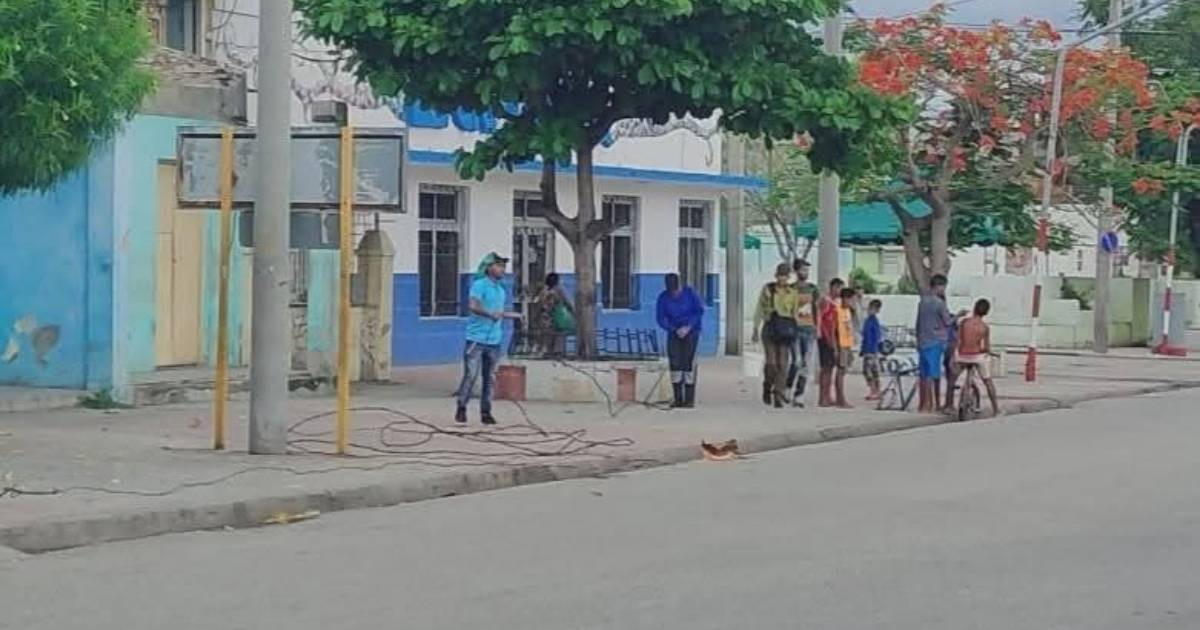
On Monday, the Cuban government initiated a coordinated operation involving the Revolutionary National Police, the Inspection Directorate, and the Santiago de Cuba Electric Company to dismantle unlawful electricity hookups in various neighborhoods. These illegal connections had reportedly caused irreparable damage to transformers in the Trocha and Cristina areas.
The Electric Union (UNE) identified that approximately 30 homes had illegally tapped into circuit 10, which also supplies power to significant hospital facilities in the province.
The crackdown extended across multiple city districts.
In the Luis Dagné area—specifically on streets 11, 14, 15, and 19—authorities discovered that several privately-run bakeries were illicitly drawing power from two circuits, leading to overloads and transformer damage.
Further interventions took place on Varadero Street in the Venceremos neighborhood, on 4th and 5th streets between F and G in Vista Hermosa, and along Manduley Avenue and La Ceiba.
As a result of these operations, approximately 1,000 meters of illegal electric connections were recovered. These materials will be redirected to address existing complaints regarding material shortages.
Fernando Javier Hau Corona, director of the Commercial Services UEB, acknowledged that the strain from restoring service after prolonged outages also contributes to equipment degradation. However, he emphasized that illegal connections significantly exacerbate the issue by adding "additional load beyond what is normally expected when electrical service is available."
The company stated that it is delving deeper into the investigation of the origins of these illegal activities and the resources employed.
This operation unfolds amidst an unprecedented electrical crisis. On Monday, the UNE reported only 995 MW of available power against a demand of 3,050 MW, with a projected shortfall of over 2,000 MW during peak times.
Moreover, the Antonio Guiteras Thermoelectric Plant—the largest in the country—was once again offline due to a boiler leak, marking its fifteenth breakdown in 2026, just three days after it had been restored to service.
Santiago de Cuba has endured blackouts lasting up to 40 and 50 consecutive hours throughout June, sparking a wave of protests.
On June 5, residents of the Micro 2 area staged pot-banging protests after more than ten days without electricity.
By June 12, citizens in the José Martí Urban Center took to the streets demanding power, food, and freedom.
This Monday also saw the arrival of recovered transformers from Havana to Santiago, intended to mitigate the impact on neighborhoods with damaged equipment. However, independent communicator Yosmany Mayeta Labrada questioned the recurring pattern of delayed responses: "The question that remains is why are these solutions only activated when silence is no longer an option?"
The UNE issued a warning that "any crime threatening the stability of the National Electroenergetic System will be punished to the full extent of the law," while the investigation into illegal connections and the resources used remains ongoing.
Understanding the Impact of Illegal Electrical Connections in Cuba
What are the consequences of illegal electrical connections in Cuba?
Illegal electrical connections can cause significant damage to transformers, leading to power outages and equipment degradation. They also add unexpected loads to circuits, exacerbating the already strained electrical infrastructure.
How is the Cuban government addressing the issue of illegal connections?
The government has launched coordinated operations to dismantle illegal hookups and recover stolen materials. Investigations are ongoing to identify the origins and resources used in these illegal activities.
What measures is the UNE taking to resolve the electrical crisis?
The UNE is working to address material shortages and has warned that crimes against the National Electroenergetic System will be penalized. They are also investigating to prevent future illegal activities and improve system stability.