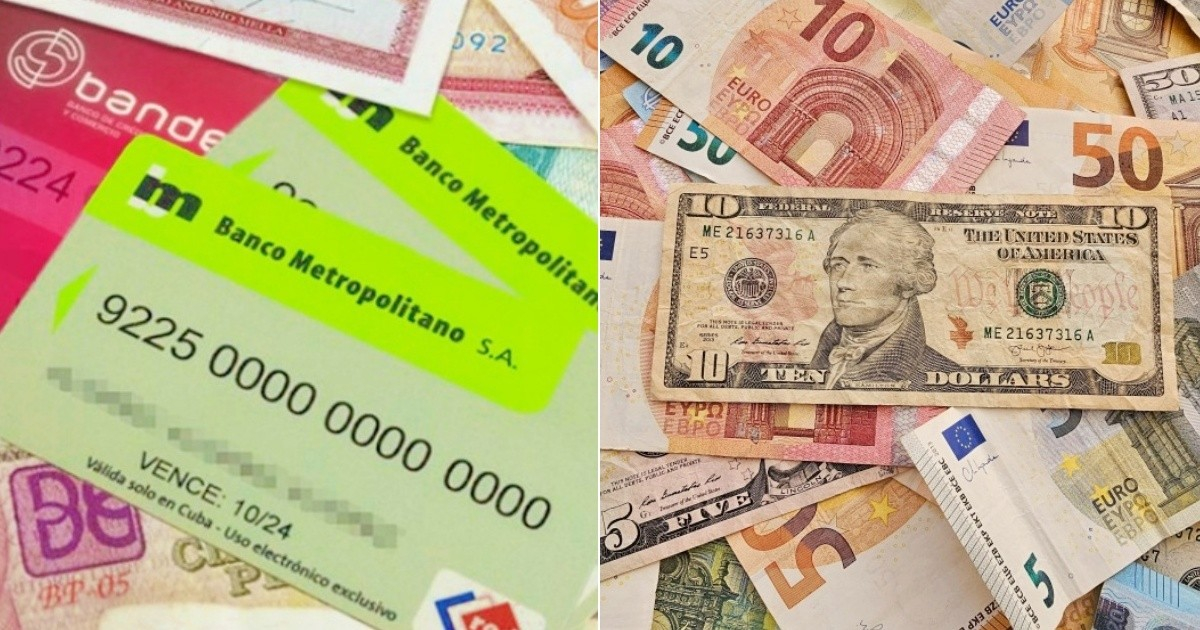
This Monday marked an unprecedented day in Cuba's informal currency market as all three key foreign currencies—dollar, euro, and the Freely Convertible Currency (MLC)—reached record highs in sales.
The dollar alone jumped by 10 pesos, now sitting at 670 CUP.
The euro also saw a 10-peso increase, reaching 770 CUP, positioning itself a full 100 pesos above the dollar.
The MLC made the most significant leap, skyrocketing by 70 pesos to surpass the 500 CUP mark for the first time, landing at 510 CUP.
These movements set new all-time highs for each currency, reinforcing a bullish trend that has persisted for over two weeks without pause.
Rising Currency Values
The scale of this surge is apparent when tracking the dollar's progression throughout June. The month began with the dollar at 585 CUP and surpassed 600 CUP by the third. It continued to climb: 610 on the fifth, 625 on the eighth, 640 on the eleventh, 650 on the twelfth, 660 on the fourteenth, and now 670 this Monday. In just 15 days, the dollar has appreciated by 85 CUP, exceeding a 14% increase against the peso.
The euro's growth was even more rapid: from 690 CUP on the fifth to 770 CUP this Monday, an 80-peso rise in just ten days. The gap between the euro and the dollar has widened to 100 CUP, indicating a comparatively higher demand for euros.
Economic and Energy Crisis Exacerbate Currency Demand
The Observatorio de Monedas y Finanzas (OMFi) from elTOQUE had initially predicted a ceiling of 650 CUP per dollar for June's end. This threshold was surpassed by the twelfth, with over two weeks remaining, highlighting that the rate of depreciation is outpacing even the most pessimistic forecasts.
Underlying this currency spiral are structural issues, exacerbated by an ongoing energy crisis. Cuba is experiencing the worst power crisis of its recent history in 2026, with generation deficits exceeding 2,174 MW during the worst days of May, affecting up to 70% of the National Electric System. By June 13, the projected deficit had surpassed 1,700 MW.
Power outages last between 20 to 24 hours daily in many areas, with some provinces experiencing blackouts extending up to 45 and 48 consecutive hours without electricity. This productive paralysis devastates the supply of goods and services, intensifies shortages, fuels inflation—which has already reached 14.73% year-on-year—and drives Cubans to seek refuge in strong currencies. As doubts over economic recovery grow, so does the pressure on the dollar and euro.
Tourism Collapse and Inflation's Toll
Compounding the energy crisis is the collapse of tourism, Cuba's primary source of foreign currency. Between January and April 2026, only 328,608 international visitors arrived, a 55.8% year-on-year drop. In 2025, Cuba barely registered over 1.8 million visitors, compared to 2.2 million in 2024 and 2.4 million in 2023. The decline in tourism revenue severely limits the foreign currency supply in the market, driving up informal exchange rates.
In March 2026, the Central Bank of Cuba introduced 2,000 and 5,000 peso bills—equivalent to just four and ten dollars at the informal exchange rate—an implicit acknowledgment of inflation's impact and the peso's diminishing purchasing power.
Since 2020, the peso has depreciated by over 95% against the dollar in the informal market, from 42 CUP per dollar to the current 670 CUP. The new barriers broken by the dollar, euro, and MLC not only reflect currency behavior but also highlight the worsening economic and energy crisis that continues to severely affect Cubans' finances, showing no signs of abating.
Cuban economist Elías Amor warned on June fourth that the dollar could approach 1,000 CUP if macroeconomic imbalances persist: "There are fewer foreign currencies and more needs, and as these needs can be met with foreign currencies, people will be willing to pay whatever it takes."
Understanding Cuba's Currency Crisis
What has caused the dramatic rise in currency prices in Cuba?
The dramatic rise in currency prices in Cuba is primarily due to structural economic issues compounded by an energy crisis and the collapse of tourism, leading to increased demand for foreign currencies like the dollar and euro.
How has the energy crisis affected Cuba's economy?
The energy crisis has led to extended power outages, disrupting production and supply chains, worsening shortages, and accelerating inflation, thereby increasing the demand for stable foreign currencies.
Why is the collapse of tourism significant for Cuba's currency market?
Tourism is a key source of foreign currency for Cuba. The collapse of tourism significantly reduces the availability of foreign currency in the market, leading to higher demand and rising exchange rates for the dollar and euro.