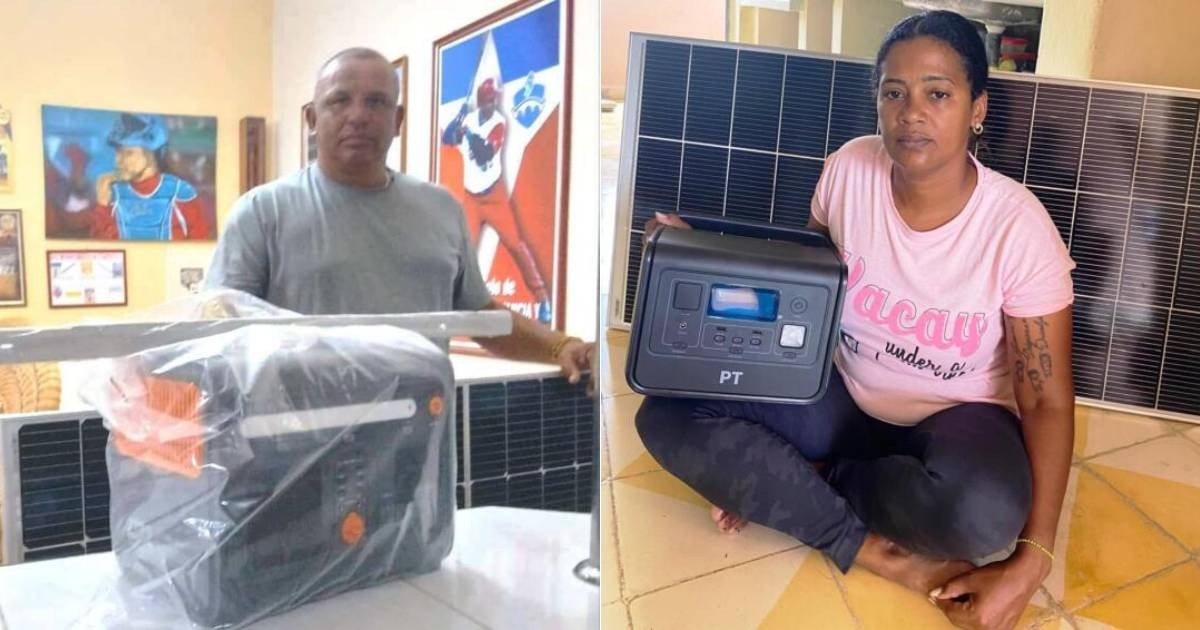
The Cuban state has opted to honor six esteemed athletes from the province of Sancti Spíritus with solar panel systems, a move that starkly highlights the depth of the island's ongoing energy crisis.
As reported by Radio Sancti Spíritus, the recipients include baseball players Frederich Cepeda, Eriel Sánchez, and José Raúl Delgado, Olympic champion canoeist Serguey Torres from the Tokyo 2020 Games, judoka Dayaris Mestre, and basketball player Jacinto de Jesús González Peralta.
The true significance lies not in the awardees themselves, but in what this prize represents in today's Cuba.
Even the official source did not shy away from acknowledging the shift: "Previously, other Olympic and world champions in the country were recognized with cars," stated María Zamora Clavo, head of the Provincial Commission for the Care of Retired Athletes and Sports Glories.
This transition—from cars to solar panels—serves as a clear indicator of how the material conditions in the country have transformed over 67 years of communist rule.
In the 1980s, Soviet subsidies allowed elite athletes and top workers to receive Ladas or Moskvich cars. During the Special Period of the 1990s, rewards dwindled to Panda televisions and Chinese appliances. By October 2023, the Cuban government had managed to distribute 17 cars to athletes and coaches in recognition of sporting excellence.
Fast forward to 2026, and solar energy has become the new emblem of privilege.
By the end of 2025, Cuba faced electricity deficits exceeding 2,000 MW, leading to power outages lasting over 20 hours daily in several provinces, with some interior regions receiving a mere three hours of electricity daily.
Energy and Mines Minister Vicente de la O Levy openly admitted that 2026 would be "challenging, albeit slightly improved," and that blackouts would persist.
In this scenario, having a solar panel system installed at home—priced between 3,600 to 4,500 dollars on the black market—has emerged as the most coveted and scarce asset in the country.
The program was sanctioned through a Council of State agreement and the National Commission for Athletes, extending also to distinguished workers in Health, Education, and National Heroes of Labor.
The installations are handled by Copextel, a state-run technology company.
The unequal access to solar panels reveals a new form of privilege in Cuba: while the state allocates them to select groups, the majority of the population continues to endure prolonged outages with no solution in sight.
Zamora Clavo confirmed that the program is ongoing: "There are still sports glories in the country who will be rewarded with solar panels, and later, we will begin with other figures who have been Pan American and Central American medalists."
The Impact of Cuba's Energy Crisis on Sports Awards
Why has Cuba started awarding solar panel systems to athletes?
The Cuban government has begun awarding solar panel systems to athletes due to the severe energy crisis on the island, which makes solar energy a highly valuable asset.
How does this change reflect the country's current situation?
The shift from cars to solar panels as rewards indicates worsening material conditions under the long-standing communist regime, highlighting the dire energy shortages in Cuba.
Who else benefits from the solar panel program?
Besides athletes, the program benefits distinguished workers in Health, Education, and National Heroes of Labor, emphasizing a selective distribution approach.