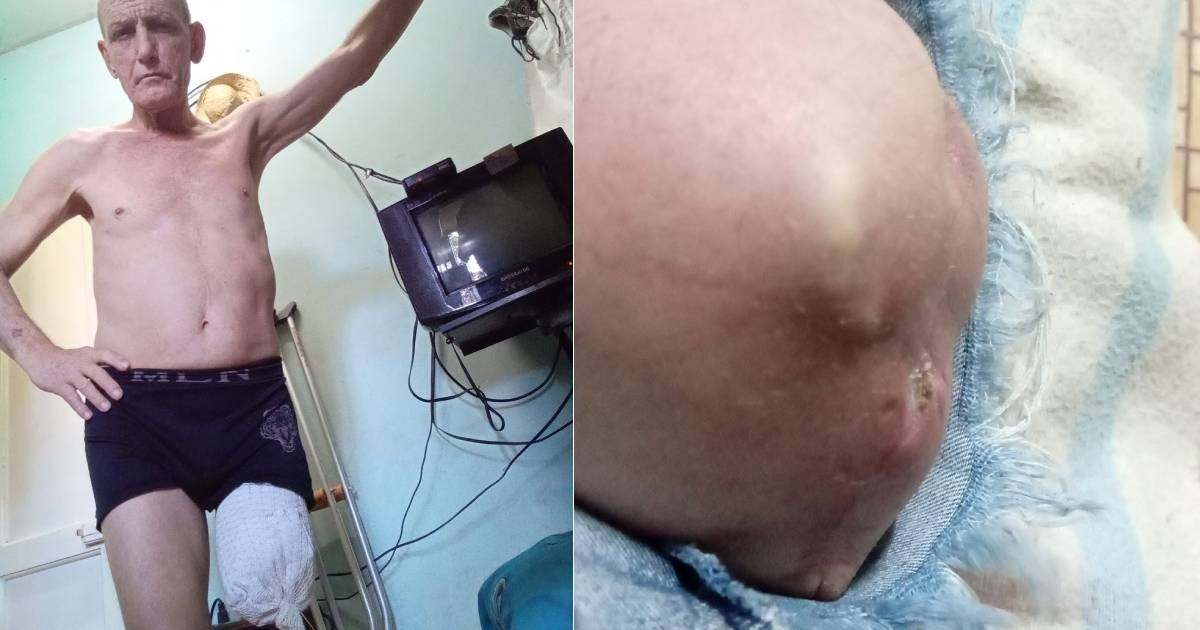
José Antonio Hernández Trujillo, a Cuban diabetic who lost his left leg above the knee, reveals that his survival hinges on the support of family and neighbors as he endures severe pain, food shortages, and a lack of state assistance.
From his home in La Sierra, Playa municipality, Havana, Hernández shared a heartfelt message on Facebook last Saturday, detailing the harsh conditions he faces daily.
"Thanks to my family and the one or two neighbors who remember to give me something to eat," he wrote.
He lamented that he can't even keep his drinking water cool. "I drink warm water from a bottle I have beside my bed," he said.
Health Challenges Amidst a Failing System
Hernández's situation is compounded by urgent medical needs. After complications from diabetes and chikungunya, a virus that affected thousands in Cuba in 2025, he lost his leg. Now, he requires another surgery due to the bone of his stump pressing against his skin.
"I'm enduring the most brutal pain imaginable. Look at the photo of the stump; you can see the bone trying to break through the skin," he shared, along with images of his injury.
Hernández claims he receives no pension and isn't listed among those eligible for food aid through local stores. Attempts to secure social assistance have been futile.
"I requested a visit from a social worker, accompanied by an elderly communist neighbor, but to no avail," he said.
A Nation in Crisis
The challenges of health and nutrition are exacerbated by failing basic services affecting much of Cuba.
"There's no electricity, no internet, no ETECSA connection, no water, no gas, no transportation; each day is worse," he wrote.
His plight underscores the increasing reliance of vulnerable individuals on the goodwill of family, friends, and neighbors amidst Cuba's economic and social turmoil.
The chikungunya epidemic in 2025 impacted tens of thousands on the island. For those with chronic illnesses like diabetes, the virus can worsen circulatory problems, escalating the risk of severe infections and amputations.
The food crisis hits elderly, sick, and disabled individuals hardest. The UN estimates that 2 million Cubans will need humanitarian aid in 2026, with a funding gap exceeding $60 million. According to the Food Monitor Program, 96.91% of the Cuban population lacked adequate food access in April 2026.
The Family Care System, which served approximately 67,000 people in 2025, is acknowledged by the state as insufficient in the face of the crisis's scale. Even with the government's promised increase, the minimum pension of 1,528 Cuban pesos remains inadequate for basic needs: 99% of retirees can't meet essential requirements.
In a desperate bid for help, Hernández shared his phone number, address, and personal information on social media.
His message ends with a poignant plea reflecting his deep despair: "Let go of the country already, you can't handle this monster. I shouldn’t be crying out of desperation and helplessness. God help me."
Cuban Crisis and Social Support FAQs
What are the main challenges José Antonio Hernández Trujillo is facing?
Hernández Trujillo faces severe pain from a medical condition, lack of food, and inadequate state support, relying on family and neighbors for survival.
How has the chikungunya epidemic affected Cuba?
The chikungunya epidemic in 2025 severely impacted Cuba, exacerbating chronic health conditions like diabetes and increasing risks of serious complications, including amputations.
What is the current state of food security in Cuba?
Food insecurity is critical, with the UN estimating 2 million Cubans needing humanitarian aid in 2026 and 96.91% lacking adequate food access as of April 2026.