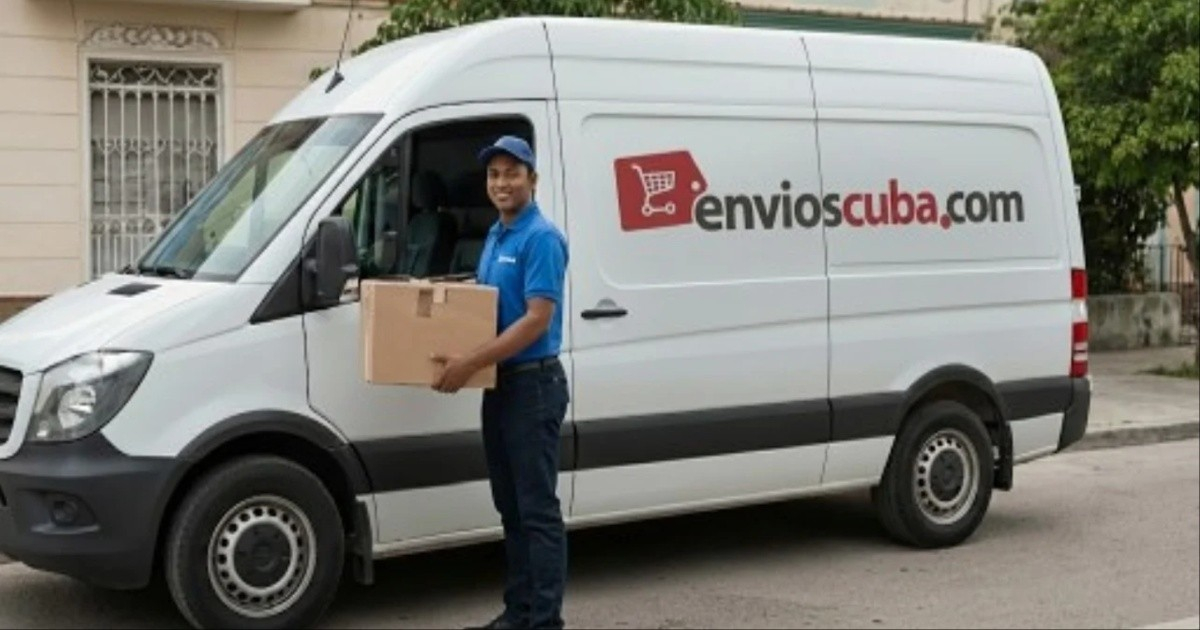
EnvíosCuba, once a major e-commerce hub catering to the Cuban market, has declared the cessation of its operations. This announcement was made via a brief statement on their website, which provided no reasons for the closure, nor did it clarify whether this halt is temporary or permanent.
The notice, which entirely replaced the platform's commercial interface, simply stated, "Due to circumstances beyond our control, our platform can no longer provide services." The company assured that all currently approved and in-progress orders would be fulfilled, expressing gratitude to its customers: "Thank you very much for your loyalty over the years. It has been an honor and a privilege to serve you."
EnvíosCuba was more than just an online store; it was an umbrella operation for several specialized shops, including Puerto Envío, Electro Envío, Mercado, Carlos III, and Almacén-On, all of which are now offline following the platform's closure.
The platform marketed itself as "the leading store for purchasing and shipping to Cuba," boasting a selection of over 10,000 products, ranging from foodstuffs to appliances, hardware, and household items.
Its business model was based on goods remittances, where emigrated family members would purchase products from abroad, which recipients would then receive in Cuba at prices far beyond the reach of the average Cuban worker, who earns less than $11 a month.
Behind the platform was NACTWS S.L., a company registered in Palma de Mallorca in November 2017, with a modest share capital of just 3,000 euros, fully controlled by Sonia Álvarez Pérez as the sole administrator.
Investigations by Cuba Siglo 21 and CubaNet have linked the platform to the military conglomerate GAESA and the Cuban-Canadian businessman Vladimir Graverán Becerra, Álvarez Pérez's husband, identified as a key figure in the network of companies used to manage e-commerce, remittances, and online sales associated with the Cuban Armed Forces.
The platform was part of the e-commerce network of CIMEX, a pioneering company in foreign currency operations in Cuba, which was absorbed by GAESA in 2011.
The shutdown occurred amidst heightened U.S. pressure on the Cuban military-economic complex. President Donald Trump signed Executive Order 14404 on May 1, 2026, expanding sanctions against individuals and entities tied to the Cuban state apparatus. GAESA was formally sanctioned on May 18.
Shortly after, Visa and Mastercard ceased operations in Cuba following the breakdown of a foreign processing bank's relationship with FINCIMEX, GAESA's financial arm responsible for processing remittances and international payments.
The closure of EnvíosCuba happened days after the grace period set by the new sanctions expired on June 5, although the company has not clarified if there is a direct connection between these events and the suspension of its services.
Visa and Mastercard operations were halted from June 6, affecting one of the primary payment methods used by thousands of Cubans abroad to make purchases on platforms like EnvíosCuba.
Other platforms targeting the same market—Supermarket23, Katapulk, Cubamax, and MallHabana—remain operational for now.
U.S. Secretary of State Marco Rubio characterized GAESA as "a state within a state," controlling assets valued at around $18 billion and nearly 70% of Cuba's economy. "Today, Cuba is not governed by any 'revolution.' Cuba is controlled by GAESA," Rubio stated in a message directed at the Cuban people.
Frequently Asked Questions about EnvíosCuba's Closure
Why did EnvíosCuba cease operations?
EnvíosCuba announced the suspension of its services without providing specific reasons, stating only that it was due to circumstances beyond their control.
Is EnvíosCuba's closure permanent?
The company has not clarified if the closure is temporary or permanent.
What impact do U.S. sanctions have on Cuban e-commerce?
U.S. sanctions have intensified pressure on Cuba's economic-military complex, affecting entities like GAESA and, consequently, platforms like EnvíosCuba.