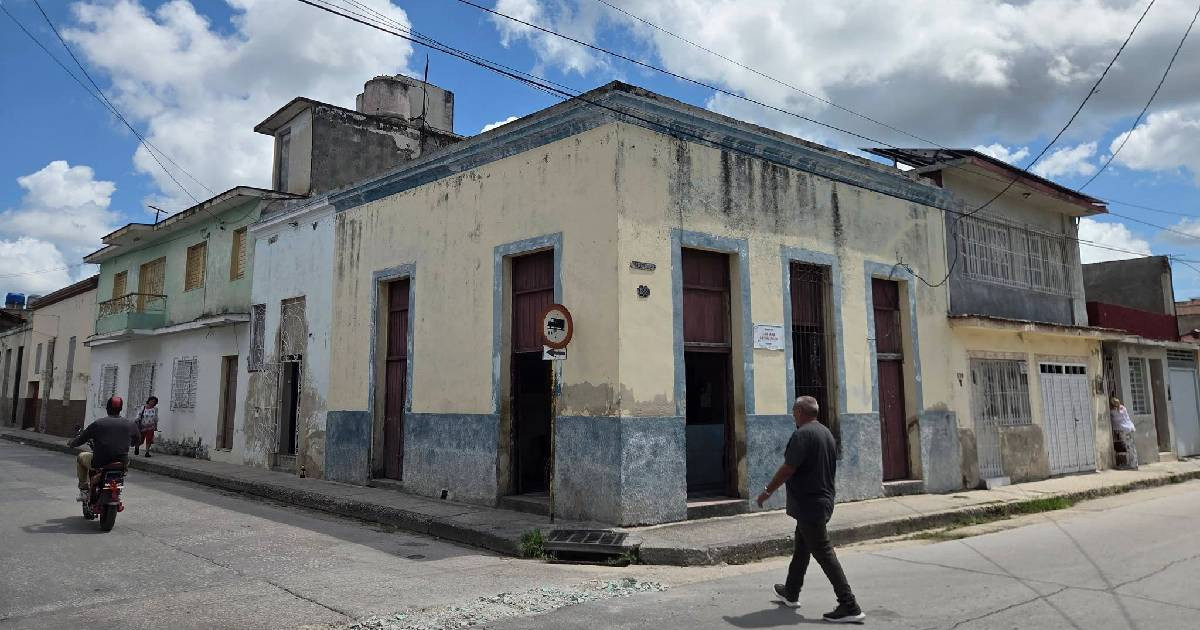
A young man staged a mock assault using a machete on the streets of the city famed as the Cuban City of Parks. Meanwhile, a companion filmed the scene for social media, leaving an elderly man terrified as he ran frantically, pleading for help, under the belief that his life was in danger. This incident was reported on Sunday by the Facebook page Holguín en fotos.
Local residents rushed to assist the distressed senior before realizing it was a setup intended to create viral content. The elderly man, unaware he was the target of a so-called "prank," knocked on doors in panic, seeking refuge, the source detailed.
An AI-generated image accompanying the post sparked widespread indignation and ignited a debate on the ethical boundaries of digital content creation in Cuba.
"Exploiting someone's fear for entertainment is unacceptable," stated the post's author, adding, "Creating content should not mean losing empathy or playing with others' fears. The quest for reactions, views, or fleeting fame should never come at the expense of people's safety and peace of mind."
The online community unanimously condemned the act. One user pointed out, "Using a weapon to create content is still a criminal act."
Another voiced concern for the elderly victim, warning that he "deserves respect, as he could suffer a heart attack or fall, with dire consequences."
A commenter imagined a more severe outcome: "This prank could end disastrously... what if the gentleman legally carries a firearm and uses it in self-defense? If harm comes to the prankster, it would be justified as self-defense, ending the joke tragically."
Several users demanded police involvement, while others lamented the apparent erosion of values reflected in the incident.
"Values have eroded to the point where words fail us; everything is a joke... respect is gone... and everything ends up online... they film first and help, if at all, later," one user commented.
The prank takes place amid a steady increase in insecurity in Cuba, with the elderly becoming frequent targets for criminals. The Cuban Citizens' Audit Observatory (OCAC) documented 2,833 verified crimes in 2025, marking a 115% increase from 2024 and a 337% rise from 2023, with thefts being predominant at 1,536 cases—a staggering 479% surge since 2023.
Historian and researcher Julio César González Pagés, recently robbed by two minors in Havana, warned that "elderly people have become the focus of thefts and assaults," linking the trend to "the abrupt end of the school year and the precarious conditions we live in."
In Holguín, OCAC recorded 40 criminal cases in the first half of 2024, noting the growth and organization of youth gangs across several municipalities by 2026, according to independent media reports.
In this environment, the machete prank not only posed an immediate physical threat to an elderly man but also trivialized simulated violence against vulnerable individuals in a setting where real violence is an everyday threat.
Understanding the Impact of Viral Pranks in Cuba
What was the nature of the machete prank in Holguín?
The prank involved a young man pretending to be an assailant with a machete, scaring an elderly man on the street while another person recorded the scene for social media.
How did the community react to the prank?
The community reacted with outrage, condemning the prank for exploiting fear and calling for police involvement. Many expressed concerns about the erosion of societal values.
What are the broader implications of such pranks in Cuba?
These pranks contribute to normalizing violence against vulnerable groups and highlight the growing insecurity in Cuba, where the elderly are increasingly targeted by criminals.