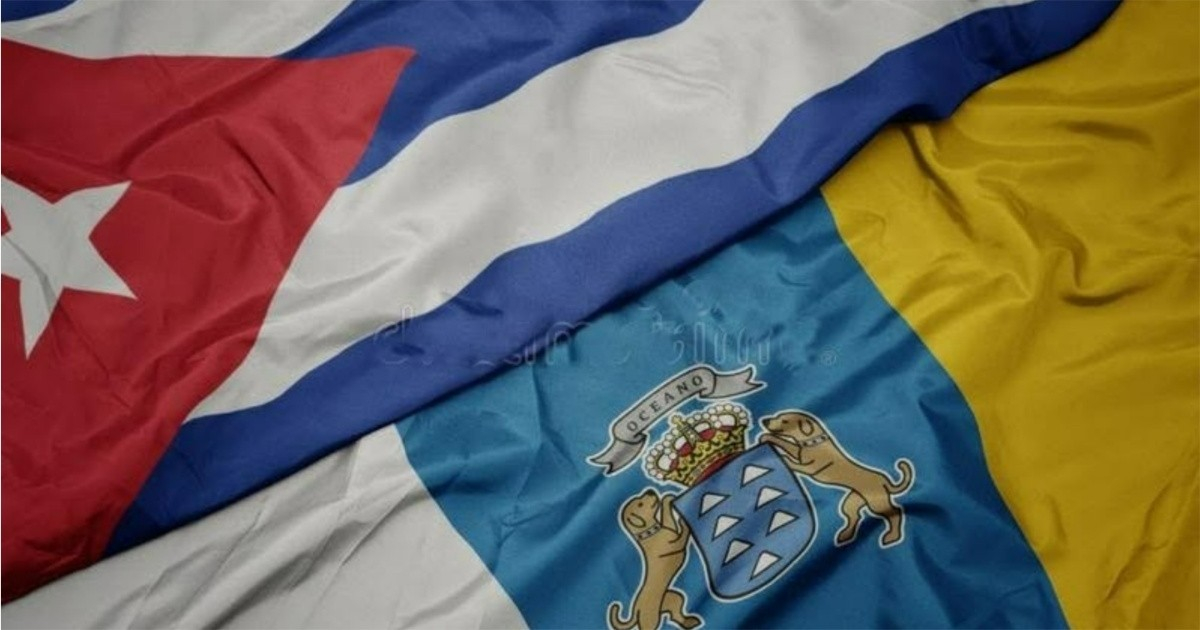
The Canary Islands have emerged as a prominent destination for Cuban emigrants, with 63,837 individuals born in Cuba residing in the archipelago as of early 2025, according to a population report on immigrant origins in the Canary Islands released by ECCA Social, utilizing data from the Canary Islands Institute of Statistics.
Cubans rank second among the migrant populations in the islands, trailing only Venezuela, which has 88,602 residents, and ahead of Colombia, with 54,362 individuals.
Overall, there are 529,739 foreign-born residents in the Canary Islands, accounting for 23.5% of the total population, marking a 4.9% increase compared to 2024.
Demographic Trends Among Cuban Migrants
The Cuban community in the Canary Islands presents a mixed demographic: older individuals aged 50 to 64 who are often engaged in reclaiming Spanish citizenship, and younger migrants aged 25 to 39 who have arrived during the recent wave of migration that intensified since 2021. This is highlighted in the report, which states that the Cuban population is predominantly adult, featuring both these age groups.
Historical and Legal Context
This demographic diversity has historical roots. Since the 19th century, the Canary Islands have been a primary source of emigrants to Cuba. In the 1862 census, Canary Islanders constituted 41.5% of all Hispanic emigrants in Cuba, creating familial networks that now facilitate return migration. The Democratic Memory Law has been a crucial pathway for Cubans of Canary descent to reclaim Spanish nationality, explaining the difference between the 63,837 Cuban-born individuals and the 46,338 who retain Cuban nationality on the islands.
In terms of provincial distribution, Santa Cruz de Tenerife hosts approximately 20,580 Cuban residents, while Las Palmas de Gran Canaria has about 18,015, based on 2023 data.
Migration Patterns in Spain
While Morocco leads in terms of migrant origins across Spain, Latin America dominates in the Canary Islands, reflecting the archipelago's historical connections with the continent. The ongoing Cuban exodus, driven by economic hardship, frequent blackouts, governmental repression, and shortages resulting from over six decades of dictatorship, has made Spain the second most popular destination for Cuban emigrants, following the United States.
Simultaneously, the Canary Islands are also handling the irregular arrival of young Africans via boats from Senegal, Mauritania, Mali, and Gambia. However, irregular arrivals have decreased by 42.6% in 2025 compared to 2024, with 36,775 people reaching all of Spain, thanks to agreements with the countries of origin.
The Canary route remains one of the world's most perilous migration paths, with the NGO Caminando Fronteras documenting 1,906 fatalities in 2025.
Approximately 50,000 individuals in the Canary Islands stand to benefit from an extraordinary regularization scheme approved by the government of Pedro Sánchez. This initiative aims to grant documentation to over half a million migrants across the country, with applications open until June 30, 2026.
Understanding Cuban Migration to the Canary Islands
Why are the Canary Islands a popular destination for Cuban migrants?
The Canary Islands attract Cuban migrants due to historical family ties, the possibility of reclaiming Spanish citizenship, and the archipelago's geographical location and economic opportunities.
What factors are driving the Cuban exodus to Spain?
The Cuban exodus is primarily driven by severe economic difficulties, ongoing blackouts, political repression, and shortages of basic necessities, all of which are consequences of the long-standing dictatorship in Cuba.
How does the Democratic Memory Law affect Cuban migrants?
The Democratic Memory Law allows Cubans with Canary ancestry to reclaim Spanish nationality, facilitating their legal status and integration in the Canary Islands.