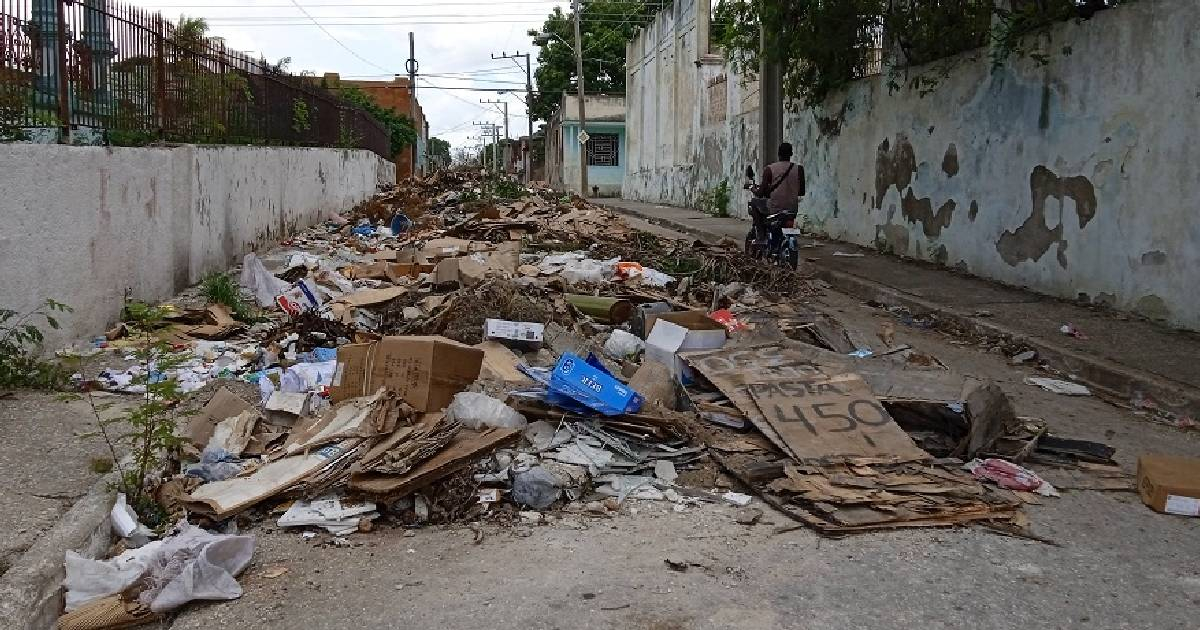
In response to the severe fuel shortage hindering the operation of specialized waste collection vehicles, Guantánamo officials have revamped their strategy for handling solid waste. They are now relying on handcart operators and animal-drawn transport across various community councils in the city.
This initiative was discussed on Saturday during the so-called Vitality Meeting, led by Yoel Pérez García, the first secretary of the Communist Party in the province, Alis Azahares, the provincial governor, alongside provincial directors and municipal administrative structures who participated via audioconference.
According to the official newspaper Venceremos, in addition to enhancing waste collection, efforts are underway to set up designated dumping areas.
Despite these measures, officials acknowledge that the city's current conditions demand significant effort. The first secretary of the PCC urged a transformation of the urban landscape through cleaning operations, clearing of green areas, tree pruning, gardening, and bridge painting.
This situation is concerning due to its potential health implications. During the meeting, health authorities stressed the need to intensify focal control in homes, workplaces, and communities as part of a strategy to combat vector proliferation and reduce epidemiological risks.
The decision to use handcart operators for waste collection highlights the ongoing impact of fuel scarcity on basic services that previously relied on motorized equipment.
As authorities call for public participation to improve the city's appearance, the accumulation of waste and material constraints continue to present visible challenges in the Guantánamo capital.
In April, a project was announced to introduce solar-panel-equipped electric tricycles in Guantánamo, managed by the mipyme R&R Soltec, as an alternative solution.
Following Hurricane Melissa in November 2025, a garbage pile in front of the San Rafael Cemetery stretched "from corner to corner," even though about 15 truckloads had been used to clean the area days prior.
The energy crisis exacerbates the situation further. On Thursday, Guantánamo was plunged into darkness due to a failure in the 110 kV line connecting it to Santiago de Cuba, with some areas experiencing up to 29 hours without power.
In the same meeting, Joaquín Díaz Castillo, director of the Electric Company in Guantánamo, reported that the partial resolution of the fault allows for lighting different circuits for an average of three hours, although he warned of several transformer breakdowns in municipalities like Maisí and Niceto Pérez, severely impacting electrical service.
The National Electric Union acknowledged on June 7 that eight transformers were damaged in Guantánamo, with no available equipment for repairs, leaving several municipalities facing power outages lasting up to 20 hours.
Understanding the Waste Management Crisis in Guantánamo
What measures are being taken to address waste collection in Guantánamo?
Guantánamo has introduced handcart operators and animal-drawn transport to manage waste collection due to a fuel shortage affecting motorized vehicles.
What are the health implications of Guantánamo's waste management issues?
Health authorities are concerned about the potential for increased vector proliferation and epidemiological risks due to inadequate waste management.
How is the energy crisis affecting Guantánamo?
The energy crisis has led to power outages, with some areas experiencing up to 29 hours without electricity, compounded by damaged transformers and insufficient repair equipment.