On Friday, Miguel Díaz-Canel unveiled a series of economic reforms under what the regime calls the "Economic and Social Program for 2026." He also invited public input, stating, "Anyone with a better idea or proposal should speak up, and it will always be considered," though he noted that the measures have already been agreed upon and are ready for swift approval.
Here's my suggestion: dismantle the socialist state enterprise. Don't reform it, don't salvage it, and definitely don't pump more subsidies into it. Dismantle it entirely. Decades of history make it clear that the system is irreparable within the framework that created it.
Decades of Economic Failure
For over six decades, Cuba has endured one of the most disastrous economic experiments in modern history. This model has not proven sustainable as a driver of development anywhere globally. In Cuba, after 67 years of subsidies, political control, and market isolation, it's been reduced to its most pathetic form: factories that don't produce, stores with empty shelves, and workers earning pitiful wages just for maintaining appearances.
The Structural and Ideological Collapse
This isn't an issue of management or circumstances—it's a structural and ideological failure. The Soviet Union partly collapsed because it clung to this model until it was no longer viable. Eastern Europe dismantled it en masse in the 1990s. China and Vietnam, which show some economic vitality today, achieved this by essentially hollowing out their state enterprises and making room for private initiative. The countries that persist with this model—Cuba and North Korea—are, unsurprisingly, the poorest, most repressed, and have the highest population exodus in their respective regions.
The Inefficiency of Cuba's State Enterprises
Socialist state enterprises aren't built to compete. They can't be. They lack ownership, and as everyone knows, what belongs to "everyone" belongs to no one. They lack incentives for efficiency, operating with soft budgets that the Cuban State covers regardless of outcomes.
Their management follows political, not economic, criteria, with party officials, not entrepreneurs, at the helm. In Cuba, this logic has been taken to the extreme: these enterprises exist to create fictitious jobs, keep the population dependent on the State, and justify subsidies that maintain the regime's control over the daily lives of Cubans.
The Path to Economic Freedom
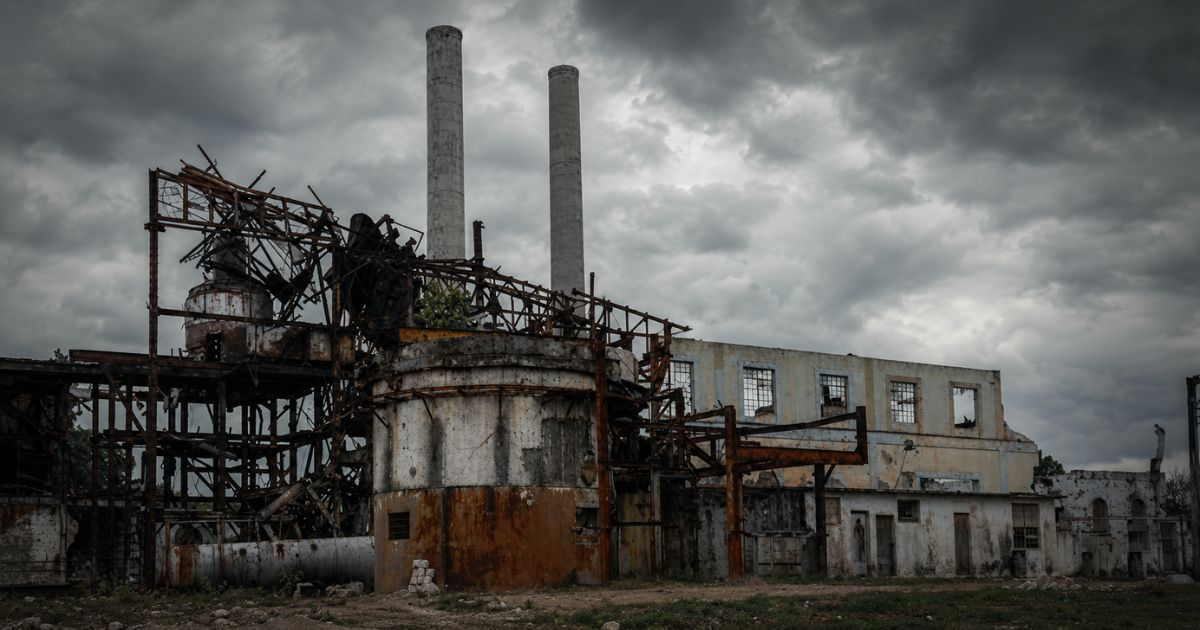
What we see today is the outcome: destroyed industries, crumbling infrastructure, productivity so low it's nearly immeasurable, and a whole generation of Cubans choosing exile over waiting for the system to work.
Cuba doesn't need to reform its state enterprises; it needs to abolish them. Privatize what holds real value, sell what finds a buyer, and shut down without hesitation what doesn't work. Opening the economy to competition, investment, and individual initiative is the only proven path to success anywhere in the world.
The regime is aware of this. And that's precisely why it won't act. A free economy creates independent citizens, and independent citizens don't need a dictatorship. The socialist state enterprise in Cuba is not a mistake; it's a conscious political decision to maintain control over a subjugated population.
Díaz-Canel requests proposals. There's mine, though we already know the response.
Understanding Cuba's Economic Crisis
Why is the state-owned enterprise model failing in Cuba?
The model is failing due to its inherent lack of competitiveness, absence of ownership, and inefficiency. It operates with state-covered budgets regardless of performance, leading to systemic inefficiencies and stagnation.
What are the consequences of maintaining the current economic model in Cuba?
The ongoing use of this model has led to destroyed industries, collapsing infrastructure, and a low productivity rate. It has also resulted in significant population exodus as citizens seek better opportunities abroad.
What alternatives exist for Cuba's economic system?
Cuba could benefit from dismantling the state enterprise model, privatizing assets, allowing for competition, investment, and encouraging private initiatives. These steps have proven successful in other regions, fostering economic growth and citizen independence.