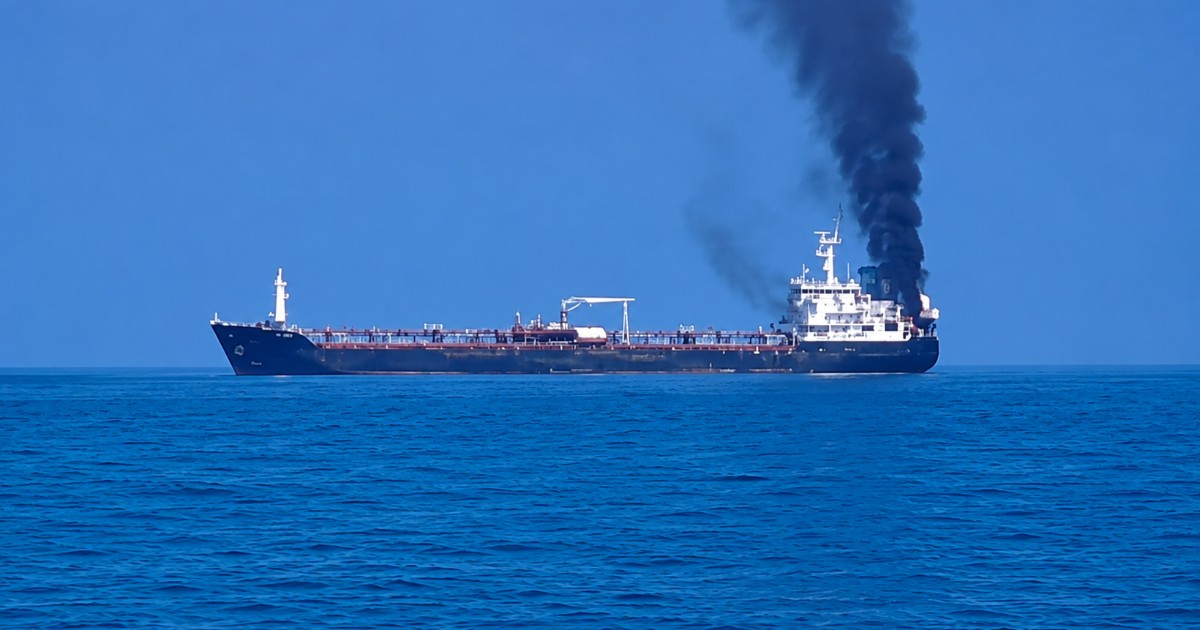
In a significant diplomatic exchange, India's External Affairs Minister, S. Jaishankar, reached out to U.S. Secretary of State Marco Rubio to express India's dissatisfaction over a U.S. Navy strike on the tanker MT Settebello in the Gulf of Oman. This attack, which resulted in the deaths of three Indian sailors, was deemed "unwarranted" by India, prompting a call for increased protections for civilian vessels operating in the area, as reported by the Mathrubhumi newspaper.
Initially intended as a rescue operation, the incident quickly escalated into a diplomatic conflict between the two strategic partners. This came after Indian officials confirmed the unfortunate demise of the three crew members who had gone missing following the June 9 attack.
Jaishankar took to social media platform X on Friday night to elaborate on his dialogue with Rubio: "I conveyed India's strong objection to the U.S. Navy's actions in the Gulf that led to the deaths of three Indian sailors. Such deadly measures against commercial shipping are unjustifiable."
Earlier that day, India's Ministry of External Affairs (MEA) summoned U.S. Chargé d'Affaires Jason Meeks to issue a formal protest, characterizing the fatalities as both "tragic and avoidable."
U.S. Actions Under Scrutiny
The MEA cautioned that employing lethal force against civilian ships compromises the safety, security, and stability of international maritime trade in this sensitive region during challenging times.
The MT Settebello, a Palau-flagged oil tanker, was manned by a crew of 28 individuals: 24 Indians, two Pakistanis, one Ukrainian, and one Russian.
Despite the rescue of 21 Indian sailors, the three initially reported missing were later confirmed deceased.
The United States Central Command (CENTCOM) admitted to executing the strike, justifying it by claiming that the crew had repeatedly ignored U.S. naval instructions and attempted to transport Iranian oil in violation of a naval blockade imposed by Washington since April 13.
This explanation did little to alter New Delhi's firm stance.
Rubio, in response to Jaishankar, emphasized that all commercial vessels in the Strait of Hormuz must "immediately comply with orders from U.S. forces," as reported by the Times of India.
Escalating Tensions and India's Maritime Concerns
The MT Settebello was the second in a sequence of three consecutive tanker attacks: the MT Marivex was targeted on June 8—with all 24 Indian sailors safely rescued—and the MT Jalveer on June 11, with 20 Indian crew members safely evacuated.
None of the three vessels carried an Indian flag; they were all foreign commercial ships with predominantly Indian crews.
Since the blockade's initiation, the U.S. Navy has redirected more than 50 commercial vessels in the Gulf of Oman and the Strait of Hormuz, a critical route for about 20% of the world's oil supply.
India, the world's third-largest supplier of seafarers, providing 9.35% of the global maritime workforce, has a vested interest in the region's maritime security. It has consistently voiced concerns over the conflict's impact on civilian crews.
The MEA stressed that India expects Washington to ensure its forces in the region "take all necessary measures to prevent civilian casualties in future operations," hinting at potential diplomatic actions if attacks on vessels with Indian crew members persist.
Impact of U.S. Naval Actions in the Gulf of Oman
What sparked India's protest against the U.S. Navy?
India's protest was initiated after a U.S. Navy attack on the MT Settebello in the Gulf of Oman resulted in the deaths of three Indian sailors, which India deemed unjustified.
How did the U.S. justify its naval actions?
The U.S. Central Command justified the attack by stating that the tanker was attempting to transport Iranian oil in violation of a naval blockade and that the crew ignored repeated U.S. naval instructions.
What were the broader implications of the incident?
The incident led to diplomatic tensions between India and the U.S., highlighting concerns over maritime security and the safety of civilian crews in the Gulf region.