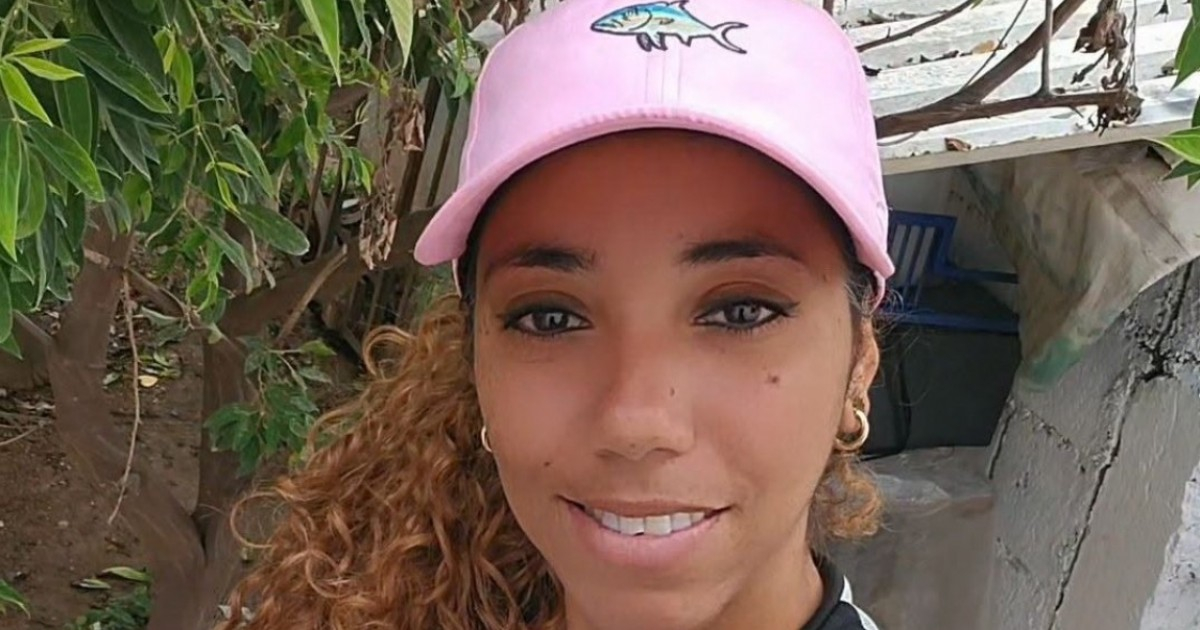
A Cuban woman named Mileydis González has shared a heartfelt video on Facebook, vividly illustrating the emotional and physical toll that power outages have on her daily life. Her message struck a chord with countless Cubans facing the same struggle.
"These power outages have me feeling anxious and depressed. Many times, I wake up feeling down for no apparent reason. What happened to me? Nothing, really. It's just that I spent the entire night without electricity, enduring unbearable heat. How can you not wake up feeling depressed?" Mileydis expresses in her video.
Life Disrupted by Constant Shortages
Her story goes beyond the absence of electricity. Mileydis describes a series of daily deprivations: "You try to make a cup of coffee to relax, but there's no gas. Then, you think about taking a shower to wash off the night's sweat, but there's no water either."
"It's not just about the lack of electricity. There's no power, no water, no life, and people are depressed," she summarizes, echoing the sentiment of millions: "How long will this continue? That's what I want to know. This can't go on any longer."
A Nationwide Crisis
Mileydis's testimony is not unique. Cuba is enduring one of its most severe energy crises in history. On Saturday, the Electric Union reported having only 1,030 MW available against a demand of 2,590 MW, predicting a deficit of 1,720 MW during peak hours.
In May, the situation was even more dire: on the 14th, the largest deficit in history was recorded at 2,174 MW, leaving 70% of the country without power simultaneously. In provinces like Granma, outages lasted up to 48 hours.
An Unresolved Problem
Researcher Jorge Piñón warned that nearly 60% of the 19 units at the nation's eight thermoelectric plants were out of service, stating that the issue "lacks a quick fix."
The power crisis is compounded by shortages of water and gas, creating a trifecta of deprivation that disrupts even the most basic routines. With 87% of Cuba's water supply reliant on the National Electric System, every blackout also halts water pumping. As of May, official data indicated that nearly 2.7 million people lacked regular access to potable water, and about 10 million experienced intermittent supply.
The Psychological Toll
The psychological impact of these conditions is being studied. A 2026 report in Social Science & Medicine, based on a survey of 415 Cuban adults, found that 55.4% experienced extremely severe depression, 66% severe anxiety, and 65.8% extreme stress, with younger adults proving to be the most vulnerable.
Sociologist Elaine Acosta has noted that Cuba is experiencing a "mental health epidemic," fueled by economic hardship, food scarcity, and access barriers.
Social psychologist Yadira Albet described the situation as a public health crisis driven by power outages, where constant uncertainty breeds chronic anxiety and depression.
Meanwhile, the Díaz-Canel regime continues to blame the U.S. embargo for the crisis, ignoring the decades of technical decline and lack of investment in the energy infrastructure that independent experts cite as key structural causes.
Mileydis concluded her video with a question to her followers, encapsulating the collective exhaustion: "I'm depressed, stressed. I'm venting with you all. Tell me how you're feeling, more or less, so I know if I'm the only one."
FAQs About Cuba's Energy Crisis
What is causing the energy crisis in Cuba?
The energy crisis in Cuba is largely due to the outdated and poorly maintained infrastructure of the country's power plants. Despite the government's claims of the U.S. embargo being a primary cause, independent experts point to decades of technical decline and insufficient investment in the energy sector.
How are power outages affecting daily life in Cuba?
Power outages severely disrupt daily routines by affecting electricity, water, and gas supplies. This leads to difficulties in performing basic tasks like cooking, bathing, and staying cool, contributing to widespread depression and anxiety among the population.
What is the psychological impact of the ongoing crisis?
The crisis has led to a significant mental health impact, with many Cubans experiencing severe depression, anxiety, and stress. The constant uncertainty and lack of basic services exacerbate these issues, creating what experts call a "mental health epidemic."